
Streets
Morse Street
Morse Street in East Camden was named for Henry G. Morse, founder and president of the New York Shipbuilding Corporation, whose Camden shipyard led to the creation of Yorkship Village.
Tag
Morse Street in East Camden was named for Henry G. Morse, founder and president of the New York Shipbuilding Corporation, whose Camden shipyard led to the creation of Yorkship Village.

William Joyce Sewell was born on December 6, 1835 in Ireland. Orphaned at a young age, he emigrated to the United States in 1851.
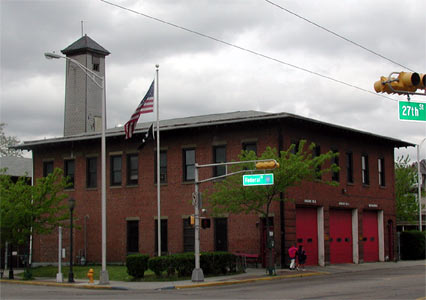
Originally a part of Stockton Township, the area that is now known as East Camden was merged into Camden proper in 1899 along with the neighborhood now known as Cramer Hill.

Ben Courter's June 3, 1932 Camden Courier-Post obituary of Robert "Bob" Turner, 58, proprietor of the Federal Street oyster restaurant his father Fred Turner started in 1886, who helped get Camden's Moose lodge under way.

Sergeant Horner Recalls Days When Horse-Drawn Patrol Toted Woozy Celebrants From Moist Recreation Centers to City Hall East Camden used to have three parks "in the old days" — and to hear a veteran like Police Sergeant William C. Horner tell it — they certainly kept the police force "on its toes." Sergeant Horner, who has seen more than a quarter century of service on the police force in East Camden and is now head of the city missing persons bureau, often tells of those days.

Camden Post-Telegram - October 1, 1915 Butchers Form Another Society from the Camden Post-Telegram - October 1, 1915 Transcription BUTCHERS FORM ANOTHER SOCIETY Beneficial Association Becomes a Yearly After a Quarter Century.
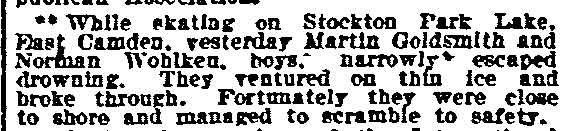
Philadelphia Inquirer, February 27, 1908: boys Martin Goldsmith and Norman Wohlken broke through thin ice while skating on Stockton Park Lake, East Camden, and scrambled to safety near shore.

Thieves attempted to rob the Stockton Park residence of Charles Kleeman; the watchman fired four shots, but the robbers escaped.

An 1899 newspaper account of Walter S. Jones, arrested in a Camden swamp near 17th and Mickle Streets after cries of murder were heard near Cooper's Creek.
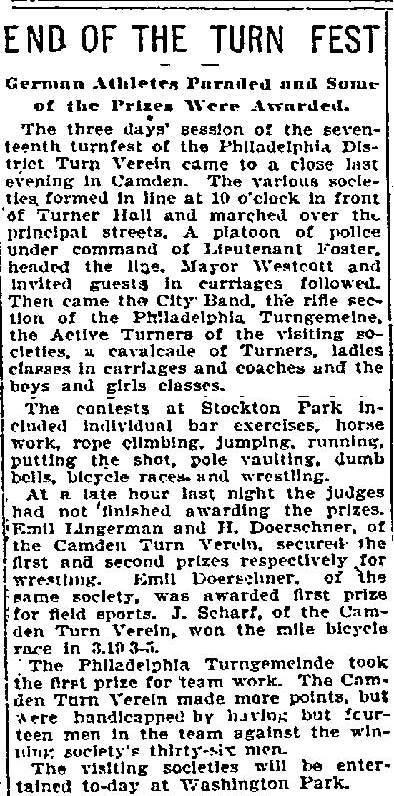
Philadelphia Inquirer, June 23, 1896: the close of the three-day turnfest of the Philadelphia District Turn Verein in Camden, with a parade led by police under Lieutenant Foster and contests at Stockton Park.
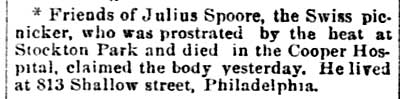
Friends of Julius Spoore, a Swiss picnicker prostrated by the heat at Stockton Park who died at Cooper Hospital, claimed his body. Philadelphia Inquirer, August 12, 1891.
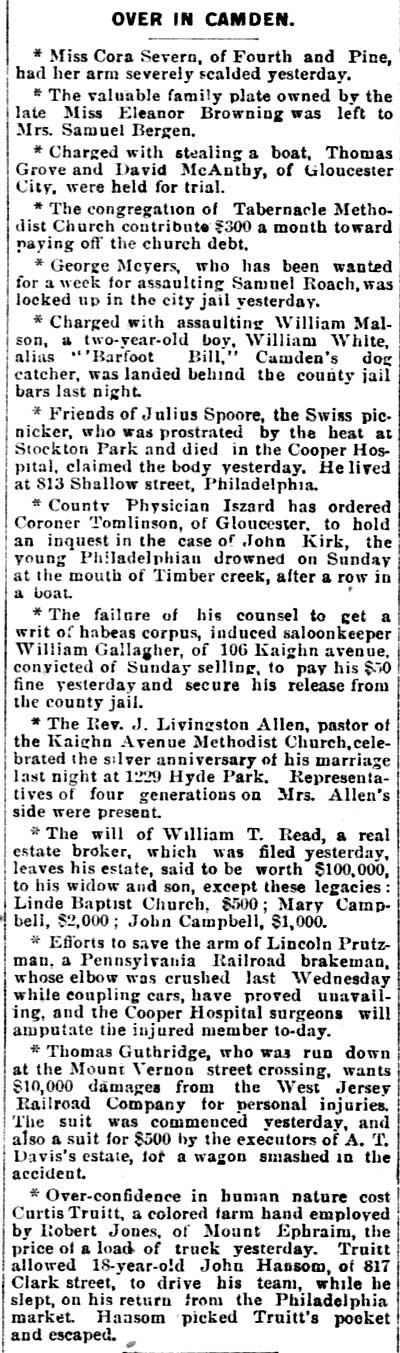
The Philadelphia Inquirer's Camden roundup of August 12, 1891: saloonkeeper William Gallagher of 106 Kaighn avenue pays his Sunday-selling fine, the Rev. J. Livingston Allen of the Kaighn Avenue Methodist Church marks his silver anniversary, and Thomas Guthridge sues the West Jersey Railroad Company for $10,000.
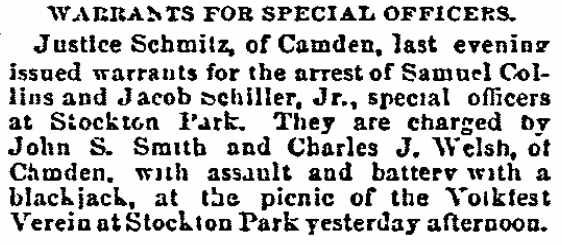
Philadelphia Inquirer, August 4, 1891: Justice Schmitz of Camden issued warrants for two special officers at Stockton Park, charged with assault and battery with a blackjack at a Volksfest Verein picnic.
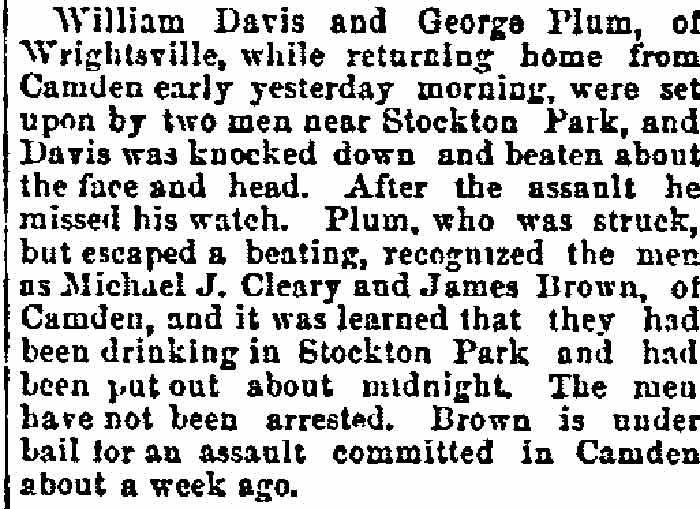
Philadelphia Inquirer, August 7, 1890: William Davis and George Plum of Wrightsville were set upon near Stockton Park, and Davis was beaten; Plum named Michael J. Cleary and James Brown of Camden as the assailants.
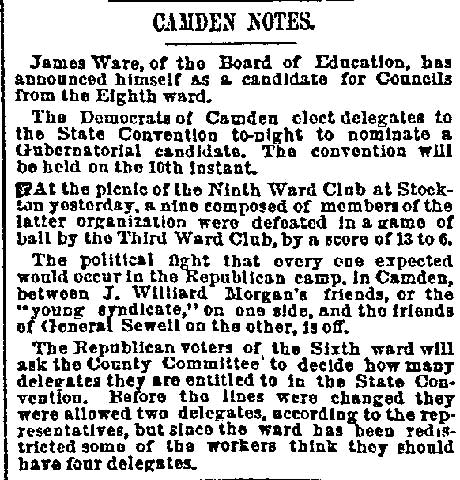
Newspaper clipping headed Camden Notes, Philadelphia Inquirer, September 4, 1889 Philadelphia Inquirer, September 4, 1889

Philadelphia Inquirer, August 3, 1883: the Stockton Rifle Range is to be sold by the Camden County sheriff on foreclosure.
Philadelphia Inquirer, May 17, 1883: the Stockton rifle range near Camden is abandoned after the New Jersey Legislature failed to appropriate money for its rent, and owner Capt. Emmor French takes possession.
Invitation from the managers of the Stockton Rifle-Range Association to the opening of the range on Monday, May 12, 1879, listing the association's directors and ex officio directors.

Printed programme for the spring meeting and grand opening of the Stockton Rifle Range at Camden, beginning May 12, 1879, listing officers, directors, the schedule of matches, admission terms and train times.