Leonard F. Garbrecht
Leonard F. Garbrecht (1910–2000) was a Camden fire captain who served from 1941 until retiring on disability in 1960. He was the last remaining captain of that era and a charter member of Camden City Firefighters Local 788.
Tag

Leonard F. Garbrecht (1910–2000) was a Camden fire captain who served from 1941 until retiring on disability in 1960. He was the last remaining captain of that era and a charter member of Camden City Firefighters Local 788.

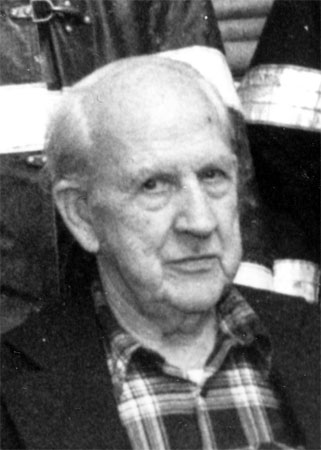
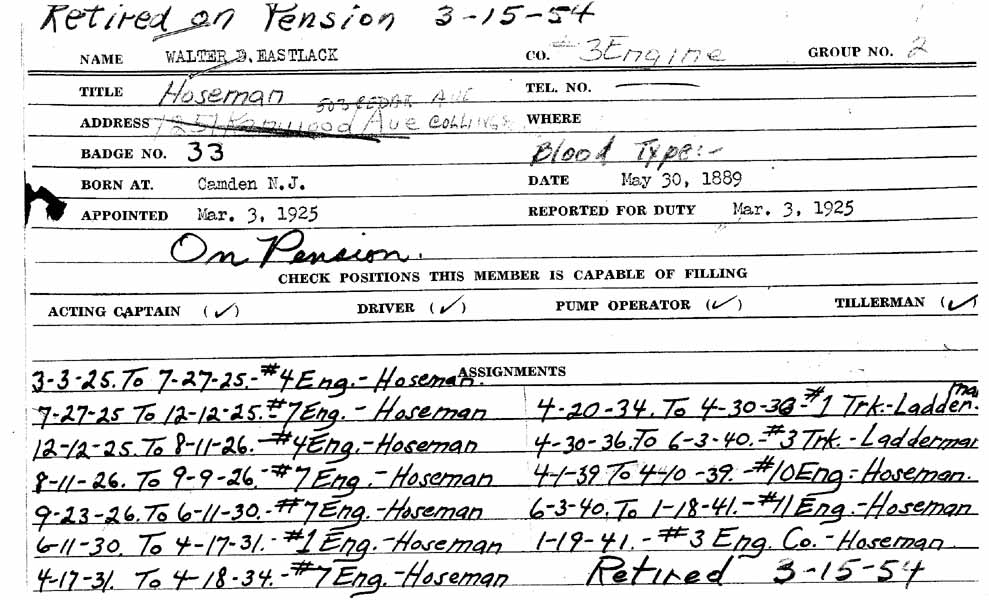
Walter Dayton Eastlack (1889–1964) was a Camden firefighter who served 29 years with the Camden Fire Department, from his appointment on March 3, 1925 to his retirement on March 15, 1954.
Earl A. Smith Sr., born on April 28, 1921, was one of at least nine children born to Catherine and Spencer H. Smith Sr . The elder Smith had a lengthy and distinguished career as a Camden Firefighter, starting in 1914.

Edward F. Murtaugh was born on January 27, 1947, in Camden to John J. Murtaugh Jr. and Saimi Perala. He was named in honor of his late uncle, Private Edward F. Murtaugh, who lost his life in action in Italy in 1944.

Morgan Street runs from Broadway, opposite the old New York Shipbuilding Corporation shipyard, to South 10th Street, crossing the Pennsylvania Railroad tracks and South 6th through 9th Streets. Part of the corridor has been renamed Holtec Boulevard.

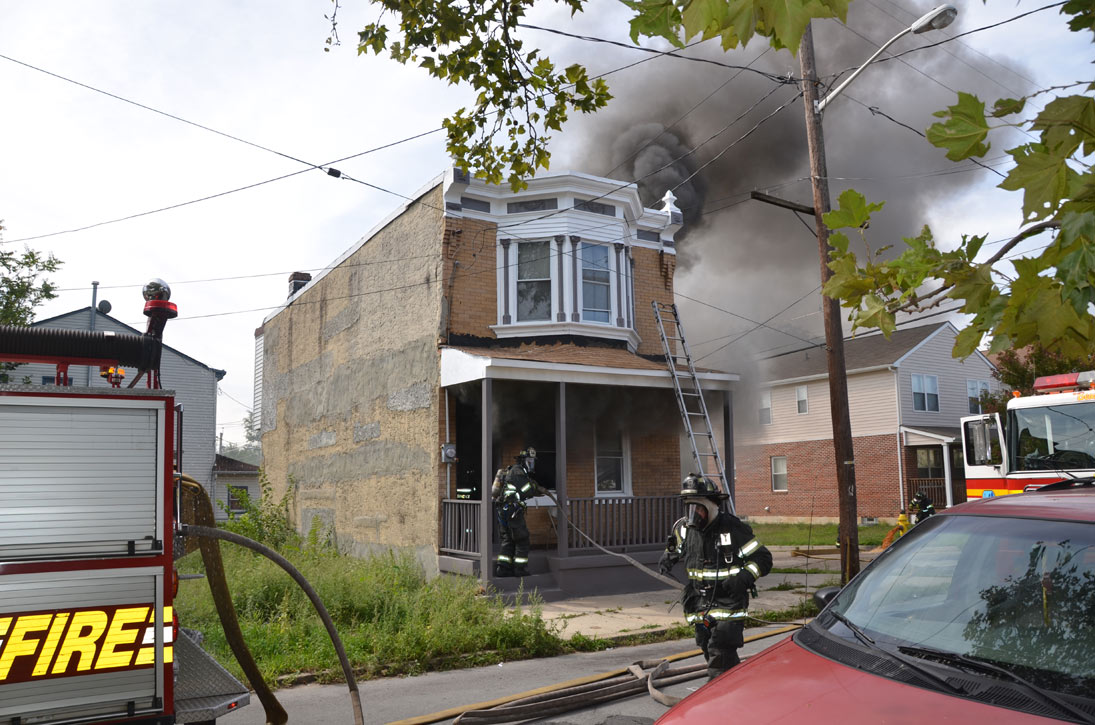
Camden Fire Department response to a fire at 1227 North 28th Street in Cramer Hill on September 19, 2011.

Photos and story by Bob Bartosz October 30, 2008 known by many Cities as "Mischief Night" — In Camden New Jersey it is known for its "Devil's Night" — but for the last few years it has been very quiet. Including this year.

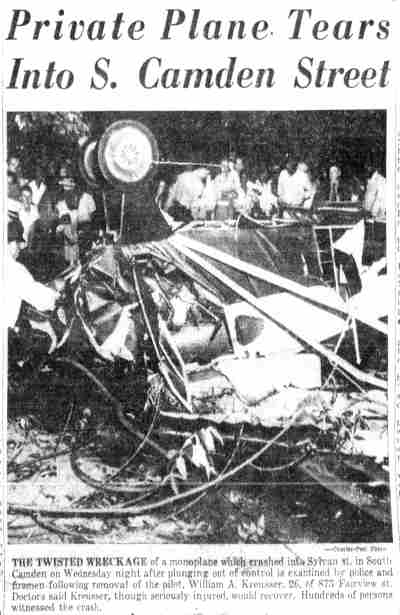
Pilot William A. Kreusser, 26, of 873 Fairview Street survived when his light monoplane tore down power lines and crashed in front of 843 Sylvan Street in South Camden on September 30, 1953.

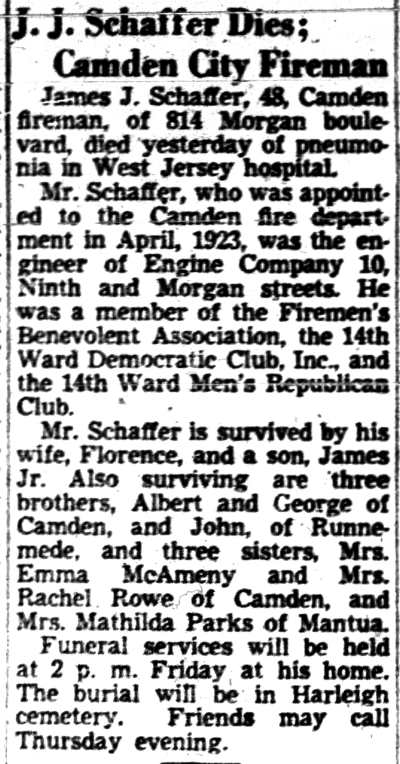
James J. Schaffer, 48, of 814 Morgan Boulevard, engineer of Engine Company 10 at Ninth and Morgan streets, died of pneumonia in January 1947. His son, Marine Cpl. James Schaffer, later witnessed an atomic blast test in 1952.

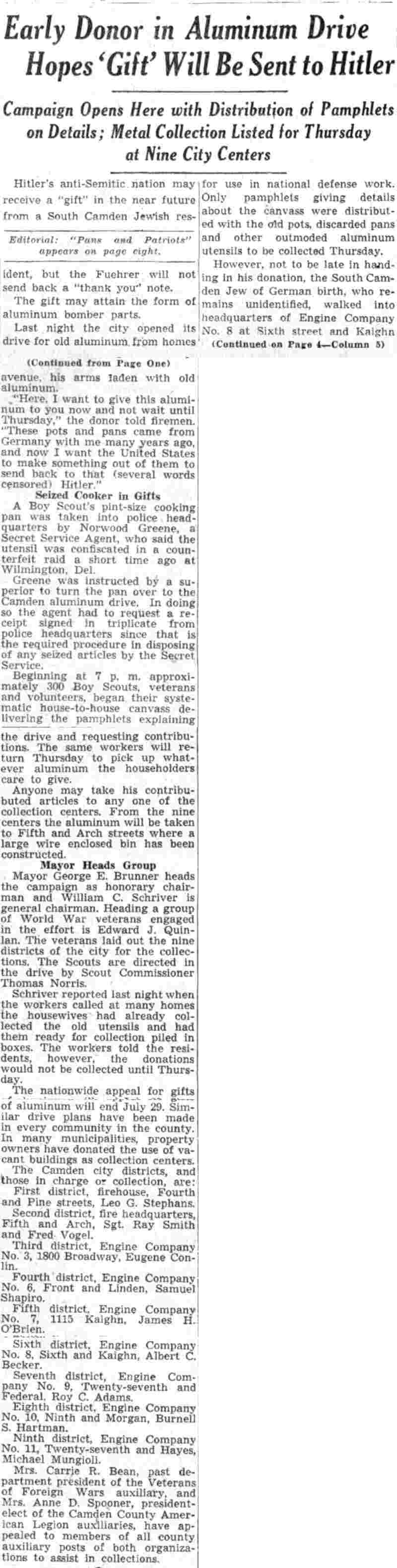
As Camden opened its World War II drive to collect old aluminum for national defense, an unidentified South Camden resident of German birth was among the first donors, carrying his old pots and pans to Engine Company No. 8's firehouse.
Camden's first group of 50 war and emergency volunteer firemen received their diplomas on completion of training at the fire school in the No. 10 firehouse, the first of 500 to be trained as a city reserve.

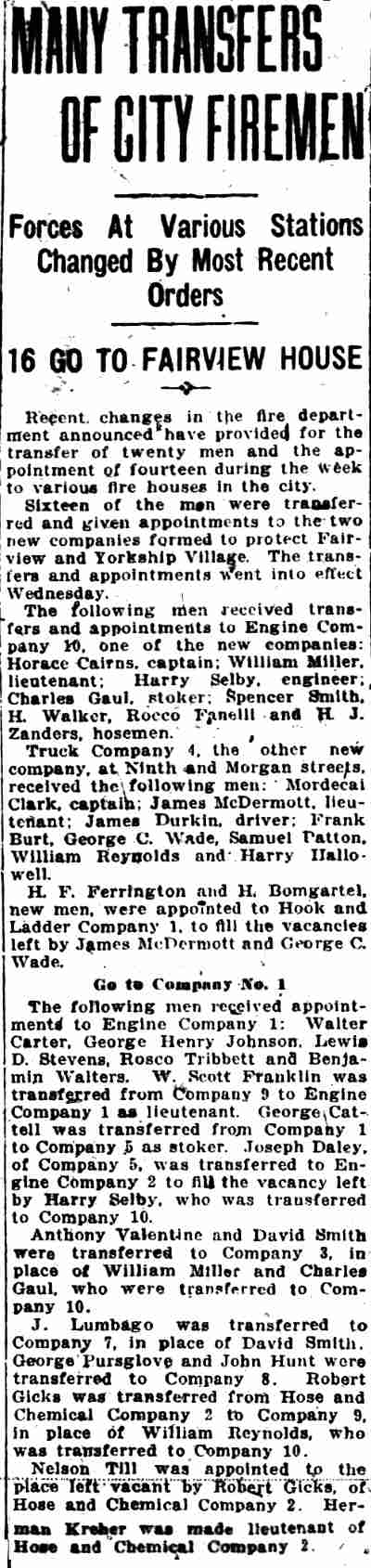
Commissioner Mary W. Kobus announced changes in the Camden fire department, disbanding Truck Company No. 4, creating Engine Company No. 10 and transferring 18 officers and men. Senior Captain Mortica Clark was assigned to the new company at Ninth and Morgan streets.

A three-alarm fire swept the wholesale store of the Antrim Hardware Company at 1514 and 1516 Federal Street, damaging $100,000 in stock, injuring several firemen and menacing nearby homes and the Standard Oil plant across the street.

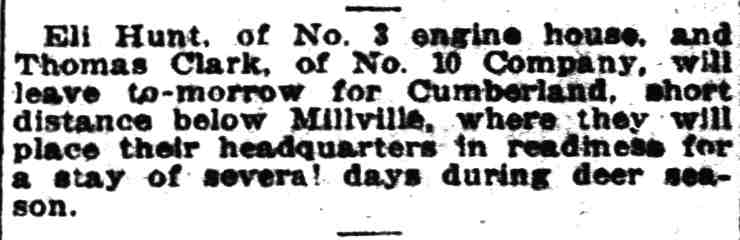
Eli Hunt of No. 3 engine house and Thomas Clark of No. 10 Company were to leave for Cumberland, a short distance below Millville, for a stay of several days during deer season.

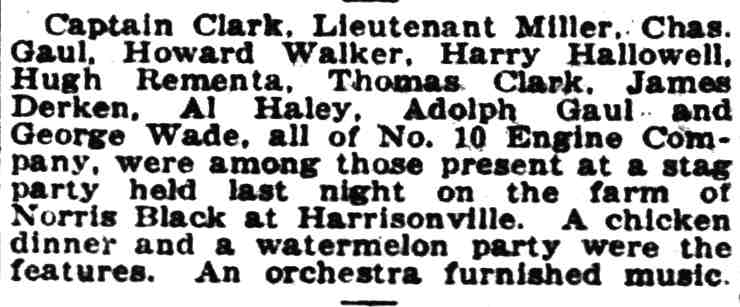
Captain Clark and other members of No. 10 Engine Company attended a stag party on the farm of Norris Black at Harrisonville, featuring a chicken dinner, a watermelon party and an orchestra.

Thomas Clark, Bill Reynolds and Fireman Zanders, all of No. 10 Engine Company, went on a two weeks' vacation.

Camden Post-Telegram - December 30, 1920 Double Shift System Becomes Effective at 8 O'clock on Saturday Morning Saturday morning at 8 o'clock the two-platoon system of the Fire Department becomes effective.

Twenty men were transferred and fourteen appointed in the Camden fire department, sixteen of them to the two new companies formed to protect Fairview and Yorkship Village. Mordecai Clark was named captain of Truck Company 4 at Ninth and Morgan streets.