Jennings' Band
Jennings' Band, originally known as the National Cornet Band, was a well-known musical group in Camden from the 1880s until America's entry into World War I in 1917. It was established in 1868 with Joseph Jennings as its leader, becoming the Sixth Regiment Band in 1871 when it was integrated into the National Guard. It later became known as Jennings' Third Regiment Band, following a reorganization of New Jersey's National Guard units that replaced the Sixth Regiment with the Third. Despite Joseph Jennings' retirement in 1910, the band continued to be associated with his name.
George Reeser Prowell wrote about the band's early days in his History of Camden County, New Jersey, published in 1886:
The National Cornet Band was organized in 1868, with Joseph Jennings as leader. In 1871 the name was changed to the Sixth Regiment Band and it was mustered into the service of the National Guard, and was the only regimental band in the State for years. Their present band-room is at the Sixth Regiment Armory, southwest corner of West and Mickle Streets. The present members are Joseph Jennings, John Roth, Augusta Buese, Gordon Phillips, Lewis Seal, Charles Landwehr, Charles Felcon, John Brown, D. C. Newman Collins, Alfred Colbins, Charles Bowyer, Isaac Heins, Joseph Young, Richard Richardson, Benjamin A. Woolman, Harry Carles, William Stevenson, Frederick Klaproth, Henry Myers, G. Philip Stephany, Adam Markgraft, Charles Ellis, Emerson Ogborn, Charles Frost, Hiram Hirst.
Tragedy struck the Jennings family in the fall of 1902 when Joseph Jennings' son, W. Price Jennings, and another boy, John Coffin, were murdered. The perpetrator, Paul Woodward, was swiftly arrested, tried, and executed.
In 1906, a fire destroyed the Sixth Regiment Armory, the band's long-time home. Three Camden firefighters, George W. Shields, William Hillman, and William Jobes, lost their lives while battling the blaze, and several others were injured.
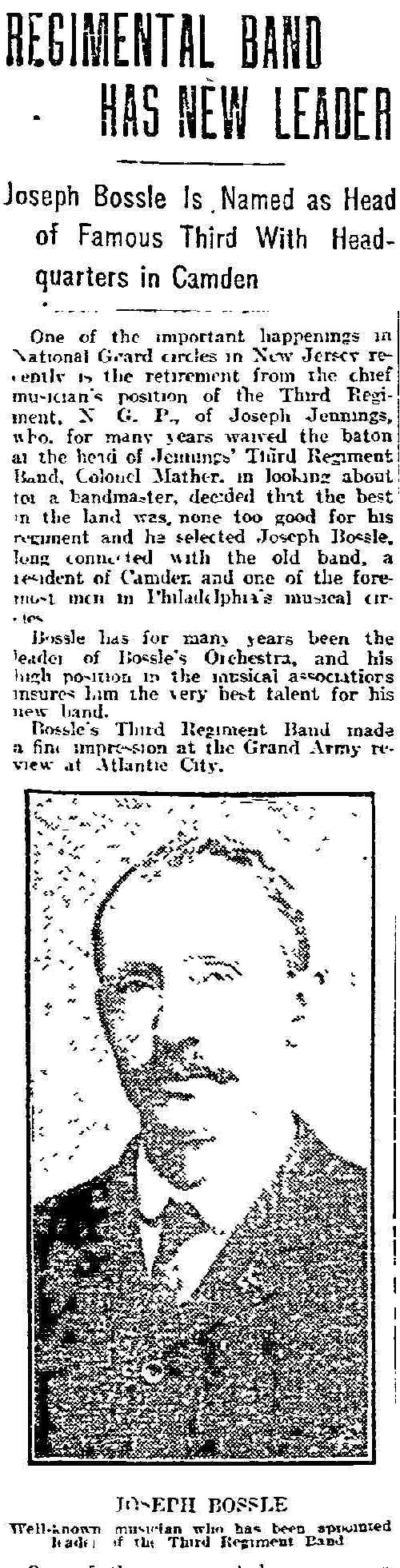
Joseph Jennings retired as chief musician of the Third Regiment in 1910, and Colonel Mather named Joseph Bossle Sr. bandmaster. A 1949 profile says Bossle became the band's leader in 1912 and reorganized it that year. His son, Joseph Bossle Jr., organized the Tall Cedars of Lebanon band in 1912, and Bossle Sr. succeeded him as its bandmaster in 1919.
Philadelphia newspaper, undated
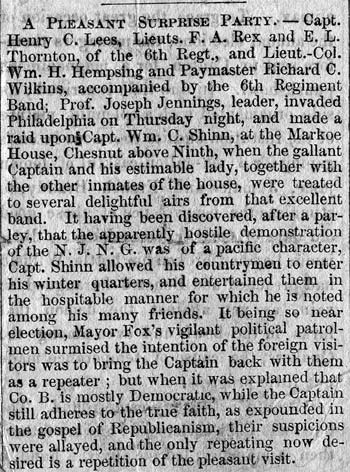
View transcription
Over the River
Philadelphia Inquirer, June 1, 1880
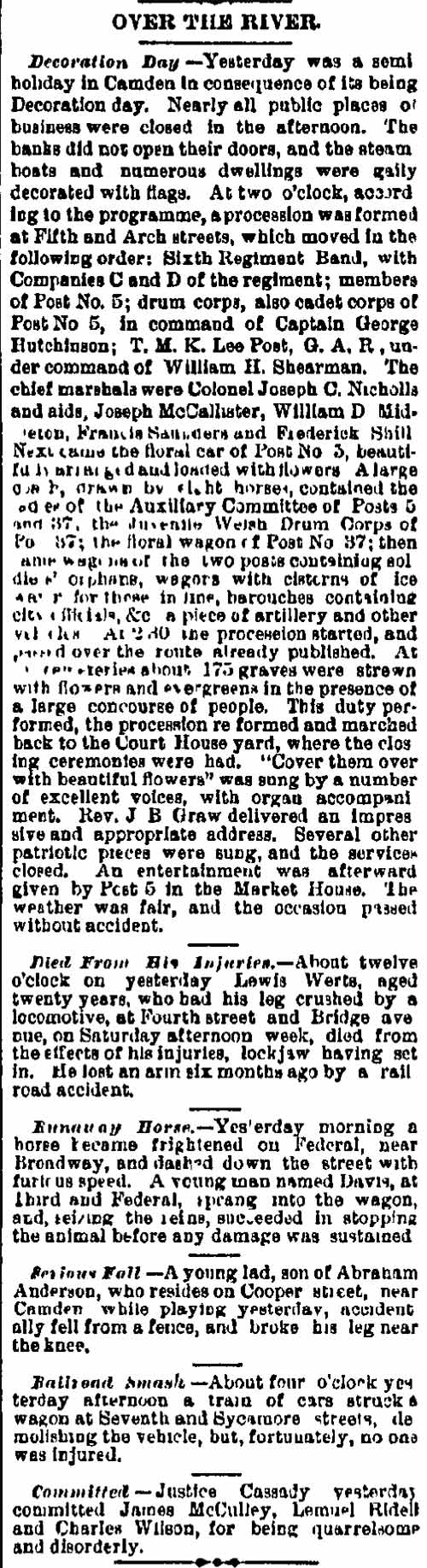
View transcription
Read the article: Over the River
Camden's Fire Laddies Parade
Philadelphia Inquirer, June 12, 1890
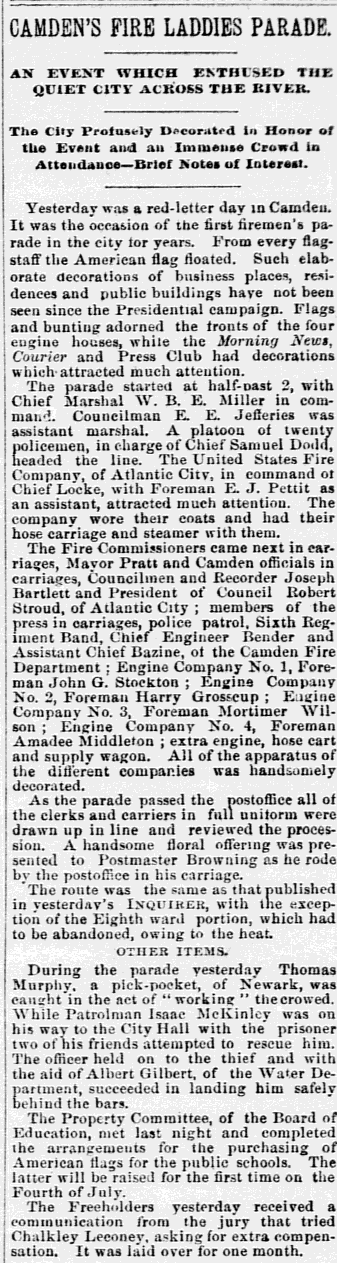
View transcription
Read the article: Camden's Fire Laddies Parade
Music Has Charms
Camden Post-Telegram, February 28, 1896
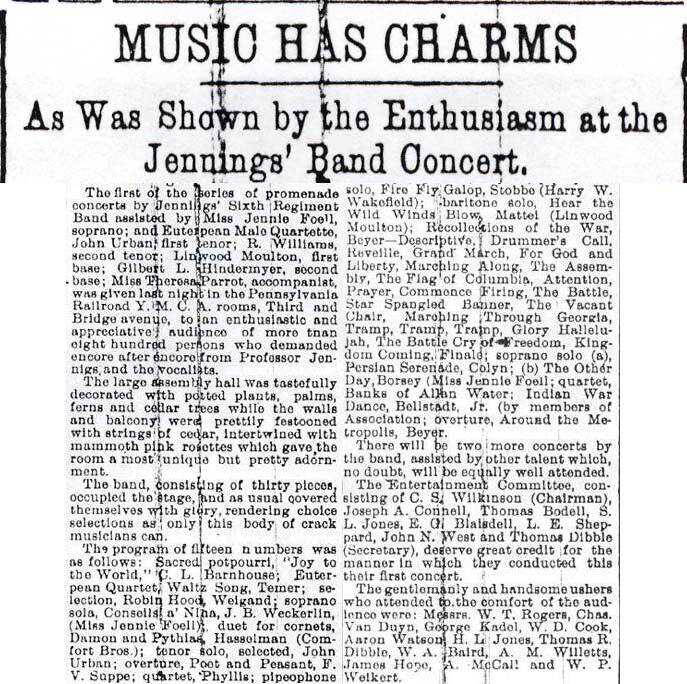
View transcription
Read the article: Music Has Charms
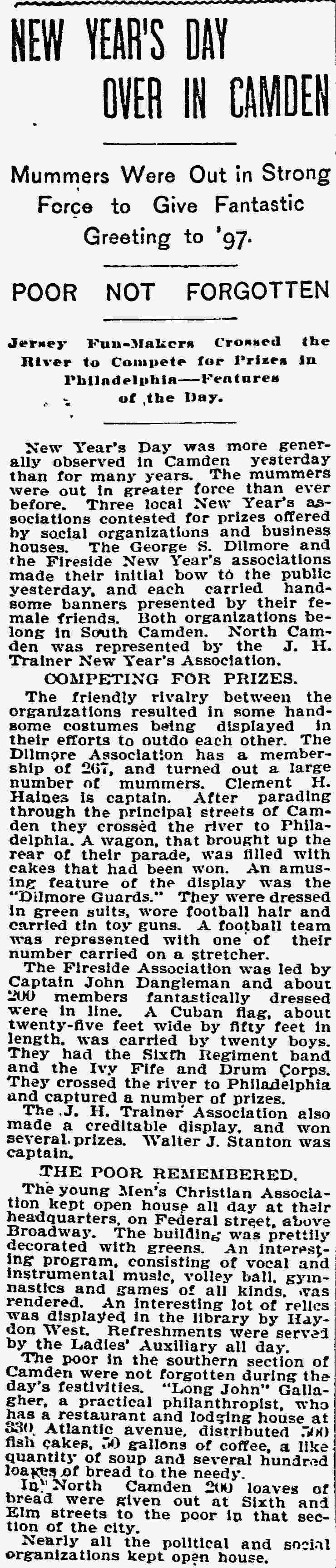
New Year's Day Over in Camden
Philadelphia Inquirer, January 2, 1897
View transcription
Read the article: New Year's Day Over in Camden
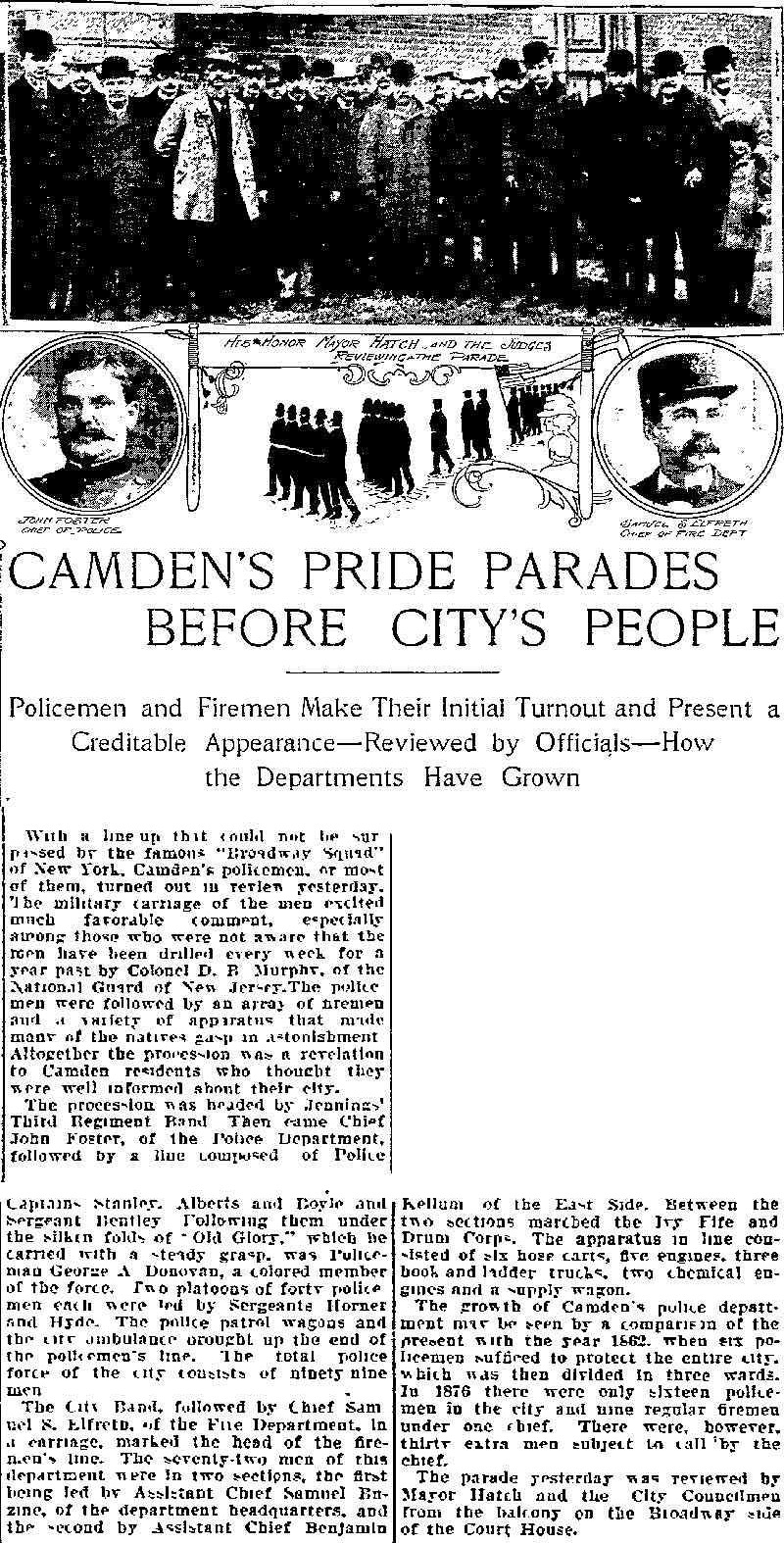
Camden's Pride Parades Before City's People
Philadelphia Inquirer, February 23, 1901
View transcription
Read the article: Camden's Pride Parades Before City's People
Jennings' Band at Moorestown
Camden Post-Telegram, June 18, 1910

View transcription
Read the article: Jennings' Band at Moorestown
Regimental Band Has New Leader
Philadelphia Inquirer, October 16, 1910
View transcription
Read the article: Regimental Band Has New Leader
Jennings' Band and Moose Band
Camden Post-Telegram, October 14, 1912

View transcription
Read the article: Jennings' Band and Moose Band
Camden News Notes
Philadelphia Inquirer, July 31, 1913
View transcription
Read the article: Camden News Notes
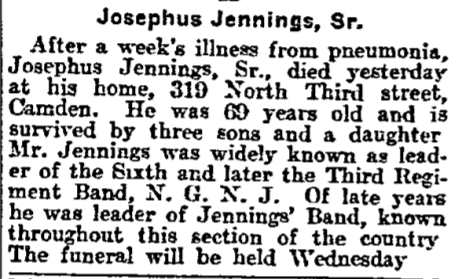
Josephus Jennings, Sr.
Philadelphia Inquirer, April 6, 1914
View transcription
Read the article: Josephus Jennings, Sr.
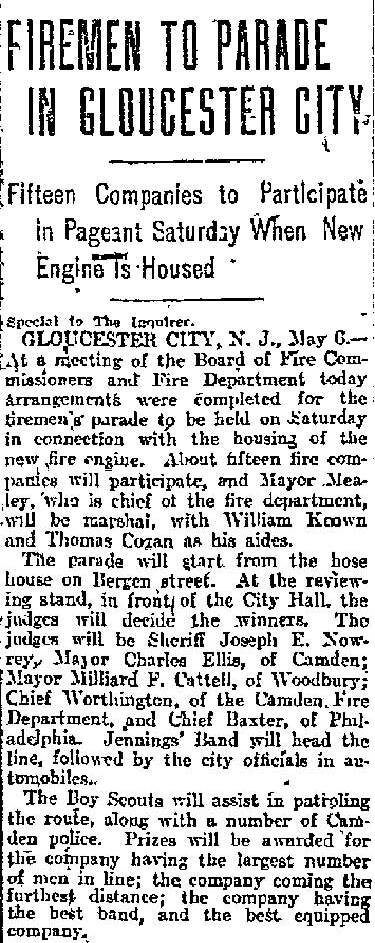
Firemen to Parade in Gloucester City
Philadelphia Inquirer, May 7, 1914
View transcription
Read the article: Firemen to Parade in Gloucester City
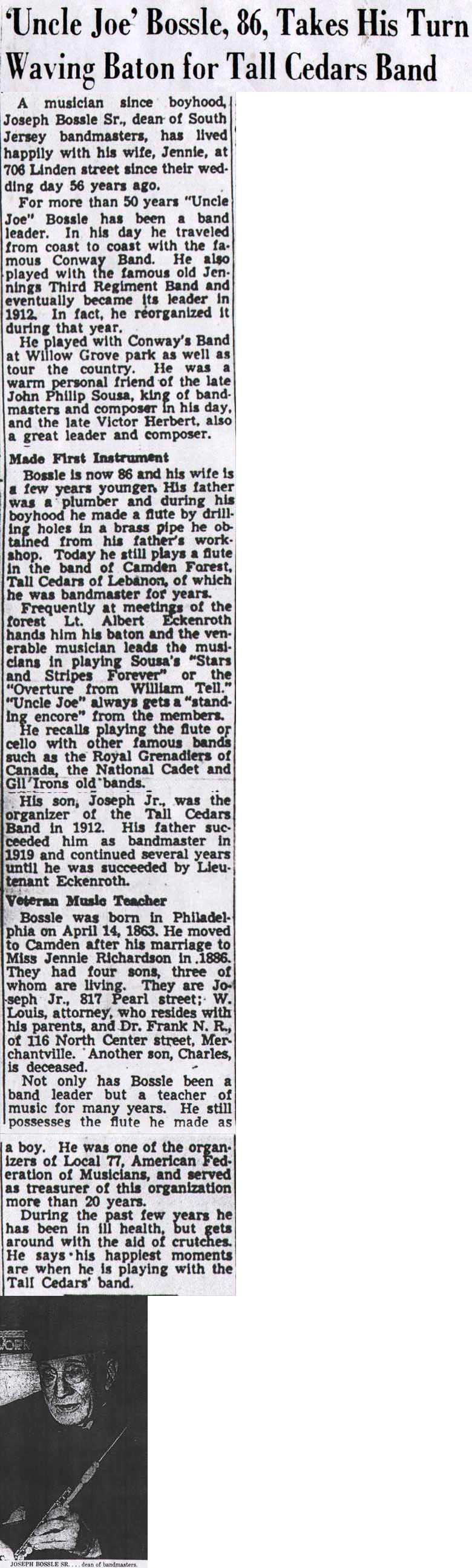
‘Uncle Joe’ Bossle, 86, Takes His Turn Waving Baton for Tall Cedars Band
Camden Courier-Post, November 4, 1949
View transcription
Read the article: ‘Uncle Joe’ Bossle, 86, Takes His Turn Waving Baton for Tall Cedars Band