Camden, New Jersey

Camden History

Historical archives documenting the people, streets, and stories of Camden, New Jersey.

Welcome to Camden History, unsurprisingly about Camden, New Jersey, a city steeped in history and brimming with stories that have left an indelible mark on the tapestry of America's past. Situated on the banks of the Delaware River, Camden has a rich and complex history that spans centuries. From its indigenous Lenape inhabitants to the bustling industrial hub of the 19th and 20th centuries, and from its pivotal role in the Underground Railroad to its contributions to the birth of the recording industry, Camden has played a significant part in shaping the nation's narrative.

Camden's origins can be traced back to the early 17th century when European settlers first arrived in the region. Over time, it evolved from a quaint village into a thriving industrial center, earning it the nickname "The City Invincible" in the late 19th century. The city's industries, including shipbuilding, manufacturing, and commerce, contributed to its growth and prosperity.

But Camden's history is not just one of industry and commerce; it's also a story of resilience, community, and cultural diversity. Throughout its past, the city has been home to waves of immigrants, each adding their unique traditions and flavors to the city's vibrant cultural mosaic.

Join us on a journey through time as we explore the people, places, and events that have shaped Camden's captivating history. From the waterfront to the neighborhoods, from famous figures to everyday citizens, we invite you to discover the hidden gems and untold tales that make Camden a city worth exploring and celebrating.

Remnants of Camden's history are all around you if you know where to look!
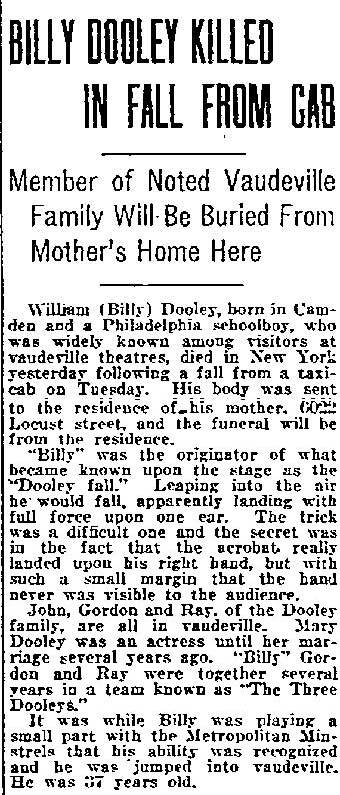
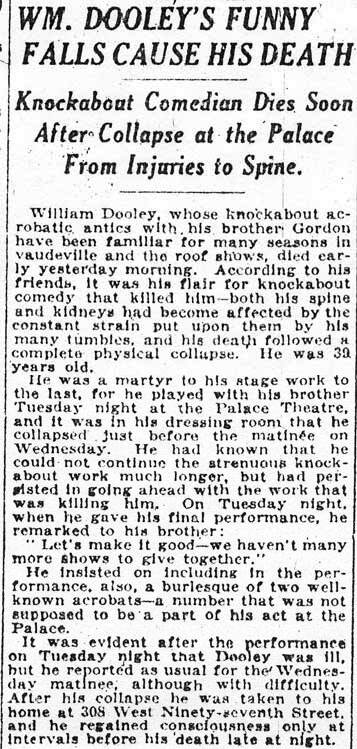
Philadelphia Inquirer article on the death of vaudeville comedian Billy Dooley, September 30, 1921
News Articles

Billy Dooley Killed in Fall From Cab

William (Billy) Dooley, born in Camden and a Philadelphia schoolboy, who was widely known among visitors at vaudeville theatres, died in New York yesterday following a fall from a taxi-cab on Tuesday.

·1 min read
News Articles

Brothers Refute Batchelder Plea of Self Defense

Harry Batchelder, taken to Cape May County jail, planned a self-defense plea in the killing of Constable William T. Cramer — a claim refuted by the Albright brothers and by the fact that no revolver was found on Cramer's body.

·2 min read
News Articles

Constable Cramer Dies of Wounds; Batchelder Caught

Constable William Cramer died of gunshot wounds sustained while serving a writ of attachment at Tuckahoe; vaudeville actor Harry Batchelder was arrested at Audubon by Captain of Detectives William Schregler and Detective Fiore Troncone.

·5 min read
charlesthumes-072621-1b.jpg
News Articles

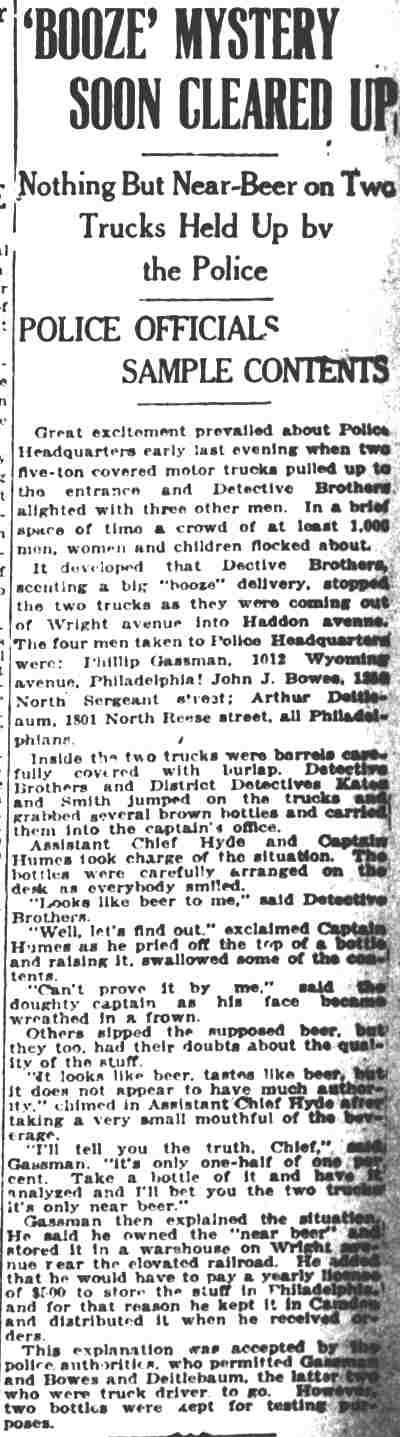
'Booze' Mystery Soon Cleared Up

Detective Brothers stops two five-ton trucks suspected of a big Prohibition-era liquor delivery; Assistant Chief Hyde and Captain Humes take charge, only to find the bottles hold nothing but near-beer.

·2 min read
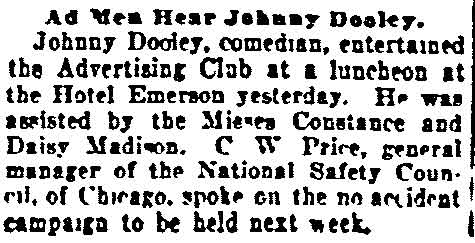
Baltimore Sun clipping, Ad Men Hear Johnny Dooley
News Articles

Ad Men Hear Johnny Dooley

Johnny Dooley, comedian, entertained the Advertising Club at a luncheon at the Hotel Emerson yesterday. He was assisted by the Misses Constance and Daisy Madison.

·1 min read
Philadelphia Inquirer, July 6, 1921
News Articles

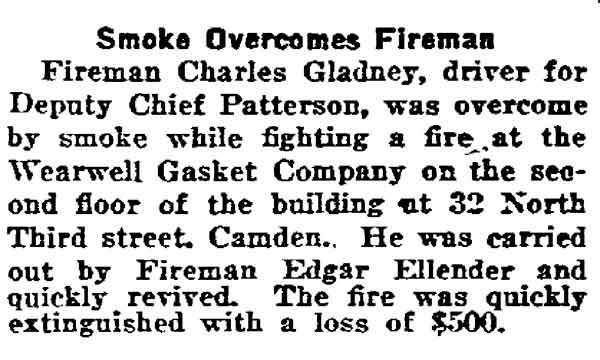
Smoke Overcomes Fireman

Fireman Charles Gladney was overcome by smoke while fighting a fire at the Wearwell Gasket Company on the second floor of 32 North Third Street, Camden, and was carried out by Fireman Edgar Ellender.

·1 min read
New Firemen Assigned for Two Platoons
News Articles

New Firemen Assigned for Two Platoons

Camden Post-Telegram - December 30, 1920 Double Shift System Becomes Effective at 8 O'clock on Saturday Morning Saturday morning at 8 o'clock the two-platoon system of the Fire Department becomes effective.

·3 min read
Funeral of Old Resident
News Articles

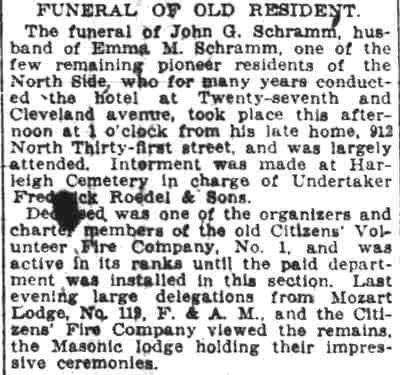
Funeral of Old Resident

The funeral of John G. Schramm, a pioneer resident of Cramer Hill who operated a hotel at 27th Street and Cleveland Avenue, was held December 1, 1920 from his home at 912 North 31st Street.

·1 min read