Aviation Machinist's Mate Third Class Livio Joseph Banda was born July 24, 1924 in Camden, NJ, the son of Biagio and Aldovina Banda. Mr. and Mrs. Banda had immigrated from Italy. In 1920 they were living with their son Vincent at 125 Birch Street, in Camden, NJ. The family later moved to 320 Birch Street. According to census records, Biagio Banda worked as a laborer in one of Camden's many factories.
After entering the United States Navy, Livio Joseph Banda trained as an aerial gunner. He served as the bow turret gunner on a Consolidated PB4Y-2 Privateer patrol bomber, as a member of squadron VPB-119. The Privateer was the naval version of the Army Air Force's well-known B-24 Liberator bomber, modified for naval use by the addition of additional electronics, crew space, and armament. The Privateer entered Navy service during the late summer of 1944. VPB-118 and VPB-119 were the first Fleet squadrons to equip with the Privateer.
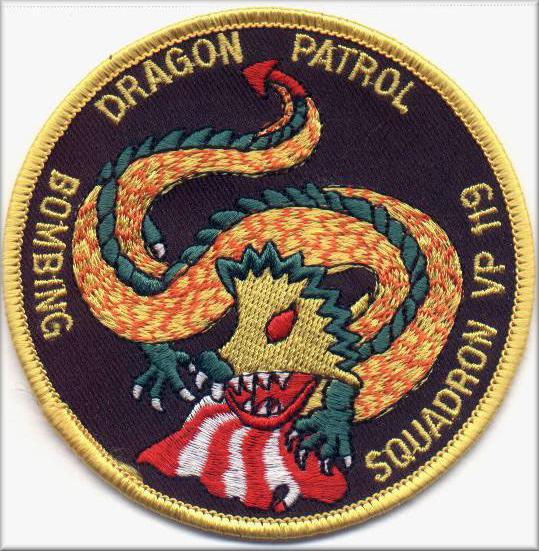
Livio Banda's squadron was established on August 15, 1944 as Patrol Bombing Squadron VB-119. On October 1, 1944, all units flying the PB4Y-1 Liberator and PB4Y-2 Privateer were re-designated as “VPB” squadrons, i.e., Patrol Bombing Squadrons.
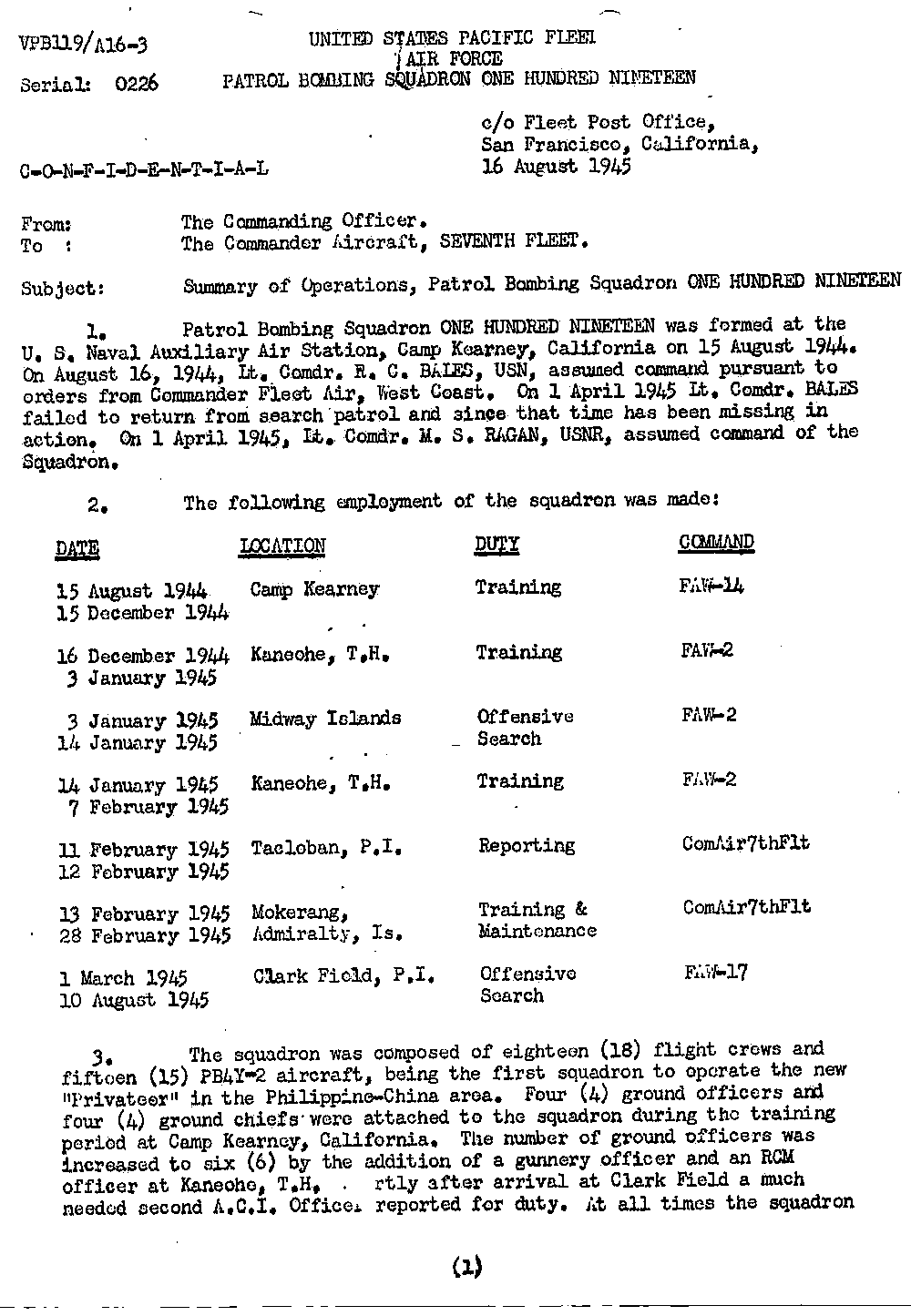
The unit's initial training station was at NAAS Camp Kearny, California until December 15, 1944. They were then deployed to Kaneohe naval station, Hawaii for further training. From January 3 through 14, 1945, the unit was deployed to Midway Island and performed “Offensive Search” operations. They then returned to Kaneohe for further training.
The first overseas deployment of the Privateer patrol bombers began on January 6, 1945, when VPB-118 left for operations in the Mariana Islands. VPB-119 deployed a few weeks later after completing training and outfitting at Kaneohe. Leaving Hawaii on February 7, 1945, the fifteen planes of VPB-119 arrived at Tacloban in the Philippine Islands on February 11, 1945. On February 13 the squadron reported to Mokerang in the Admiralty Islands for further training and maintenance, then returned to the Philippines. On March 1, 1945, VPB-119 began Offensive Search operations, flying out of Clark Field in the Philippines.
Livio Banda was assigned to Crew 4, under the command of Lieutenant J.W. Holt. Lieutenant Holt had served as the pilot for Ambassador Stanley, the nation's chief emissary to the Soviet Union. On the first day of operations from Clark Field, Lieutenant Holt's crew encountered a small Japanese convoy northeast of Okinawa with three destroyer escorts and three cargo vessels. Lieutenant Holt took the plane down through anti-aircraft fire to masthead level, and, with Aviation Machinist's Mate Banda manning the guns in the bow turret, proceeded to strafe the convoy. The gunfire was effective, setting off an explosion that sank one freighter. A fire was started aboard one of the destroyer escorts, and another freighter was set ablaze. Only a lack of ammunition prevented the total destruction of the Japanese convoy.
Flying with Crew 4, Livio Banda was killed in action when his plane was shot down on May 1, 1945 over Hainan Island, in the Gulf of Tonkin, off the southern coast of China. The plane and crew were listed as missing at the end of the war; however, the wreckage and remains were eventually found and were returned to the States in 1949 for burial. Relatives of another crew member (A.H. Busse) advise that the plane wreckage was found on “a hill called Pen Lu Po Ling about a mile opposite the village of Ling Tow in Kuong An Huing, Ling Shui, Hainan Island.”
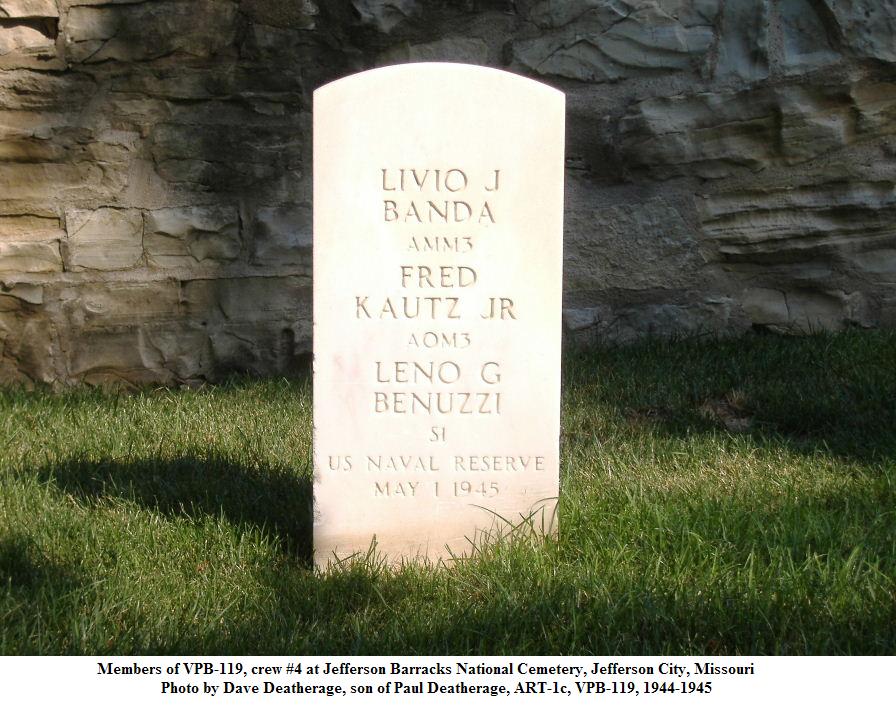
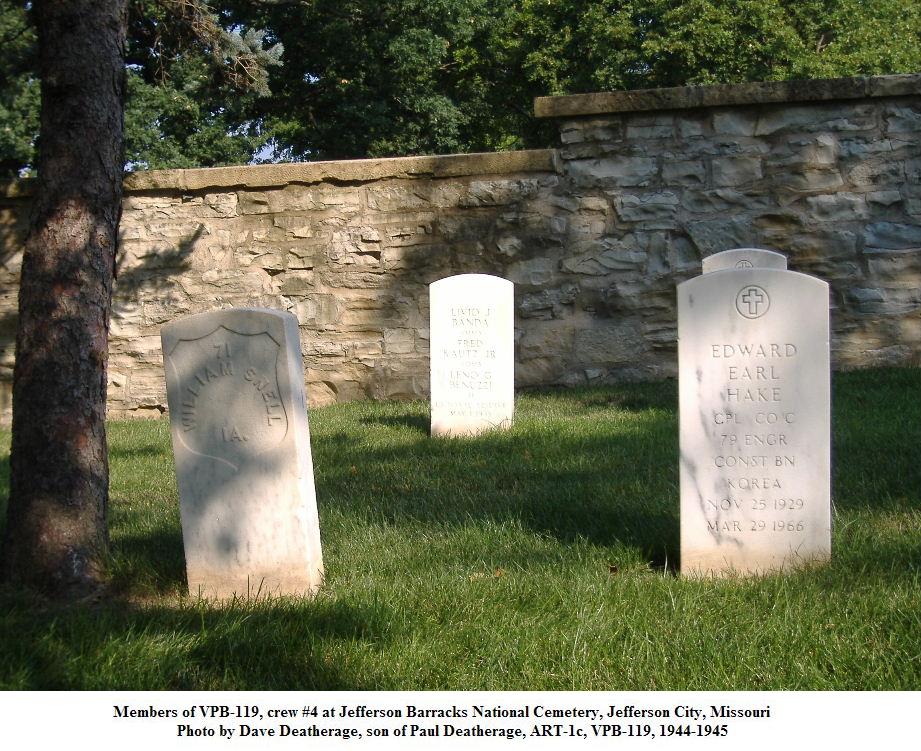
Livio J. Banda and fellow crew members Leno G. Benuzzi and Fred Kautz were buried at the Jefferson Barracks National Cemetery, Jefferson City, MO on August 5, 1949. As identification of the three men was difficult due to the circumstances of the crash and condition of the crash site, they were interred together in Plot 2 0 14–15.
Advertisement
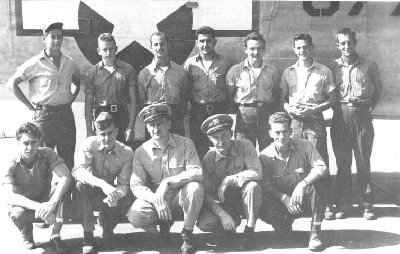
Crew 4, VPB-119
Crew 4, VPB-119 — Livio J. Banda is standing, 4th from left
Crew 4, VPB-119 — Livio J. Banda is standing, 4th from left
Circa 1944–1945. Left to right, front row: 1st Radioman Smith, M.F., ACRM; Co-pilot Baker, M.C., Ensign; Commander Holt, J.W., Lieut., USN; Co-pilot Urban, F.J., Ensign; Plane Captain Hutchison, J.B., Jr., AMMF1/c.
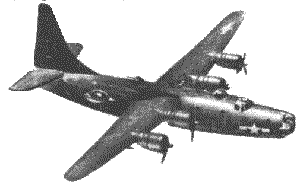
The Consolidated PB4Y-2 Privateer, the Navy's patrol bomber variant of the B-24 Liberator, flown by VPB-119.
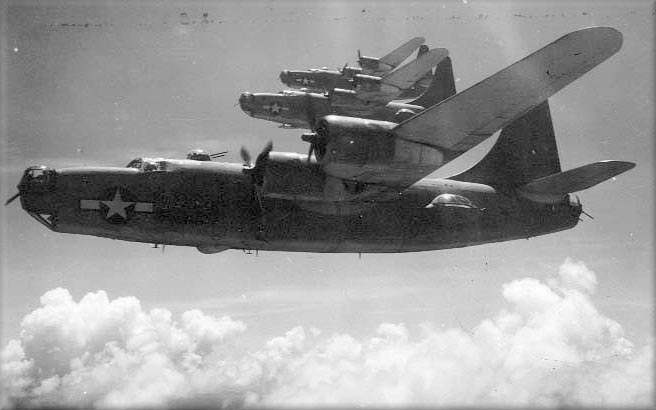
PB4Y-2 Privateers of VPB-119
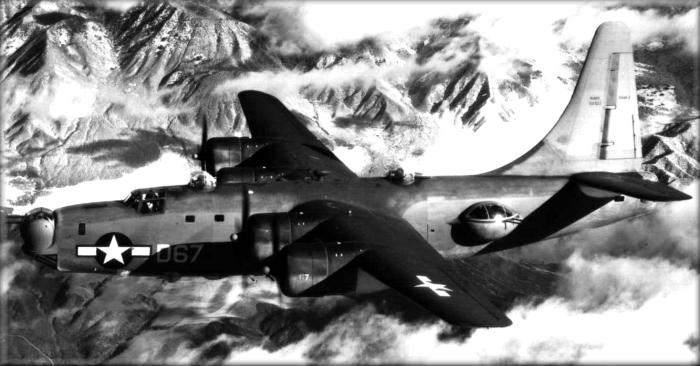
VP-119 PB4Y BUNO: D67 — photographed in California in 1944 during training at NAAS Camp Kearny
VP-119 PB4Y BUNO: D67 — photographed in California in 1944 during training at NAAS Camp KearnyView transcription
D67
[illegible]
VP-119 PB4Y BUNO: W256 — lead aircraft, Philippines 1945
VP-119 PB4Y BUNO: W256 — lead aircraft, Philippines 1945
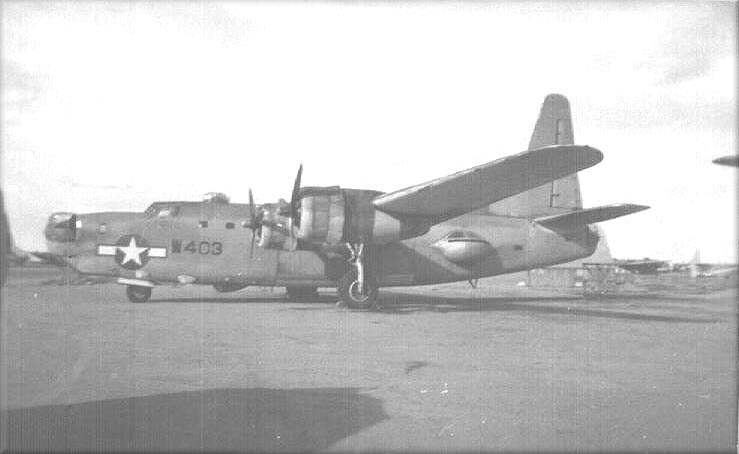
VP-119 PB4Y BUNO: W403 — Clark Field, Luzon, 1945
VP-119 PB4Y BUNO: W403 — Clark Field, Luzon, 1945View transcription
W403
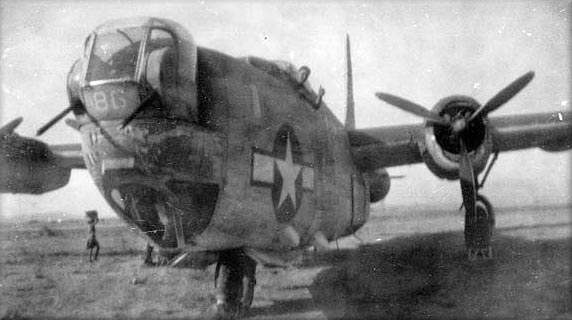
VPB-119 PB4Y-2 BUNO: W415 — Clark Field, Philippines 1945, early model with Consolidated nose turret
VPB-119 PB4Y-2 BUNO: W415 — Clark Field, Philippines 1945, early model with Consolidated nose turretView transcription
86
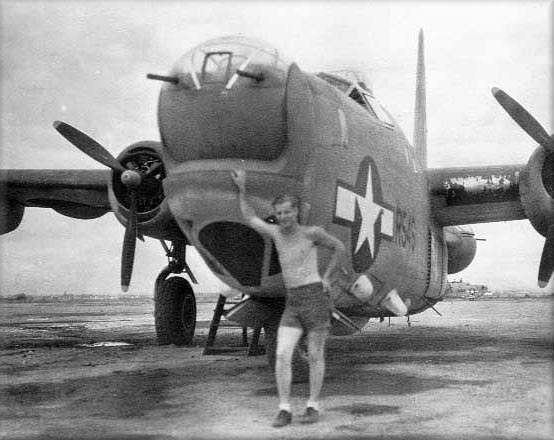
VPB-119 PB4Y-2 BUNO: R546 — Clark Field 1945, with blister-like Erco nose turret; Wallace Parmer leaning against the nose
VPB-119 PB4Y-2 BUNO: R546 — Clark Field 1945, with blister-like Erco nose turret; Wallace Parmer leaning against the nose
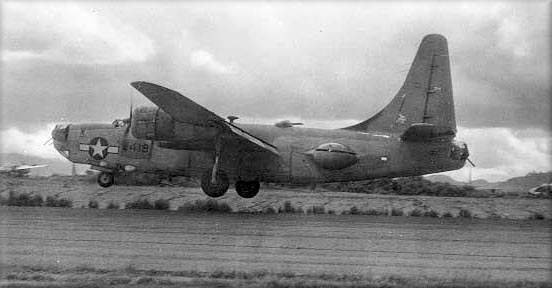
VP-119 PB4Y BUNO: W419 'Elizabeth Ann' — taking off from Clark Field, Philippines, in 1945
VP-119 PB4Y BUNO: W419 'Elizabeth Ann' — taking off from Clark Field, Philippines, in 1945
PB4Y-2 Privateers of VPB-119 photographed at NAAS Camp Kearny, California during training (1944) and at Clark Field, Philippines (1945).
Mishap Report — VPB-119
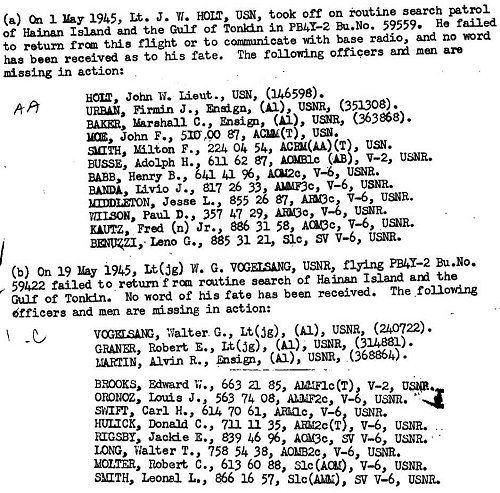
Mishap Report — VPB-119, listing crew of Crew 4 lost May 1, 1945
Mishap Report — VPB-119, listing crew of Crew 4 lost May 1, 1945View transcription
(a) On 1 May 1945, Lt. J. W. HOLT, USN, took off on routine search patrol
of Hainan Island and the Gulf of Tonkin in PB4Y-2 Bu.No. 59559. He failed
to return from this flight or to communicate with base radio, and no word
has been received as to his fate. The following officers and men are
missing in action:
AA
HOLT, John W. Lieut., USN, (146598).
URBAN, Firmin J., Ensign, (Al), USNR, (351308).
BAKER, Marshall C., Ensign, (Al), USNR, (363868).
MOE, John F., 510 00 87, ACMM(T), USN.
SMITH, Milton F., 224 04 54, ACRM(AA)(T), USN.
BUSSE, Adolph H., 611 62 87, AOMB1c (AB), V-2, USNR.
BABB, Henry B., 641 41 96, AOM2c, V-6, USNR.
BANDA, Livio J., 817 26 33, AMMF3c, V-6, USNR.
MIDDLETON, Jesse L., 855 26 87, ARM3c, V-6, USNR.
WILSON, Paul D., 357 47 29, ARM3c, V-6, USNR.
KAUTZ, Fred (n) Jr., 886 31 58, AOM3c, V-6, USNR.
BENUZZI, Leno G., 885 31 21, S1c, SV V-6, USNR.
(b) On 19 May 1945, Lt(jg) W. G. VOGELSANG, USNR, flying PB4Y-2 Bu.No.
59422 failed to return from routine search of Hainan Island and the
Gulf of Tonkin. No word of his fate has been received. The following
officers and men are missing in action:
1 -C
VOGELSANG, Walter G., Lt(jg), (Al), USNR, (240722).
GRANER, Robert E., Lt(jg), (Al), USNR, (314881).
MARTIN, Alvin R., Ensign, (Al), USNR, (368864).
BROOKS, Edward W., 663 21 85, AMMF1c(T), V-2, USNR.
ORONOZ, Louis J., 563 74 08, AMMF2c, V-6, USNR.
SWIFT, Carl H., 614 70 61, ARM1c, V-6, USNR.
HULICK, Donald C., 711 11 35, ARM2c(T), V-6, USNR.
RIGSBY, Jackie E., 839 46 96, AOM3c, SV V-6, USNR.
LONG, Walter T., 758 54 38, AOMB2c, V-6, USNR.
MOLTER, Robert C., 613 60 88, S1c(AOM), V-6, USNR.
SMITH, Leonal L., 866 16 57, S1c(AMM), SV V-6, USNR.
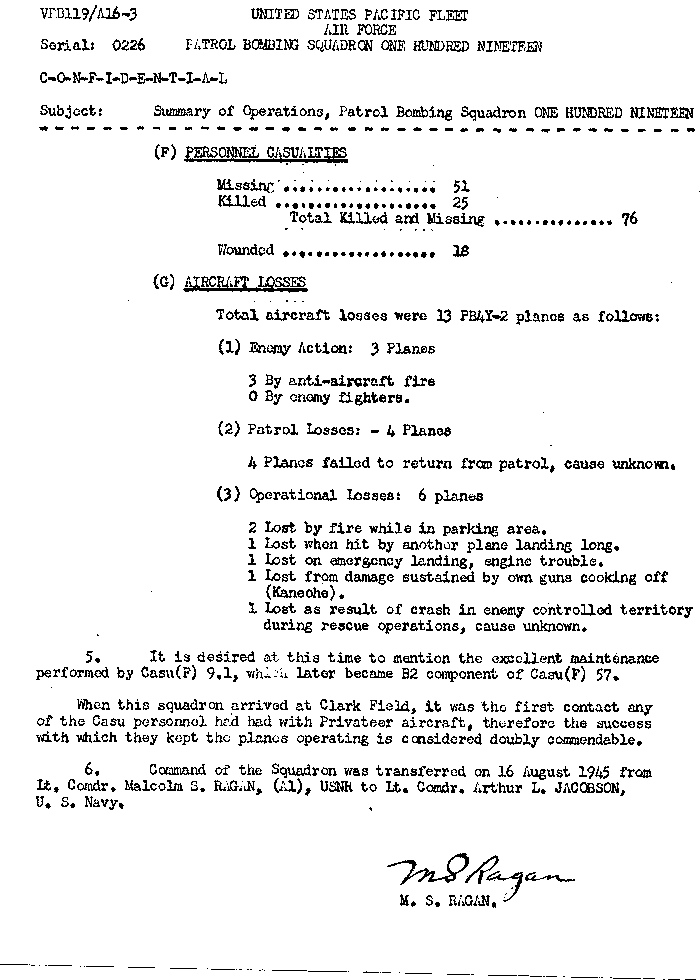
U.S. Pacific Fleet Air Force Mishap Report for VPB-119. Entry (a) records that on May 1, 1945, Lt. J.W. Holt, USN, took off on routine search patrol of Hainan Island and the Gulf of Tonkin in PB4Y-2 Bu. No. 59559. He failed to return from the flight or to communicate with base radio, and no word on his fate had been received. The following officers and men are listed as missing in action:
Summary of Operations, Patrol Bombing Squadron VPB-119
United States Pacific Fleet Air Force — August 15, 1944 – August 16, 1945
Summary of Operations, Patrol Bombing Squadron One Hundred Nineteen, U.S. Pacific Fleet Air Force, 16 August 1945, page 1
Summary of Operations, Patrol Bombing Squadron One Hundred Nineteen, U.S. Pacific Fleet Air Force, 16 August 1945, page 1View transcription
VPB119/A16-3
Serial: 0226
UNITED STATES PACIFIC FLEET
AIR FORCE
PATROL BOMBING SQUADRON ONE HUNDRED NINETEEN
c/o Fleet Post Office,
San Francisco, California,
16 August 1945
C-O-N-F-I-D-E-N-T-I-A-L
From: The Commanding Officer.
To : The Commander Aircraft, SEVENTH FLEET.
Subject: Summary of Operations, Patrol Bombing Squadron ONE HUNDRED NINETEEN
1. Patrol Bombing Squadron ONE HUNDRED NINETEEN was formed at the U. S. Naval Auxiliary Air Station, Camp Kearney, California on 15 August 1944. On August 16, 1944, Lt. Comdr. R. C. BALES, USN, assumed command pursuant to orders from Commander Fleet Air, West Coast. On 1 April 1945 Lt. Comdr. BALES failed to return from search patrol and since that time has been missing in action. On 1 April 1945, Lt. Comdr. M. S. RAGAN, USNR, assumed command of the Squadron.
2. The following employment of the squadron was made:
DATE | LOCATION | DUTY | COMMAND
15 August 1944 - 15 December 1944 | Camp Kearney | Training | FAW-14
16 December 1944 - 3 January 1945 | Kaneohe, T.H. | Training | FAW-2
3 January 1945 - 14 January 1945 | Midway Islands | Offensive Search | FAW-2
14 January 1945 - 7 February 1945 | Kaneohe, T.H. | Training | FAW-2
11 February 1945 - 12 February 1945 | Tacloban, P.I. | Reporting | ComAir7thFlt
13 February 1945 - 28 February 1945 | Mokerang, Admiralty, Is. | Training & Maintenance | ComAir7thFlt
1 March 1945 - 10 August 1945 | Clark Field, P.I. | Offensive Search | FAW-17
3. The squadron was composed of eighteen (18) flight crews and fifteen (15) PB4Y-2 aircraft, being the first squadron to operate the new "Privateer" in the Philippine-China area. Four (4) ground officers and four (4) ground chiefs were attached to the squadron during the training period at Camp Kearney, California. The number of ground officers was increased to six (6) by the addition of a gunnery officer and an RCM officer at Kaneohe, T.H.. [illegible] rtly after arrival at Clark Field a much needed second A.C.I. Office[illegible] reported for duty. At all times the squadron
(1)
Summary of Operations, Patrol Bombing Squadron One Hundred Nineteen, U.S. Pacific Fleet Air Force, 16 August 1945, page 2
Summary of Operations, Patrol Bombing Squadron One Hundred Nineteen, U.S. Pacific Fleet Air Force, 16 August 1945, page 2View transcription
VPB119/A16-3
UNITED STATES PACIFIC FLEET
AIR FORCE
Serial: 0226
PATROL BOMBING SQUADRON ONE HUNDRED NINETEEN
C-O-N-F-I-D-E-N-T-I-A-L
Subject: Summary of Operations, Patrol Bombing Squadron ONE HUNDRED NINETEEN
complement has included two yeomen who have carried a heavy load of work, and the addition of a third yeoman is recommended.
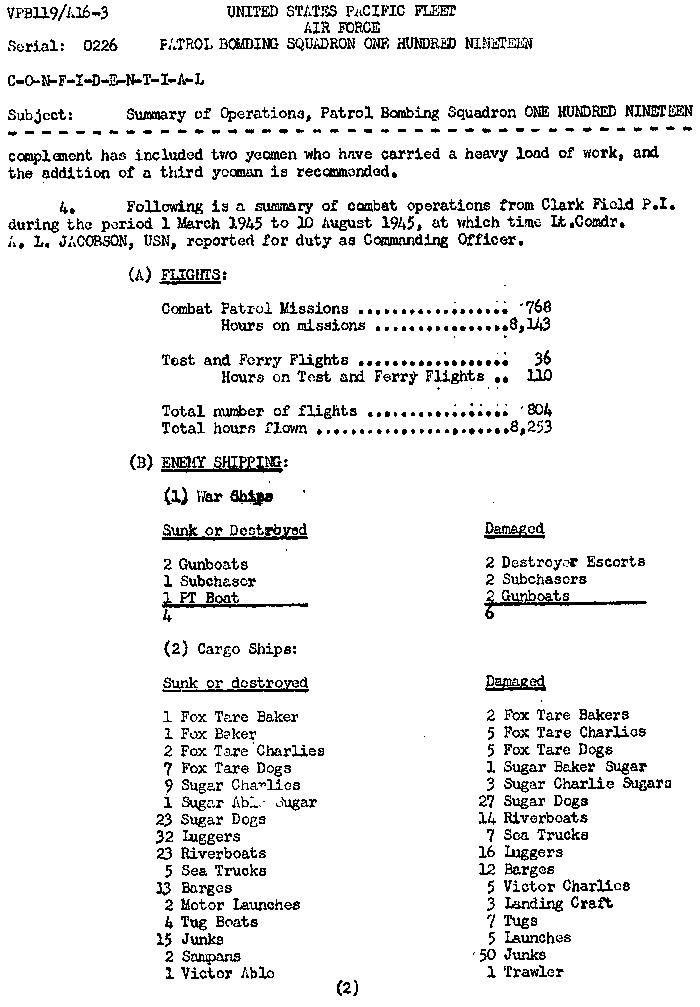
4. Following is a summary of combat operations from Clark Field P.I. during the period 1 March 1945 to 10 August 1945, at which time Lt.Comdr. A. L. JACOBSON, USN, reported for duty as Commanding Officer.
(A) FLIGHTS:
Combat Patrol Missions ................ 768
Hours on missions ................ 8,143
Test and Ferry Flights ................ 36
Hours on Test and Ferry Flights .. 110
Total number of flights ................ 804
Total hours flown ................ 8,253
(B) ENEMY SHIPPING:
(1) War Ships
Sunk or Destroyed | Damaged
2 Gunboats | 2 Destroyer Escorts
1 Subchaser | 2 Subchasers
1 PT Boat | 2 Gunboats
4 | 6
(2) Cargo Ships:
Sunk or destroyed | Damaged
1 Fox Tare Baker | 2 Fox Tare Bakers
1 Fox Baker | 5 Fox Tare Charlies
2 Fox Tare Charlies | 5 Fox Tare Dogs
7 Fox Tare Dogs | 1 Sugar Baker Sugar
9 Sugar Charlies | 3 Sugar Charlie Sugars
1 Sugar Able Sugar | 27 Sugar Dogs
23 Sugar Dogs | 14 Riverboats
32 Luggers | 7 Sea Trucks
23 Riverboats | 16 Luggers
5 Sea Trucks | 12 Barges
13 Barges | 5 Victor Charlies
2 Motor Launches | 3 Landing Craft
4 Tug Boats | 7 Tugs
15 Junks | 5 Launches
2 Sampans | 50 Junks
1 Victor Able | 1 Trawler
(2)
Summary of Operations, Patrol Bombing Squadron One Hundred Nineteen, U.S. Pacific Fleet Air Force, 16 August 1945, final page, signed by M. S. Ragan
Summary of Operations, Patrol Bombing Squadron One Hundred Nineteen, U.S. Pacific Fleet Air Force, 16 August 1945, final page, signed by M. S. RaganView transcription
VPB119/A16-3
UNITED STATES PACIFIC FLEET
AIR FORCE
Serial: 0226
PATROL BOMBING SQUADRON ONE HUNDRED NINETEEN
C-O-N-F-I-D-E-N-T-I-A-L
Subject: Summary of Operations, Patrol Bombing Squadron ONE HUNDRED NINETEEN
(F) PERSONNEL CASUALTIES:
Missing .................... 51
Killed ..................... 25
Total Killed and Missing ................ 76
Wounded .................... 18
(G) AIRCRAFT LOSSES:
Total aircraft losses were 13 PB4Y-2 planes as follows:
(1) Enemy Action: 3 Planes
3 By anti-aircraft fire
0 By enemy fighters.
(2) Patrol Losses: - 4 Planes
4 Planes failed to return from patrol, cause unknown.
(3) Operational Losses: 6 planes
2 Lost by fire while in parking area.
1 Lost when hit by another plane landing long.
1 Lost on emergency landing, engine trouble.
1 Lost from damage sustained by own guns cooking off (Kaneohe).
1 Lost as result of crash in enemy controlled territory during rescue operations, cause unknown.
5. It is desired at this time to mention the excellent maintenance performed by Casu(F) 9.1, which later became B2 component of Casu(F) 57.
When this squadron arrived at Clark Field, it was the first contact any of the Casu personnel had had with Privateer aircraft, therefore the success with which they kept the planes operating is considered doubly commendable.
6. Command of the Squadron was transferred on 16 August 1945 from Lt. Comdr. Malcolm S. RAGAN, (A1), USNR to Lt. Comdr. Arthur L. JACOBSON, U. S. Navy.
[handwritten signature] M. S. Ragan
M. S. RAGAN.
Summary of Operations, Patrol Bombing Squadron One Hundred Nineteen, U.S. Pacific Fleet Air Force, 16 August 1945, printed page 3
Summary of Operations, Patrol Bombing Squadron One Hundred Nineteen, U.S. Pacific Fleet Air Force, 16 August 1945, printed page 3View transcription
VPB119/A16-3
UNITED STATES PACIFIC FLEET
AIR FORCE
Serial: 0226
PATROL BOMBING SQUADRON ONE HUNDRED NINETEEN
C-O-N-F-I-D-E-N-T-I-A-L
Subject: Summary of Operations, Patrol Bombing Squadron ONE HUNDRED NINETEEN
Sunk or destroyed | Damaged
2 Landing Craft | 4 Patrol Craft
2 Converted Patrol Craft | 1 Fishing Craft
3 Patrol Craft | 1 Lumber Raft
1 Fishing Craft | 1 Unidentified
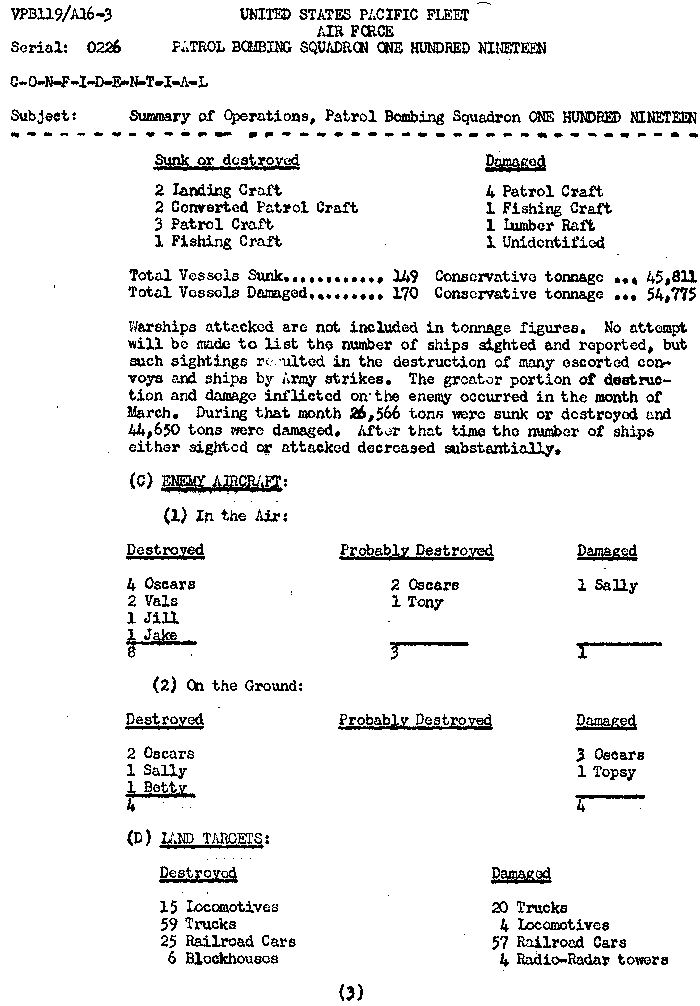
Total Vessels Sunk............ 149 Conservative tonnage ... 45,811
Total Vessels Damaged........ 170 Conservative tonnage ... 54,775
Warships attacked are not included in tonnage figures. No attempt will be made to list the number of ships sighted and reported, but such sightings resulted in the destruction of many escorted convoys and ships by Army strikes. The greater portion of destruction and damage inflicted on the enemy occurred in the month of March. During that month 26,566 tons were sunk or destroyed and 44,650 tons were damaged. After that time the number of ships either sighted or attacked decreased substantially.
(C) ENEMY AIRCRAFT:
(1) In the Air:
Destroyed | Probably Destroyed | Damaged
4 Oscars | 2 Oscars | 1 Sally
2 Vals | 1 Tony |
1 Jill | |
1 Jake | |
8 | 3 | 1
(2) On the Ground:
Destroyed | Probably Destroyed | Damaged
2 Oscars | | 3 Oscars
1 Sally | | 1 Topsy
1 Betty | |
4 | | 4
(D) LAND TARGETS:
Destroyed | Damaged
15 Locomotives | 20 Trucks
59 Trucks | 4 Locomotives
25 Railroad Cars | 57 Railroad Cars
6 Blockhouses | 4 Radio-Radar towers
(3)
Summary of Operations, Patrol Bombing Squadron One Hundred Nineteen, U.S. Pacific Fleet Air Force. The squadron was formed on August 15, 1944 and flew the PB4Y-2 Privateer. Initial training was at NAAS Camp Kearny, California, followed by deployment to Kaneohe Naval Air Station, Hawaii, and Midway Island for offensive search operations.
The squadron arrived at Tacloban, Philippines on February 11, 1945, then moved to Clark Field on March 1, 1945 to begin combat operations. During its operational period from March 1 to August 10, 1945, the squadron flew 768 combat patrol missions totaling 8,143 hours. Personnel casualties: 51 missing, 25 killed, 76 total killed and missing. Total aircraft losses: 13 PB4Y-2 planes — 3 by enemy action, 4 patrol losses, 6 operational losses.
Enemy shipping sunk or destroyed: 149 vessels. Enemy aircraft destroyed in air: 4 Oscars, 2 Vals, 1 Jill, 1 Jake. Command of the squadron was transferred on August 16, 1945 from Lt. Comdr. Malcolm S. Ragan (A1), USNR to Lt. Comdr. Arthur L. Jacobson, U.S. Navy.
VPB-119: First Fleet Privateers
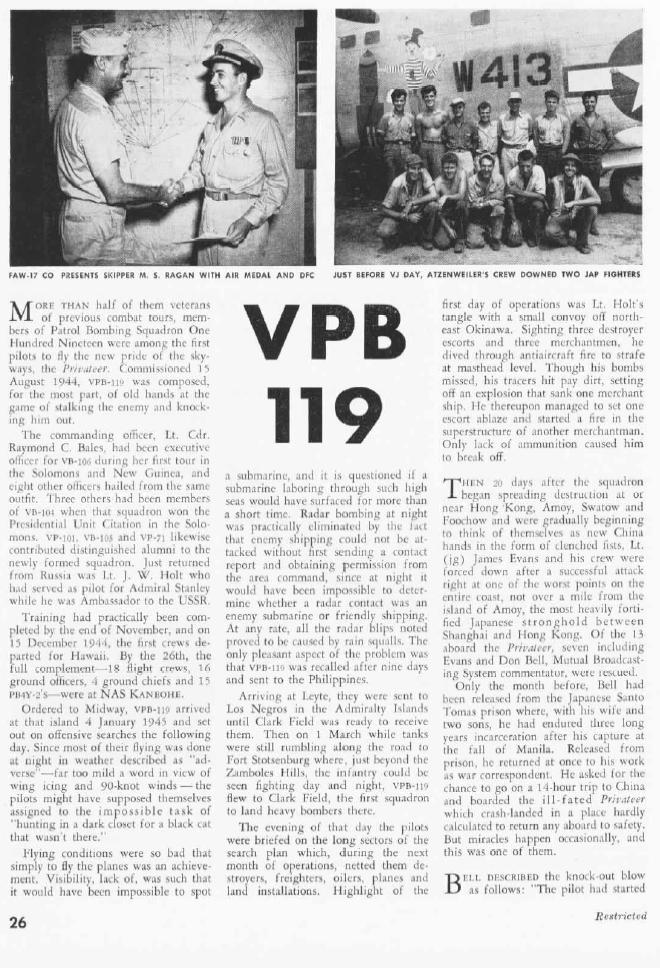
Naval Aviation News, June 1949, "VPB-119: First Fleet Privateers", page 26
Naval Aviation News, June 1949, "VPB-119: First Fleet Privateers", page 26View transcription
FAW-17 CO PRESENTS SKIPPER M. S. RAGAN WITH AIR MEDAL AND DFC
JUST BEFORE VJ DAY, ATZENWEILER'S CREW DOWNED TWO JAP FIGHTERS
MORE than half of them veterans of previous combat tours, members of Patrol Bombing Squadron One Hundred Nineteen were among the first pilots to fly the new pride of the skyways, the Privateer. Commissioned 15 August 1944, VPB-119 was composed, for the most part, of old hands at the game of stalking the enemy and knocking him out.
The commanding officer, Lt. Cdr. Raymond C. Bales, had been executive officer for VB-106 during her first tour in the Solomons and New Guinea, and eight other officers hailed from the same outfit. Three others had been members of VB-104 when that squadron won the Presidential Unit Citation in the Solomons. VP-101, VB-10[illegible digit] and VP-71 likewise contributed distinguished alumni to the newly formed squadron. Just returned from Russia was Lt. J. W. Holt who had served as pilot for Admiral Stanley while he was Ambassador to the USSR.
Training had practically been completed by the end of November, and on 15 December 1944, the first crews departed for Hawaii. By the 26th, the full complement-18 flight crews, 16 ground officers, 4 ground chiefs and 15 PB4Y-2's-were at NAS KANEOHE.
Ordered to Midway, VPB-119 arrived at that island 4 January 1945 and set out on offensive searches the following day. Since most of their flying was done at night in weather described as "adverse"-far too mild a word in view of wing icing and 90-knot winds-the pilots might have supposed themselves assigned to the impossible task of "hunting in a dark closet for a black cat that wasn't there."
Flying conditions were so bad that simply to fly the planes was an achievement. Visibility, lack of, was such that it would have been impossible to spot
VPB
119
a submarine, and it is questioned if a submarine laboring through such high seas would have surfaced for more than a short time. Radar bombing at night was practically eliminated by the fact that enemy shipping could not be attacked without first sending a contact report and obtaining permission from the area command, since at night it would have been impossible to determine whether a radar contact was an enemy submarine or friendly shipping. At any rate, all the radar blips noted proved to be caused by rain squalls. The only pleasant aspect of the problem was that VPB-119 was recalled after nine days and sent to the Philippines.
Arriving at Leyte, they were sent to Los Negros in the Admiralty Islands until Clark Field was ready to receive them. Then on 1 March while tanks were still rumbling along the road to Fort Stotsenburg where, just beyond the Zamboles Hills, the infantry could be seen fighting day and night, VPB-119 flew to Clark Field, the first squadron to land heavy bombers there.
The evening of that day the pilots were briefed on the long sectors of the search plan which, during the next month of operations, netted them destroyers, freighters, oilers, planes and land installations. Highlight of the
first day of operations was Lt. Holt's tangle with a small convoy off northeast Okinawa. Sighting three destroyer escorts and three merchantmen, he dived through antiaircraft fire to strafe at masthead level. Though his bombs missed, his tracers hit pay dirt, setting off an explosion that sank one merchant ship. He thereupon managed to set one escort ablaze and started a fire in the superstructure of another merchantman. Only lack of ammunition caused him to break off.
THEN 20 days after the squadron began spreading destruction at or near Hong Kong, Amoy, Swatow and Foochow and were gradually beginning to think of themselves as new China hands in the form of clenched fists, Lt. (jg) James Evans and his crew were forced down after a successful attack right at one of the worst points on the entire coast, not over a mile from the island of Amoy, the most heavily fortified Japanese stronghold between Shanghai and Hong Kong. Of the 13 aboard the Privateer, seven including Evans and Don Bell, Mutual Broadcasting System commentator, were rescued.
Only the month before, Bell had been released from the Japanese Santo Tomas prison where, with his wife and two sons, he had endured three long years incarceration after his capture at the fall of Manila. Released from prison, he returned at once to his work as war correspondent. He asked for the chance to go on a 14-hour trip to China and boarded the ill-fated Privateer which crash-landed in a place hardly calculated to return any aboard to safety. But miracles happen occasionally, and this was one of them.
BELL DESCRIBED the knock-out blow as follows: "The pilot had started
26
Restricted
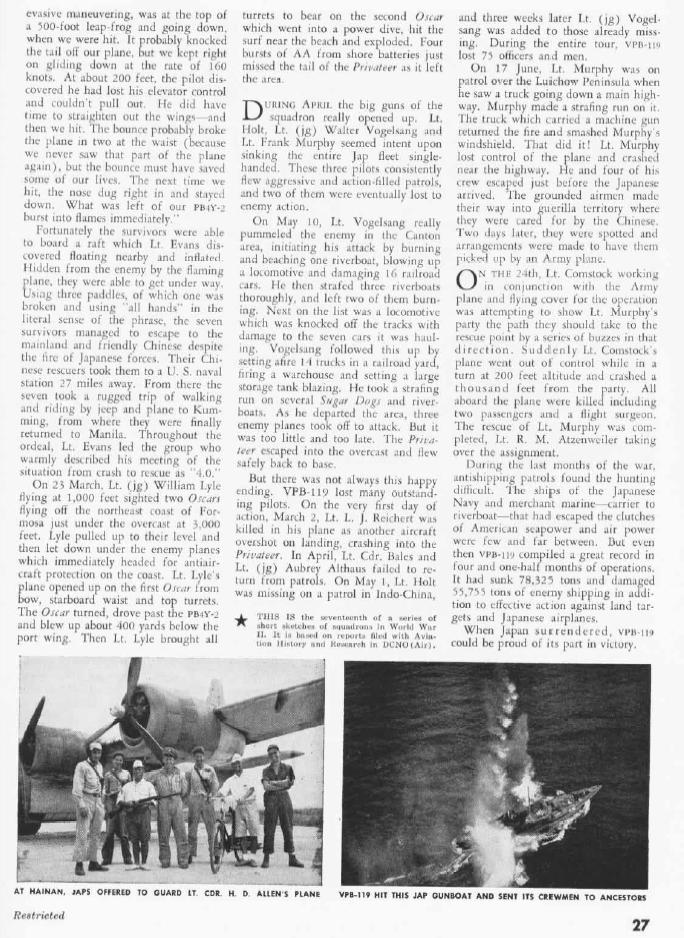
Naval Aviation News, June 1949, "VPB-119: First Fleet Privateers", page 27
Naval Aviation News, June 1949, "VPB-119: First Fleet Privateers", page 27View transcription
evasive maneuvering, was at the top of a 500-foot leap-frog and going down, when we were hit. It probably knocked the tail off our plane, but we kept right on gliding down at the rate of 160 knots. At about 200 feet, the pilot discovered he had lost his elevator control and couldn't pull out. He did have time to straighten out the wings-and then we hit. The bounce probably broke the plane in two at the waist (because we never saw that part of the plane again), but the bounce must have saved some of our lives. The next time we hit, the nose dug right in and stayed down. What was left of our PB4Y-2 burst into flames immediately."
Fortunately the survivors were able to board a raft which Lt. Evans discovered floating nearby and inflated. Hidden from the enemy by the flaming plane, they were able to get under way. Using three paddles, of which one was broken and using "all hands" in the literal sense of the phrase, the seven survivors managed to escape to the mainland and friendly Chinese despite the fire of Japanese forces. Their Chinese rescuers took them to a U. S. naval station 27 miles away. From there the seven took a rugged trip of walking and riding by jeep and plane to Kunming, from where they were finally returned to Manila. Throughout the ordeal, Lt. Evans led the group who warmly described his meeting of the situation from crash to rescue as "4.0."
On 23 March, Lt. (jg) William Lyle flying at 1,000 feet sighted two Oscars flying off the northeast coast of Formosa just under the overcast at 3,000 feet. Lyle pulled up to their level and then let down under the enemy planes which immediately headed for antiaircraft protection on the coast. Lt. Lyle's plane opened up on the first Oscar from bow, starboard waist and top turrets. The Oscar turned, drove past the PB4Y-2 and blew up about 400 yards below the port wing. Then Lt. Lyle brought all
turrets to bear on the second Oscar which went into a power dive, hit the surf near the beach and exploded. Four bursts of AA from shore batteries just missed the tail of the Privateer as it left the area.
DURING APRIL the big guns of the squadron really opened up. Lt. Holt, Lt. (jg) Walter Vogelsang and Lt. Frank Murphy seemed intent upon sinking the entire Jap fleet single-handed. These three pilots consistently flew aggressive and action-filled patrols, and two of them were eventually lost to enemy action.
On May 10, Lt. Vogelsang really pummeled the enemy in the Canton area, initiating his attack by burning and beaching one riverboat, blowing up a locomotive and damaging 16 railroad cars. He then strafed three riverboats thoroughly, and left two of them burning. Next on the list was a locomotive which was knocked off the tracks with damage to the seven cars it was hauling. Vogelsang followed this up by setting afire 14 trucks in a railroad yard, firing a warehouse and setting a large storage tank blazing. He took a strafing run on several Sugar Dogs and riverboats. As he departed the area, three enemy planes took off to attack. But it was too little and too late. The Privateer escaped into the overcast and flew safely back to base.
But there was not always this happy ending. VPB-119 lost many outstanding pilots. On the very first day of action, March 2, Lt. L. J. Reichert was killed in his plane as another aircraft overshot on landing, crashing into the Privateer. In April, Lt. Cdr. Bales and Lt. (jg) Aubrey Althaus failed to return from patrols. On May 1, Lt. Holt was missing on a patrol in Indo-China,
THIS IS the seventeenth of a series of short sketches of squadrons in World War II. It is based on reports filed with Aviation History and Research in DCNO (Air).
and three weeks later Lt. (jg) Vogelsang was added to those already missing. During the entire tour, VPB-119 lost 75 officers and men.
On 17 June, Lt. Murphy was on patrol over the Luichow Peninsula when he saw a truck going down a main highway. Murphy made a strafing run on it. The truck which carried a machine gun returned the fire and smashed Murphy's windshield. That did it! Lt. Murphy lost control of the plane and crashed near the highway. He and four of his crew escaped just before the Japanese arrived. The grounded airmen made their way into guerilla territory where they were cared for by the Chinese. Two days later, they were spotted and arrangements were made to have them picked up by an Army plane.
ON THE 24th, Lt. Comstock working in conjunction with the Army plane and flying cover for the operation was attempting to show Lt. Murphy's party the path they should take to the rescue point by a series of buzzes in that direction. Suddenly Lt. Comstock's plane went out of control while in a turn at 200 feet altitude and crashed a thousand feet from the party. All aboard the plane were killed including two passengers and a flight surgeon. The rescue of Lt. Murphy was completed, Lt. R. M. Atzenweiler taking over the assignment.
During the last months of the war, antishipping patrols found the hunting difficult. The ships of the Japanese Navy and merchant marine-carrier to riverboat-that had escaped the clutches of American seapower and air power were few and far between. But even then VPB-119 compiled a great record in four and one-half months of operations. It had sunk 78,325 tons and damaged 55,755 tons of enemy shipping in addition to effective action against land targets and Japanese airplanes.
When Japan surrendered, VPB-119 could be proud of its part in victory.
AT HAINAN, JAPS OFFERED TO GUARD LT. CDR. H. D. ALLEN'S PLANE
VPB-119 HIT THIS JAP GUNBOAT AND SENT ITS CREWMEN TO ANCESTORS
Restricted
27
Naval Aviation News, June 1949 — article on VPB-119, one of the first Fleet squadrons to fly the PB4Y-2 Privateer. The article describes the squadron's combat record and the crew's actions against Japanese shipping in the Pacific.
Crew 4 at Jefferson Barracks National Cemetery
Gravestone of Livio J. Banda, Fred Kautz Jr. and Leno G. Benuzzi, VPB-119 Crew 4, Jefferson Barracks National Cemetery, Jefferson City, Missouri
Gravestone of Livio J. Banda, Fred Kautz Jr. and Leno G. Benuzzi, VPB-119 Crew 4, Jefferson Barracks National Cemetery, Jefferson City, MissouriView transcription
LIVIO J
BANDA
AMM3
FRED
KAUTZ JR
AOM3
LENO G
BENUZZI
SI
US NAVAL RESERVE
MAY 1 1945
Members of VPB-119, crew #4 at Jefferson Barracks National Cemetery, Jefferson City, Missouri
Photo by Dave Deatherage, son of Paul Deatherage, ART-1c, VPB-119, 1944-1945
Gravestones at Jefferson Barracks National Cemetery, Jefferson City, Missouri, including the stone of VPB-119 Crew 4 members
Gravestones at Jefferson Barracks National Cemetery, Jefferson City, Missouri, including the stone of VPB-119 Crew 4 membersView transcription
71
WILLIAM SNELL
IA.
LIVIO J
BANDA
[illegible]
FRED
KAUTZ JR
[illegible]
LENO G
BENUZZI
[illegible]
[illegible]
[illegible]
EDWARD
EARL
HAKE
CPL CO C
79 ENGR
CONST BN
KOREA
NOV 25 1929
MAR 29 1966
Members of VPB-119, crew #4 at Jefferson Barracks National Cemetery, Jefferson City, Missouri
Photo by Dave Deatherage, son of Paul Deatherage, ART-1c, VPB-119, 1944-1945
Members of VPB-119, Crew 4 at Jefferson Barracks National Cemetery, Jefferson City, MO. Photo by Dave Deatherage, son of Paul Deatherage, ART-1c, VPB-119, 1944–1945.