Streets
Carteret Street
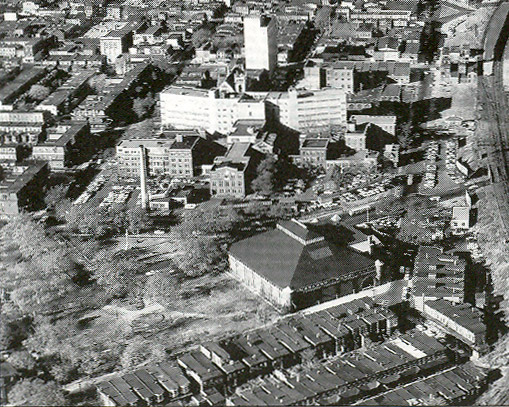
Carteret Street, in Camden's old Ninth Ward, ran just two blocks from Mickle Street to Newton Avenue. Built after 1891, the street fell victim to the construction of Interstate 676 in the 1970s.
Tag
Carteret Street, in Camden's old Ninth Ward, ran just two blocks from Mickle Street to Newton Avenue. Built after 1891, the street fell victim to the construction of Interstate 676 in the 1970s.
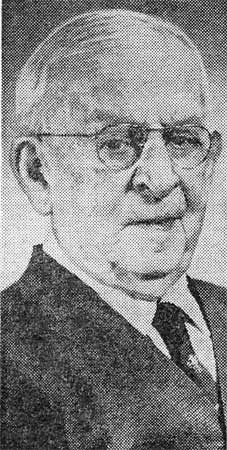
Robert Hartmann (1876–1967), son of cigar manufacturer Frank J. Hartmann Sr., grew up in Camden's labor movement and was elected the first president of the Camden County Central Labor Union when it was formed in 1908. The 1920 Census found him and his family at 16 North 23rd Street in East Camden.
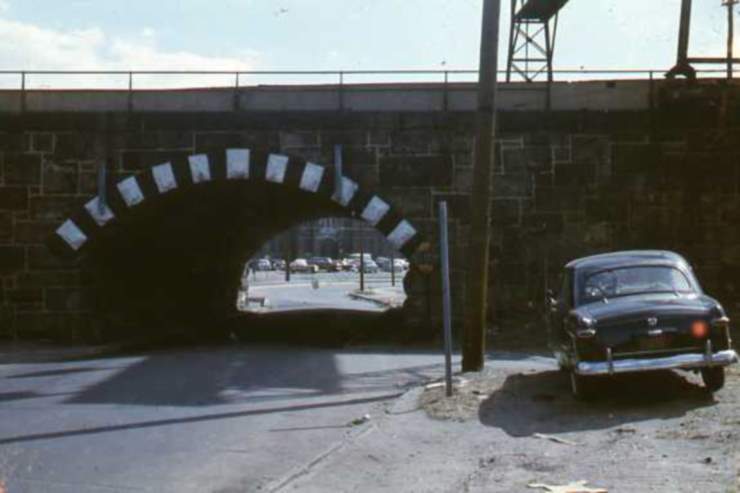
Eleventh Street ran north from Market Street through to Pearl Street. Over time, North 11th Street was erased block by block, until only a short segment between Penn and Linden Streets survives. South 11th Street is a connecting road with no residential addresses.

Augustus Edwin "Gus" Gondolf Sr. was born in Philadelphia, Pennsylvania, on March 8, 1892. His father, Edward Gondolff, was the son of Peter Gondolff Sr. , who immigrated to the United States from the Alsace-Lorraine region of France.

Cooper Browning Hatch was a prominent citizen of Camden in the late 19th and early 20th centuries. He was born to Joseph and Mary Hatch in a farmhouse that now houses the Camden County Historical Society.

Frank B. Hanna was born in New Jersey in 1894. He married Rachel Thomason around 1914, and they had a daughter, Elizabeth, the following year. By January 1920, the Hannas were residing at 5315 Locust Street in Philadelphia.
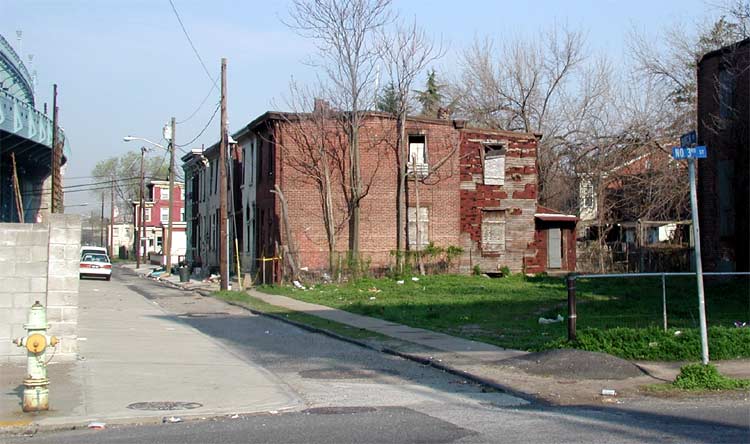
Birch Street once ran from Front Street through Ninth Street in North Camden. Over the years, the Delaware River Bridge, the Port Authority, and the Northgate Apartment Buildings took most of the street off the map.

Haddon Avenue is one of Camden's oldest roads, dating to at least 1792 as a bridle path and incorporated as the Haddonfield & Camden Turnpike in 1839. It runs southeast from Federal Street to the city limits toward Collingswood, Haddon Township, and Haddonfield.

Camden, NJ had two Convention Halls: the first on Memorial Avenue at Line Street, the second the former Third Regiment Armory on Mickle Street.
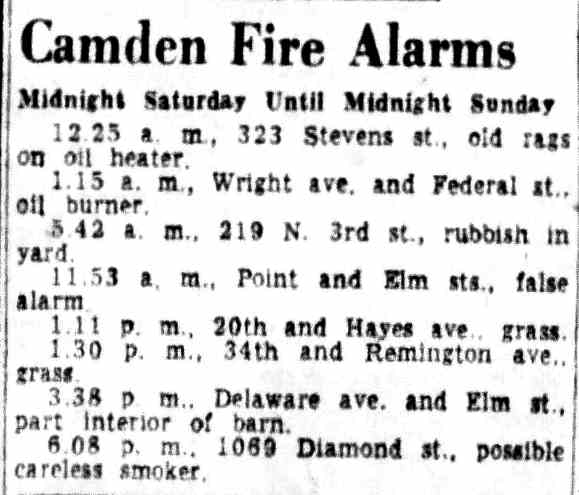
Fire alarm log for Camden, midnight Saturday to midnight Sunday, February 1, 1954, including a call at 1069 Diamond Street for a possible careless smoker.
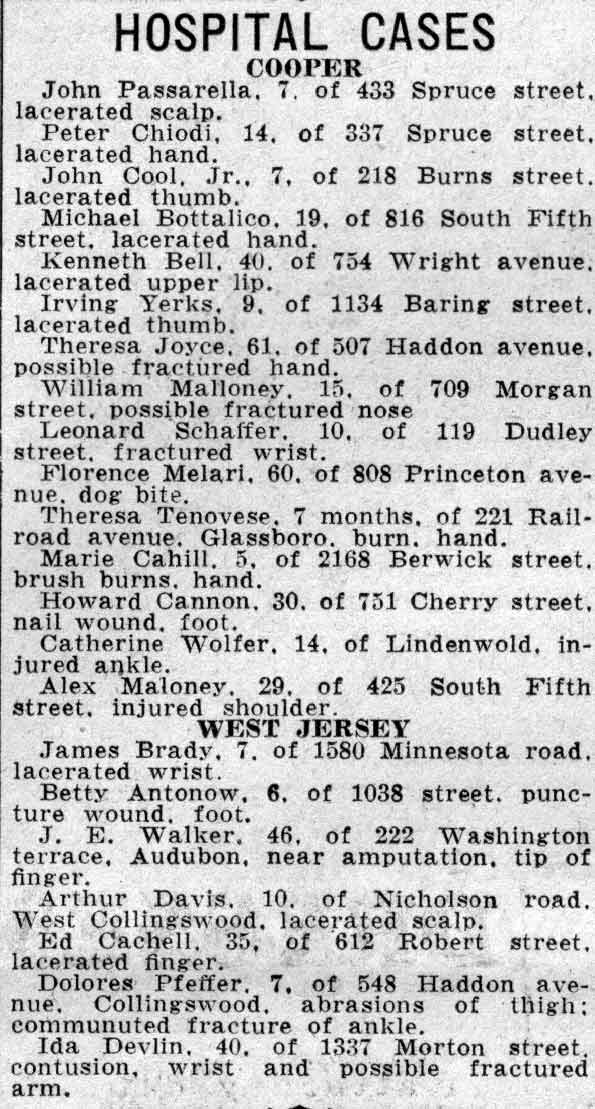
Emergency room cases at Cooper Hospital and West Jersey Hospital on February 26, 1938, including Marie Cahill, 5, of 2168 Berwick Street, treated for brush burns on her hand.

More than 5,000 persons — the biggest Polish gathering in Camden's history — attended the October 11, 1936 unveiling of the Casimir Pulaski monument in Pulaski Square, with speeches by Mayor Frederick von Nieda, Monsignor Arthur B. Strenski, Congressman Charles A. Wolverton, and Polish consul Dr. Szygowski.

Detective Robert Ashenfelter, wounded in the August 24, 1931 gun duel with a burglar at the American Store, Thirty-second Street and Pierce Avenue, and Accident Investigator John Sheeran applied for disability pensions before the Police and Firemen's Pension Commission.
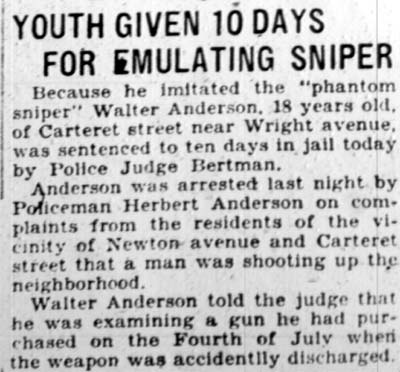
Walter Anderson, 18, of Carteret Street near Wright Avenue, was sentenced to ten days in jail by Police Judge Bertman for imitating the "phantom sniper" near Newton Avenue and Carteret Street.
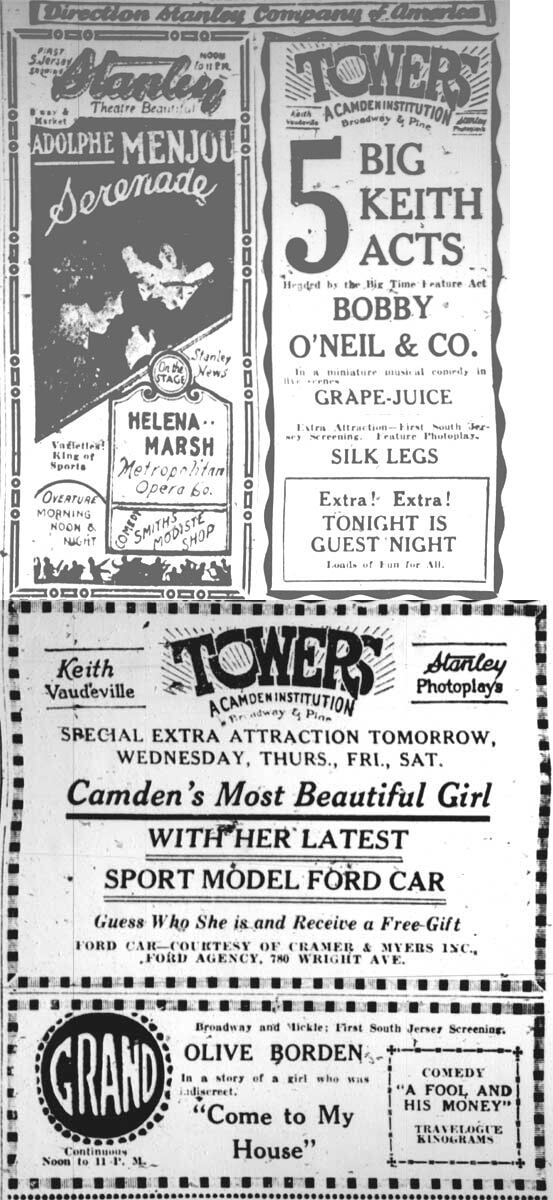
Stanley Company of America theater advertisements from the Camden Courier-Post of January 24, 1928, for the Stanley at Broadway and Market, the Towers at Broadway and Pine, and the Grand at Broadway and Mickle.
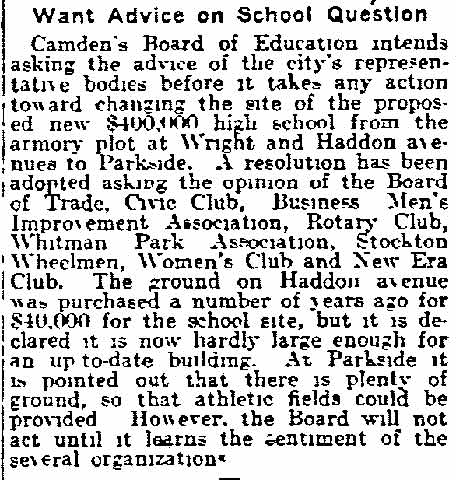
Camden's Board of Education seeks the advice of the city's civic bodies before considering moving the proposed $400,000 high school from the armory plot at Wright and Haddon avenues to Parkside.