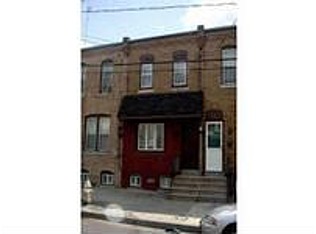
Streets
Viola Street
Viola Street runs west from Ancona Street across Broadway to the railroad tracks and Interstate 676. City directory records, newspaper clippings, and photos from 1891 to 1983.
Tag
Viola Street runs west from Ancona Street across Broadway to the railroad tracks and Interstate 676. City directory records, newspaper clippings, and photos from 1891 to 1983.

Sitley & Son was established by Arthur M. Sitley and his son, Frank Budd Sitley. Originally farmers, the Sitleys recognized a business opportunity in Camden and began selling grain, feed, and farm equipment.

Bulson Street runs east from Broadway to South 11th Street alongside the railroad tracks, named after 19th-century farmer Gilbert Bulson. At one time the tracks were at street level; in modern times the overpass has been known as "the hump."

Arlington Street in South Camden ran one block and virtually disappeared after demolition in 2004. The street was home to working-class families, the General Gas Mantle factory (which caused thorium contamination), and became an EPA Superfund site in 1996.
Jefferson Avenue, also called Jefferson Street, runs from the Delaware River east to South 10th Street in Camden, one block north of Chelton Avenue; construction of I-676 severed the street, wiping out all structures east of the railroad tracks to Master Street.

Railroad Avenue ran from Kaighn Avenue to Jefferson Street in Camden. The page includes a 1906 Sanborn Map of its west side from Chelton Avenue to Bulson Street.

Sixth Street runs with few interruptions from the Delaware River to Morgan Street, virtually the length of the city, from North Camden south almost all the way to Gloucester City.

Fourth Street, one of Camden's original streets, ran with few interruptions from Chelton Avenue in South Camden north to Pyne Point in North Camden. City-directory records, photographs, advertisements and newspaper clippings for every block from the 2000 block of South 4th Street to the 1000 block of North 4th Street.
John "Chick" Binder recalls growing up at 2030 Arlington Street through the World War II years — the Rohde family across the street, air-raid drills, and V-J Day on a now-vanished block.
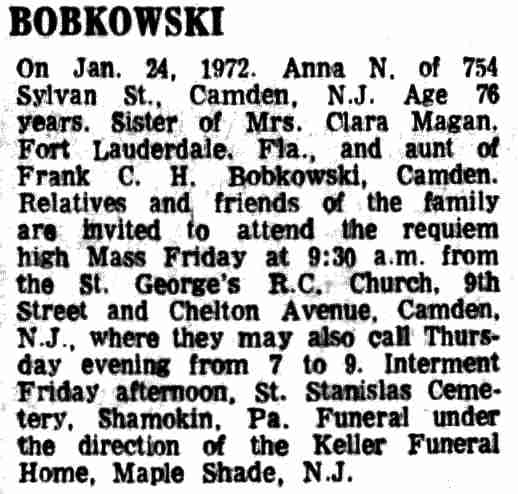
Death notice for Anna N. Bobkowski, 76, of 754 Sylvan Street, who died January 24, 1972. She was the aunt of Frank C. H. Bobkowski; her requiem Mass was to be held at St. George's R.C. Church.
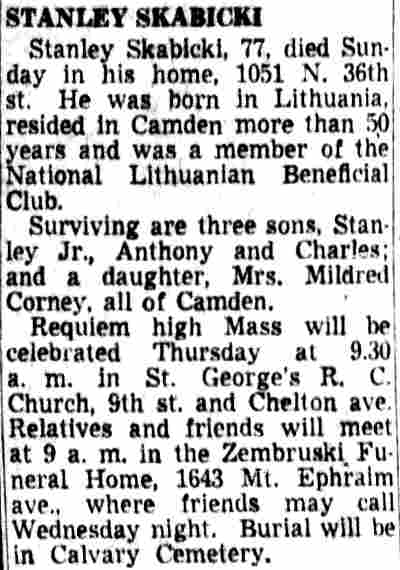
Stanley Skabicki, 77, died at his home, 1051 North 36th Street. Born in Lithuania, he resided in Camden for more than 50 years and was a member of the National Lithuanian Beneficial Club. Survived by three sons and a daughter.

Mayor Brunner called a July 1950 conference to coordinate city departments in clearing high grass and weeds from Camden — a campaign during which crews uncovered and destroyed more than 200 wild marijuana plants on a city lot at Chelton Avenue and Arlington Street.
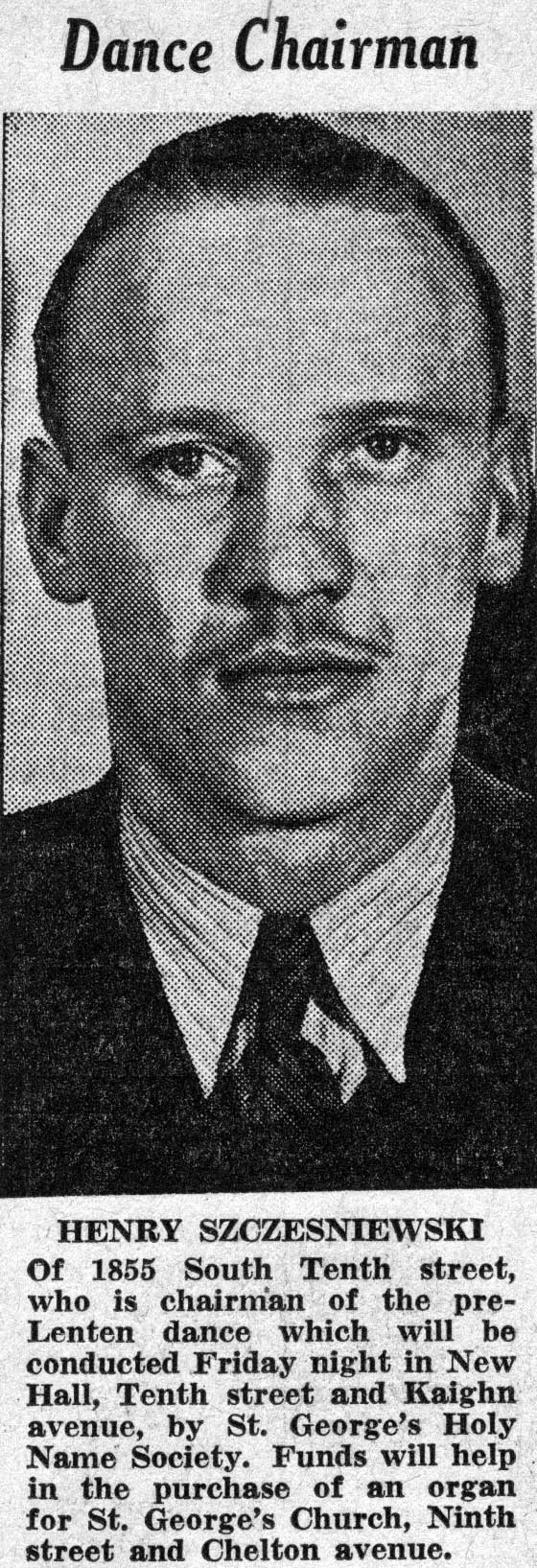
Henry Szczesniewski of 1855 South Tenth Street was chairman of St. George's Holy Name Society's pre-Lenten dance at New Hall, Tenth Street and Kaighn Avenue, held to raise funds for an organ for St. George's Church.

Two Rooms Turned Upside Down But Safe Is Not Robbed POLICE THINK PAPERS WERE BURGLARS' GOAL Officials of Camden Firm Are Unable to Explain Motive of Attempt Burglars ransacked the offices of the Camden County Beverage Company early yesterday but what they took, if anything, had not been disclosed late last night.
Damage in Fire at Sixth and Bulson Streets Estimated at $45,000 Four Men Risk Lives to Save Two Horses Boys Believed by Police Probers to Have Been Smoking in Building Three boys are being held and two others are sought in the investigation of the $45.000 fire which today destroyed the warehouse of Sitley & Son , wholesale hardware, roofing material and grain dealers at Sixth and Bulson streets.
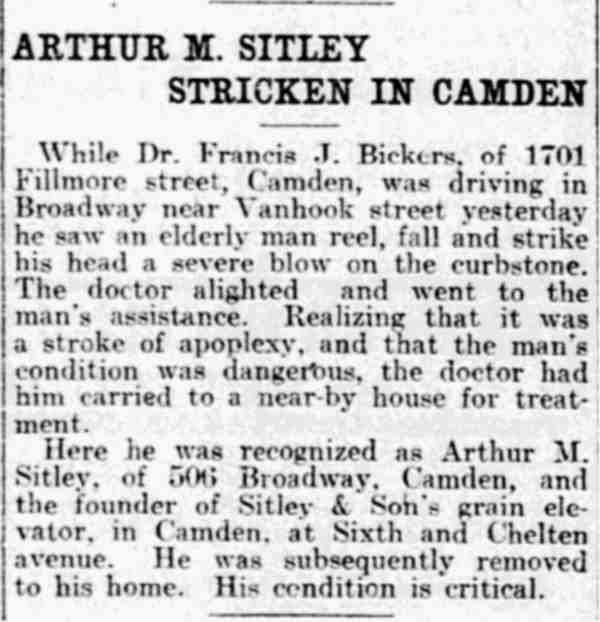
Dr. Francis J. Bickers, of 1701 Fillmore Street, saw an elderly man fall from a stroke of apoplexy on Broadway near Vanhook Street; the man was recognized as Arthur M. Sitley, of 506 Broadway, founder of Sitley & Son's grain elevator at Sixth and Chelten Avenue, and his condition was critical.