News Articles
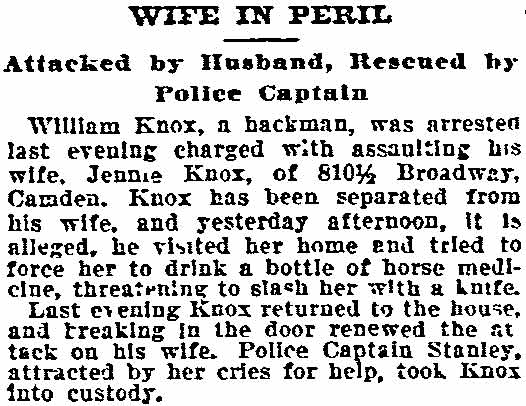
Wife in Peril
William Knox, a hackman, was arrested for assaulting his estranged wife Jennie Knox at 810½ Broadway, Camden. Police Captain Stanley, drawn by her cries for help, took Knox into custody.
Tag
William Knox, a hackman, was arrested for assaulting his estranged wife Jennie Knox at 810½ Broadway, Camden. Police Captain Stanley, drawn by her cries for help, took Knox into custody.
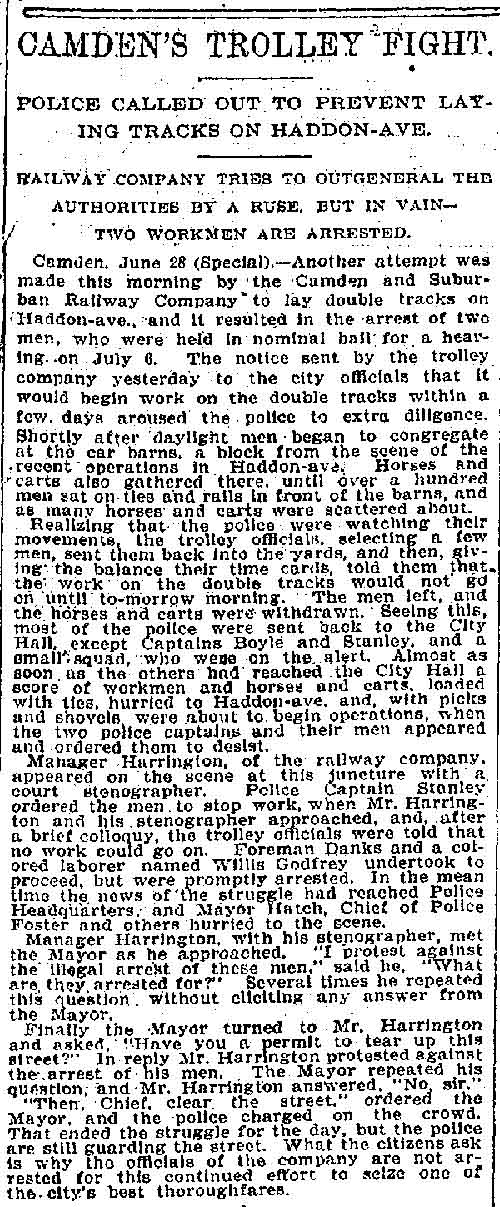
The Camden and Suburban Railway Company's ruse to lay double tracks on Haddon Avenue was foiled by Captains Boyle and Stanley, who kept a small squad on the alert; two workmen were arrested and Mayor Hatch ordered the street cleared.
The Camden and Suburban Railway Company's ruse to slip a work gang onto Haddon Avenue failed when a watchful police line intercepted them. Captain Stanley — "the doughty little captain" — ordered the men to disperse, and Mayor Hatch had the street cleared.
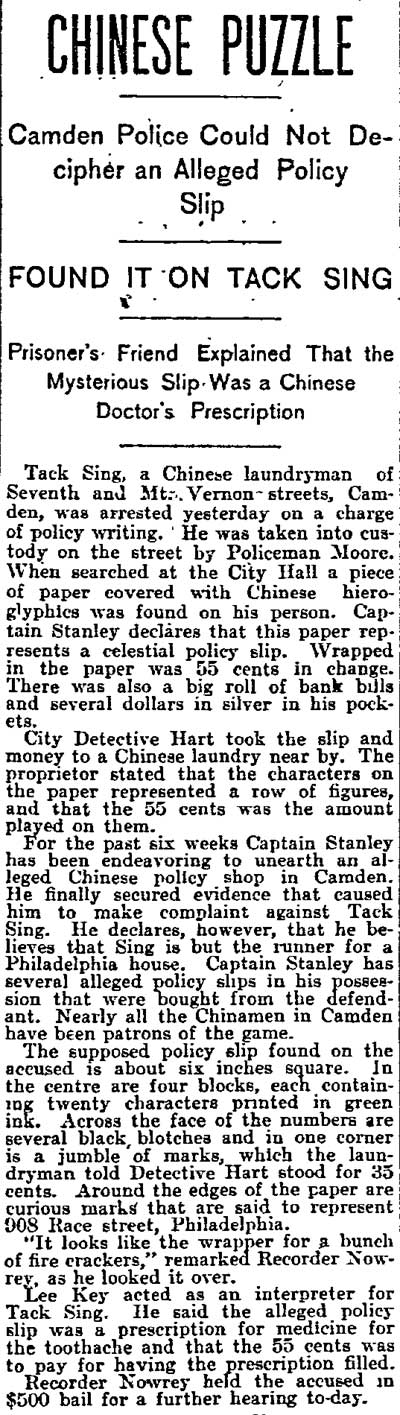
Tack Sing, a Chinese laundryman at Seventh and Mt. Vernon Streets, was arrested on a policy-writing charge after a slip covered in Chinese characters was found on him. An interpreter testified the slip was a doctor's prescription for toothache medicine.
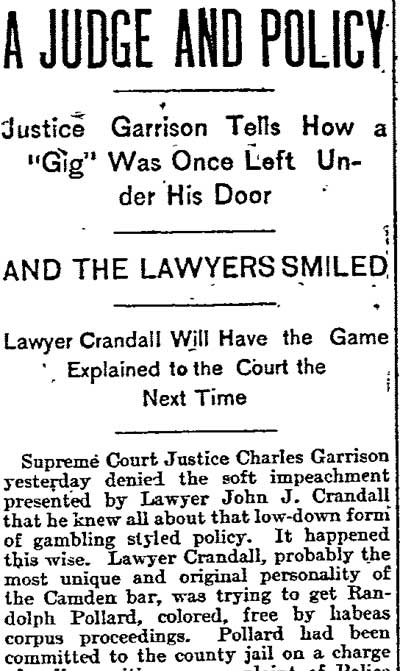
Supreme Court Justice Charles Garrison denied Lawyer John J. Crandall's suggestion that he understood the game of policy, during habeas corpus proceedings for Randolph Pollard, committed on Captain Stanley's complaint.
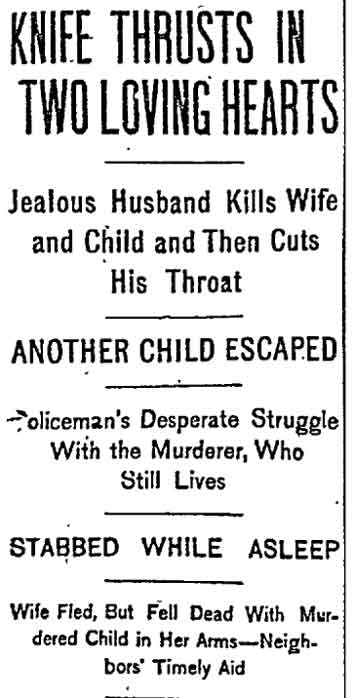
Edward Oswald fatally stabbed his wife and six-year-old daughter at 926 Jefferson Avenue and then cut his own throat; a second daughter escaped with a neighbour's help. Police Captain Stanley ordered the bodies removed to the home of Mrs. Oswald's brother.
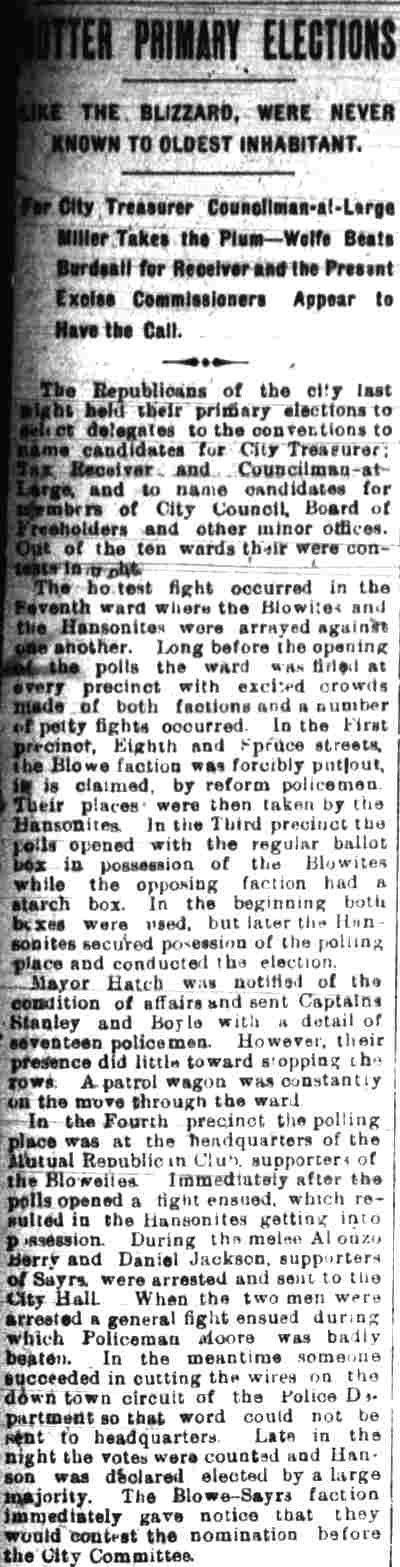
Camden's Republican primary elections of February 1899 turned violent in the Seventh Ward, where the Blowite and Hansonite factions fought at the polls. Mayor Hatch sent Captains Stanley and Boyle with seventeen policemen, but the rows continued and a patrolman was badly beaten.
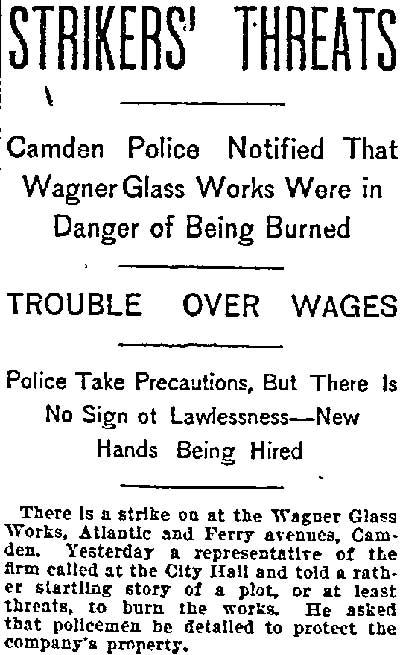
Camden police were told of threats to burn the Wagner Glass Works at Atlantic and Ferry Avenues during a strike over a change from time work to piece work. Chief Foster sent Captain Stanley, who found no sign of lawlessness but posted an officer and arranged a reserve force.
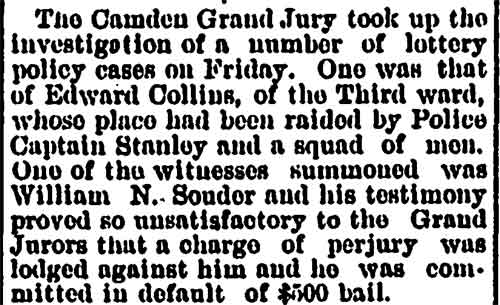
The Camden Grand Jury investigated a number of lottery policy cases, among them that of Edward Collins of the Third Ward, whose place had been raided by Police Captain Stanley; witness William N. Souder was charged with perjury and held in $500 bail.
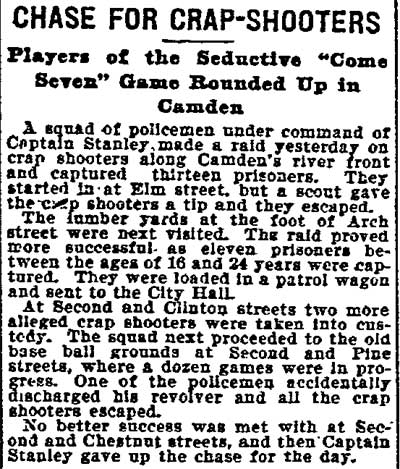
A squad of policemen under Captain Stanley raided crap shooters along Camden's river front, capturing thirteen prisoners at the Arch Street lumber yards and Second and Clinton Streets before an accidental revolver shot let the rest escape.
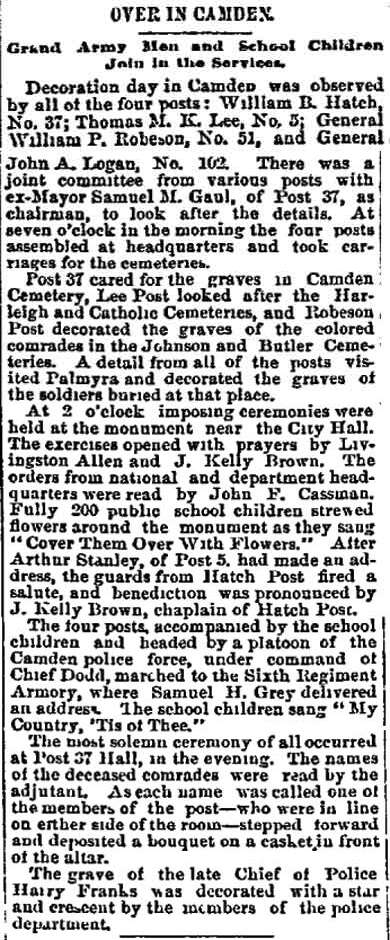
Decoration Day 1890 in Camden; the four Grand Army posts and school children joined in the services, and the grave of the late Chief of Police Harry Franks was decorated with a star and crescent by the police department.
Residents and property owners of Camden's Fourth and Sixth wards petition City Council for an under-drainage culvert running from the Line Street culvert at Broadway out to Sixth Street and north to Sixth and Royden. Arthur Stanley, then of 929 Newton Avenue, signed among the petitioners.