Camden Courier-Post, October 9, 1936View transcription
Volunteer Firemen Worked 14 Years To Pay Off $5000 Debt on Engine
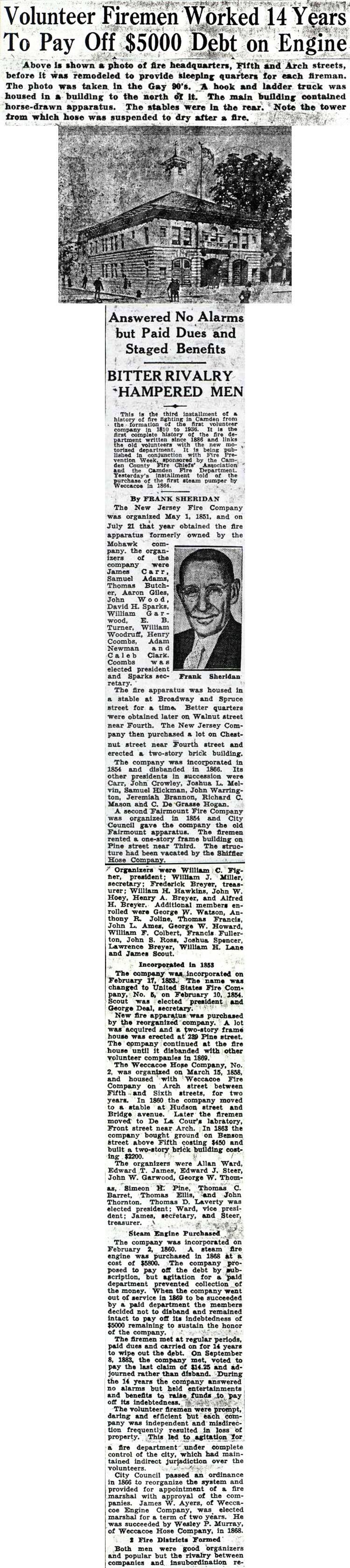
Above is shown a photo of fire headquarters, Fifth and Arch streets, before it was remodeled to provide sleeping quarters for each fireman. The photo was taken in the Gay 90's. A hook and ladder truck was housed in a building to the north of it. The main building contained horse-drawn apparatus. The stables were in the rear. Note the tower from which hose was suspended to dry after a fire.
Answered No Alarms but Paid Dues and Staged Benefits
BITTER RIVALRY HAMPERED MEN
This is the third installment of a history of fire fighting in Camden from the formation of the first volunteer company in 1810 to 1936. It is the first complete history of the fire department written since 1886 and links the old volunteers with the new paid motorized department. It is being published in conjunction with Fire Prevention Week, sponsored by the Camden County Fire Chiefs' Association and the Camden Fire Department. Yesterday's installment told of the purchase of the first steam pumper by Weccacoe in 1864.
By FRANK SHERIDAN
The New Jersey Fire Company was organized May 1, 1851, and on July 21 that year obtained the fire apparatus formerly owned by the Mohawk company. the organizers of the company were James Carr, Samuel Adams, Thomas Butcher, Aaron Giles, John Wood, David H. Sparks, William Garwood, E. B. Turner, William Woodruff, Henry Coombs, Adam Newman and Caleb Clark. Coombs was elected president and Sparks secretary.
Frank Sheridan
The fire apparatus was housed in a stable at Broadway and Spruce street for a time. Better quarters were obtained later on Walnut street near Fourth. The New Jersey Company then purchased a lot on Chestnut street near Fourth street and erected a two-story brick building.
The company was incorporated in 1854 and disbanded in 1866. Its other presidents in succession were Carr, John Crowley, Joshua L. Melvin, Samuel Hickman, John Warrington, Jeremiah Brannon, Richard C. Mason and C. De Grasse Hogan.
A second Fairmount Fire Company was organized in 1854 and City Council gave the company the old Fairmount apparatus. The firemen rented a one-story frame building on Pine street near Third. The structure had been vacated by the Shiffler Hose Company.
Organizers were William C. Figner, president; William J. Miller, secretary; Frederick Breyer, treasurer; William H. Hawkins, John W. Hoey, Henry A. Breyer, and Alfred H. Breyer. Additional members enrolled were George W. Watson, Anthony R. Joline, Thomas Francis, John L. Ames, George W. Howard, William F. Colbert, Francis Fullerton, John S. Ross, Joshua Spencer, Lawrence Breyer, William H. Lane and James Scout.
Incorporated in 1853
The company was incorporated on February 17, 1853. The name was changed to United States Fire Company, No. 5, on February 10, 1854. Scout was elected president and George Deal, secretary.
New fire apparatus was purchased by the reorganized company. A lot was acquired and a two-story frame house was erected at 239 Pine street. The company continued at the fire house until it disbanded with other volunteer companies in 1869.
The Weccacoe Hose Company, No. 2, was organized on March 15, 1858, and housed with Weccacoe Fire Company on Arch street between Fifth and Sixth streets, for two years. In 1860 the company moved to a stable at Hudson street and Bridge avenue. Later the firemen moved to De La Cour's labratory, Front street near Arch. In 1863 the company bought ground on Benson street above Fifth costing $450 and built a two-story brick building costing $2200.
The organizers were Allan Ward, Edward T. James, Edward J. Steer, John W. Garwood, George W. Thomas, Simeon H. Pine, Thomas C. Barret, Thomas Ellis, and John Thornton. Thomas D. Laverty was elected president; Ward, vice president; James, secretary, and Steer, treasurer.
Steam Engine Purchased
The company was incorporated on February 2, 1860. A steam fire engine was purchased in 1868 at a cost of $5800. The company proposed to pay off the debt by subscription, but agitation for a paid department prevented collection of the money. When the company went out of service in 1869 to be succeeded by a paid department the members decided not to disband and remained intact to pay off its indebtedness of $5000 remaining to sustain the honor of the company.
The firemen met at regular periods, paid dues and carried on for 14 years to wipe out the debt. On September 8, 1883, the company met, voted to pay the last claim of $14.25 and adjourned rather than disband. During the 14 years the company answered no alarms but held entertainments and benefits to raise funds to pay off its indebtedness.
The volunteer firemen were prompt, daring and efficient but each company was independent and misdirection frequently resulted in loss of property. This led to agitation for a fire department under complete control of the city, which had maintained indirect jurisdiction over the volunteers.
City Council passed an ordinance in 1866 to reorganize the system and provided for appointment of a fire marshal with approval of the companies. James W. Ayers, of Weccacoe Engine Company, was elected marshal for a term of two years. He was succeeded by Wesley P. Murray, of Weccacoe Hose Company, in 1868.
2 Fire Districts Formed
Both men were good organizers and popular but the rivalry between companies and insubordination re-
Above is shown a photo of fire headquarters, Fifth and Arch streets, before it was remodeled to provide sleeping quarters for each fireman. The photo was taken in the Gay 90's. A hook and ladder truck was housed in a building to the north of it. The main building contained horse-drawn apparatus. The stables were in the rear. Note the tower from which hose was suspended to dry after a fire.
Answered No Alarms but Paid Dues and Staged Benefits
BITTER RIVALRY HAMPERED MEN
This is the third installment of a history of fire fighting in Camden from the formation of the first volunteer company in 1810 to 1936. It is the first complete history of the fire department written since 1886 and links the old volunteers with the new paid motorized department. It is being published in conjunction with Fire Prevention Week, sponsored by the Camden County Fire Chiefs' Association and the Camden Fire Department. Yesterday's installment told of the purchase of the first steam pumper by Weccacoe in 1864.
The New Jersey Fire Company was organized May 1, 1851, and on July 21 that year obtained the fire apparatus formerly owned by the Mohawk company. the organizers of the company were James Carr, Samuel Adams, Thomas Butcher, Aaron Giles, John Wood, David H. Sparks, William Garwood, E. B. Turner, William Woodruff, Henry Coombs, Adam Newman and Caleb Clark. Coombs was elected president and Sparks secretary.
Frank Sheridan
The fire apparatus was housed in a stable at Broadway and Spruce street for a time. Better quarters were obtained later on Walnut street near Fourth. The New Jersey Company then purchased a lot on Chestnut street near Fourth street and erected a two-story brick building.
The company was incorporated in 1854 and disbanded in 1866. Its other presidents in succession were Carr, John Crowley, Joshua L. Melvin, Samuel Hickman, John Warrington, Jeremiah Brannon, Richard C. Mason and C. De Grasse Hogan.
A second Fairmount Fire Company was organized in 1854 and City Council gave the company the old Fairmount apparatus. The firemen rented a one-story frame building on Pine street near Third. The structure had been vacated by the Shiffler Hose Company.
Organizers were William C. Figner, president; William J. Miller, secretary; Frederick Breyer, treasurer; William H. Hawkins, John W. Hoey, Henry A. Breyer, and Alfred H. Breyer. Additional members enrolled were George W. Watson, Anthony R. Joline, Thomas Francis, John L. Ames, George W. Howard, William F. Colbert, Francis Fullerton, John S. Ross, Joshua Spencer, Lawrence Breyer, William H. Lane and James Scout.
Incorporated in 1853
The company was incorporated on February 17, 1853. The name was changed to United States Fire Company, No. 5, on February 10, 1854. Scout was elected president and George Deal, secretary.
New fire apparatus was purchased by the reorganized company. A lot was acquired and a two-story frame house was erected at 239 Pine street. The company continued at the fire house until it disbanded with other volunteer companies in 1869.
The Weccacoe Hose Company, No. 2, was organized on March 15, 1858, and housed with Weccacoe Fire Company on Arch street between Fifth and Sixth streets, for two years. In 1860 the company moved to a stable at Hudson street and Bridge avenue. Later the firemen moved to De La Cour's labratory, Front street near Arch. In 1863 the company bought ground on Benson street above Fifth costing $450 and built a two-story brick building costing $2200.
The organizers were Allan Ward, Edward T. James, Edward J. Steer, John W. Garwood, George W. Thomas, Simeon H. Pine, Thomas C. Barret, Thomas Ellis, and John Thornton. Thomas D. Laverty was elected president; Ward, vice president; James, secretary, and Steer, treasurer.
Steam Engine Purchased
The company was incorporated on February 2, 1860. A steam fire engine was purchased in 1868 at a cost of $5800. The company proposed to pay off the debt by subscription, but agitation for a paid department prevented collection of the money. When the company went out of service in 1869 to be succeeded by a paid department the members decided not to disband and remained intact to pay off its indebtedness of $5000 remaining to sustain the honor of the company.
The firemen met at regular periods, paid dues and carried on for 14 years to wipe out the debt. On September 8, 1883, the company met, voted to pay the last claim of $14.25 and adjourned rather than disband. During the 14 years the company answered no alarms but held entertainments and benefits to raise funds to pay off its indebtedness.
The volunteer firemen were prompt, daring and efficient but each company was independent and misdirection frequently resulted in loss of property. This led to agitation for a fire department under complete control of the city, which had maintained indirect jurisdiction over the volunteers.
City Council passed an ordinance in 1866 to reorganize the system and provided for appointment of a fire marshal with approval of the companies. James W. Ayers, of Weccacoe Engine Company, was elected marshal for a term of two years. He was succeeded by Wesley P. Murray, of Weccacoe Hose Company, in 1868.
2 Fire Districts Formed
Both men were good organizers and popular but the rivalry between companies and insubordination re-