Streets
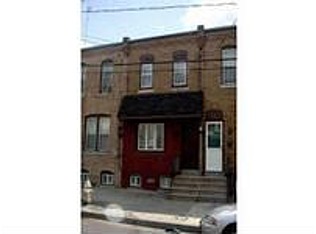
Viola Street
Viola Street runs west from Ancona Street across Broadway to the railroad tracks and Interstate 676. City directory records, newspaper clippings, and photos from 1891 to 1983.
Tag
Viola Street runs west from Ancona Street across Broadway to the railroad tracks and Interstate 676. City directory records, newspaper clippings, and photos from 1891 to 1983.
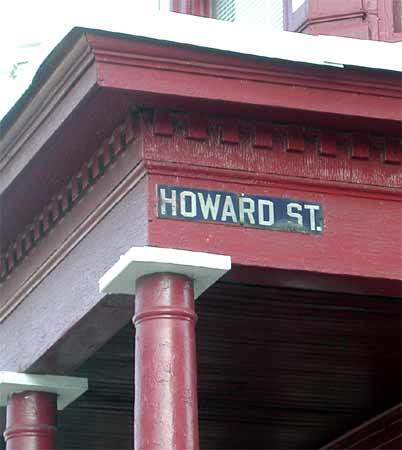
Howard Street ran for two blocks in North Camden, from State Street north to Erie Street, parallel to North Front and North 2nd Streets. It was already laid out and built up by 1887.
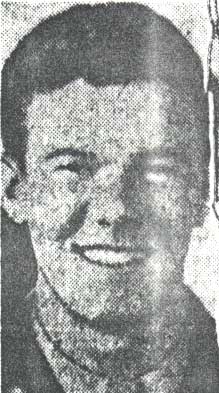
Staff Sergeant Frank J. Blair (1921–1944) of 987 North 23rd Street in Cramer Hill was a June 1940 graduate of Woodrow Wilson High School who served as a B-24 crewman with the 374th Bomber Squadron, 308th Bomber Group, based at Kunming, China. He was killed in action on July 13, 1944, and is listed on the Tablets of the Missing at the Honolulu Memorial.
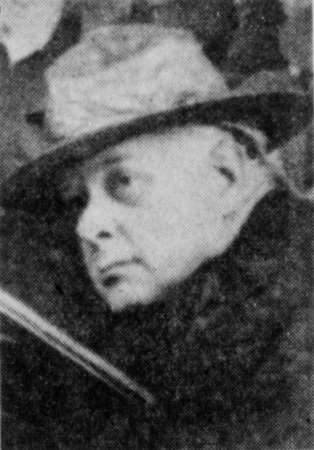
Ambrose Wesley "Wes" Faust served with the Camden Fire Department from 1951 to 1961, and later became a police sergeant with New Hanover Township, Pennsylvania, where he died on duty in 1977.
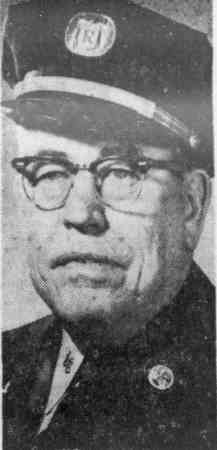
Arthur Cuellen Batten (1904–1972), known to his fellow firefighters as Artie, joined the Camden Fire Department on March 4, 1927 and served until his retirement on February 28, 1969, rising to captain of Rescue Company 1 and acting battalion chief. He lived for many years at 1132 North 22nd Street in Cramer Hill and invented the un-patented ring cutter used by the rescue company to remove finger jewelry.
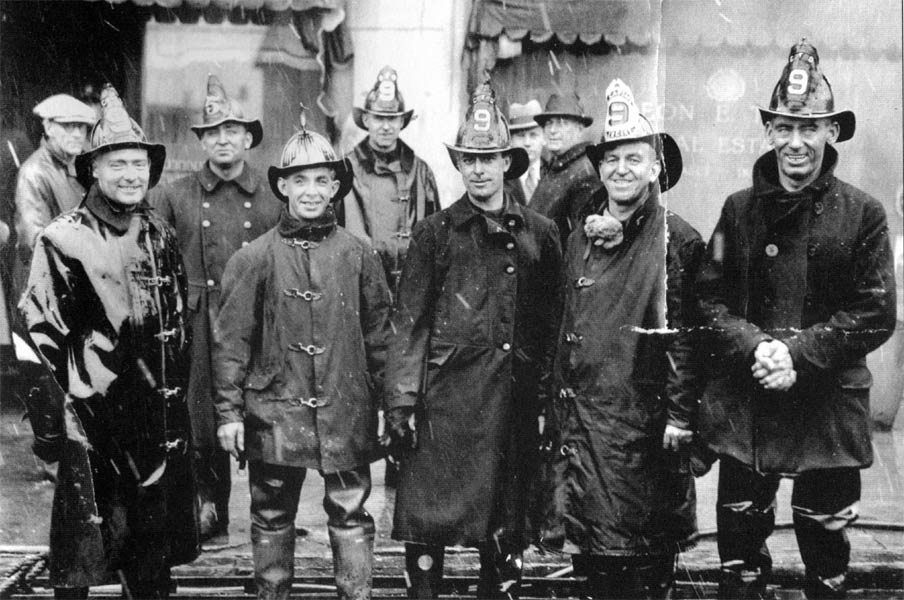
John C. Voll Jr. (1900-1979) was born in Camden and served the Camden Fire Department for 40 years, entering the department on January 15, 1925 and retiring on December 1, 1965. He lived his later years at 2737 Garfield Avenue in the Cramer Hill section of Camden.
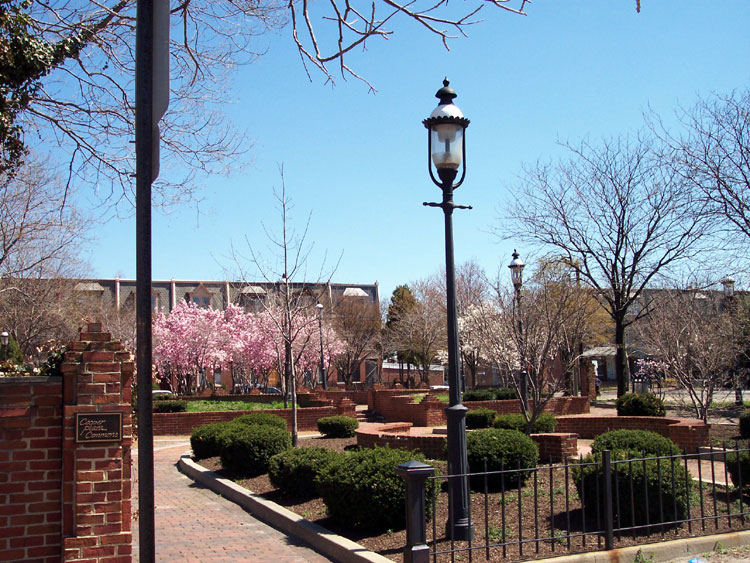
Auburn Street is a small street that runs from Broadway to South Sixth Street between Benson and Washington Streets. All 26 homes were seized by eminent domain and demolished in 2001.

Sitley & Son was established by Arthur M. Sitley and his son, Frank Budd Sitley. Originally farmers, the Sitleys recognized a business opportunity in Camden and began selling grain, feed, and farm equipment.

Cooper Browning Hatch was a prominent citizen of Camden in the late 19th and early 20th centuries. He was born to Joseph and Mary Hatch in a farmhouse that now houses the Camden County Historical Society.

Jesse D. Seybold was born in New Jersey in February 1892 to Charles and Lizzie Seybold, though records vary on the exact date, listing February 2, 7, or 8.

Carman Street ran from Broadway to South 8th Street downtown and, across the Cooper River, from 15th Street through East Camden to Woodrow Wilson High School at 31st Street. It is apparently named for William Carman, whose home at Broadway and Federal Street stood until 1902.
Camden Terrace was a small street in Camden's Eighth Ward, running south from Fairview Street between South 6th Street and Master Street, obliterated when I-676 was built.
Erie Street in North Camden runs from Beach Avenue to 9th Street, crossing Delaware Avenue, Point, Front, Segal, and the numbered streets 2nd through 9th.
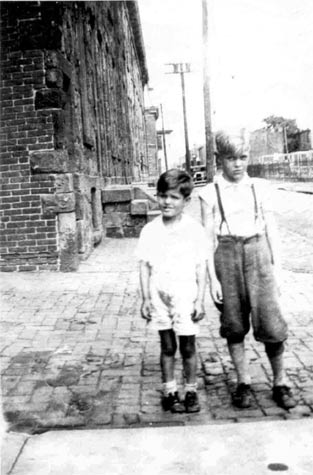
Grant Street is a street in Camden, New Jersey, named after Ulysses S. Grant, Civil War hero and 18th President of the United States.

Basil Preston Cook was born in England. He entered the bar business during Prohibition and had several encounters with the law. By 1932, he was managing a bar at 939 South 5th Street .

Bulson Street runs east from Broadway to South 11th Street alongside the railroad tracks, named after 19th-century farmer Gilbert Bulson. At one time the tracks were at street level; in modern times the overpass has been known as "the hump."

Branch Street is a one-block street running from 1460 Broadway east to South 6th Street; formerly known as Commerce Street until sometime between 1888–1889 and 1890–1891.
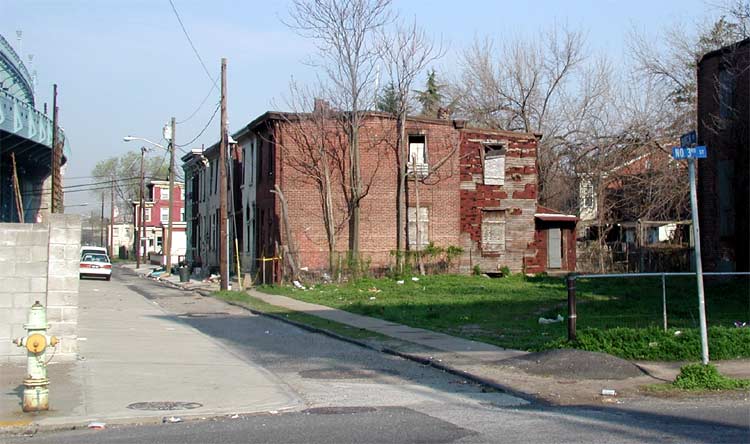
Birch Street once ran from Front Street through Ninth Street in North Camden. Over the years, the Delaware River Bridge, the Port Authority, and the Northgate Apartment Buildings took most of the street off the map.
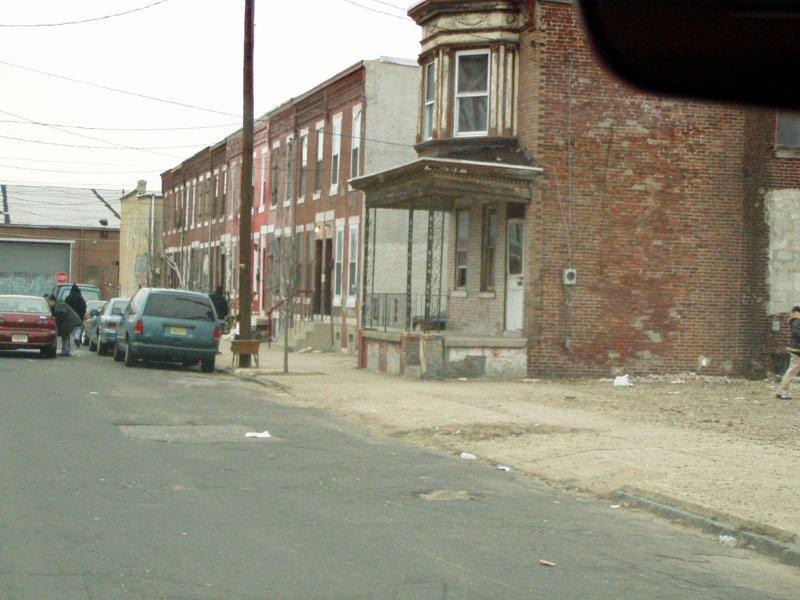
Beckett Street, named for Henry and Mary Beckett who owned land in South Camden around 1853, originally ran from Front Street to West Street. After 1947 the eastern portion was demolished for an industrial building; today it runs only from South 3rd Street to West Street.

Baxter Street (formerly Newton Street and locally known as "Hog Alley") ran from South 7th Street to Mount Ephraim Avenue in South Camden, notorious for decades as a hub of illegal activity; largely demolished, the 700 block survives as an overgrown alley.
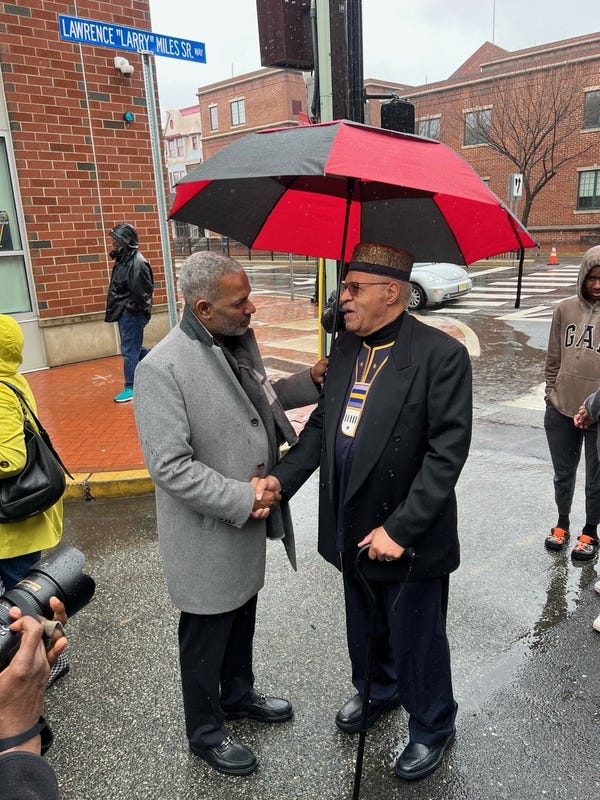
CAMDEN –- When Larry Miles came to Camden in the early 1970s, he wasn't sure how long he would stay.
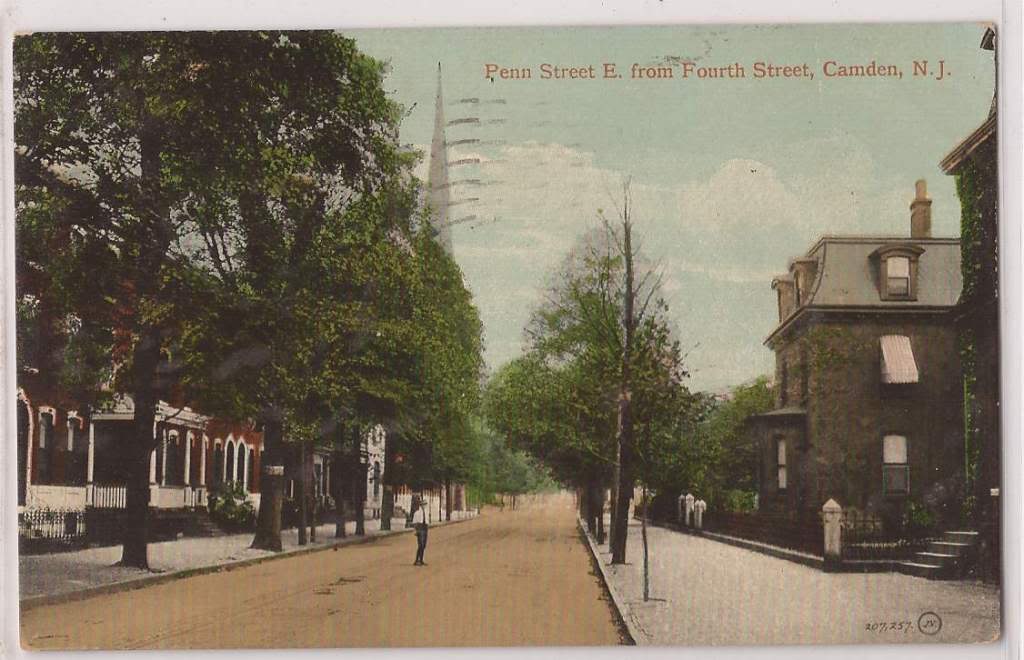
Penn Street runs east from the Delaware River to North 12th Street in Camden. First listed in the 1867 city directory, it lost blocks to the expansion of Rutgers University and the building of Route 676.

Byron Street was part of North Camden's Poet's Row neighborhood, a working-class district whose streets were named for English literary figures. The 200, 300, and 500 blocks developed in the 1890s; the 200 block's north side was destroyed in the catastrophic Poet's Row fire of August 1972.
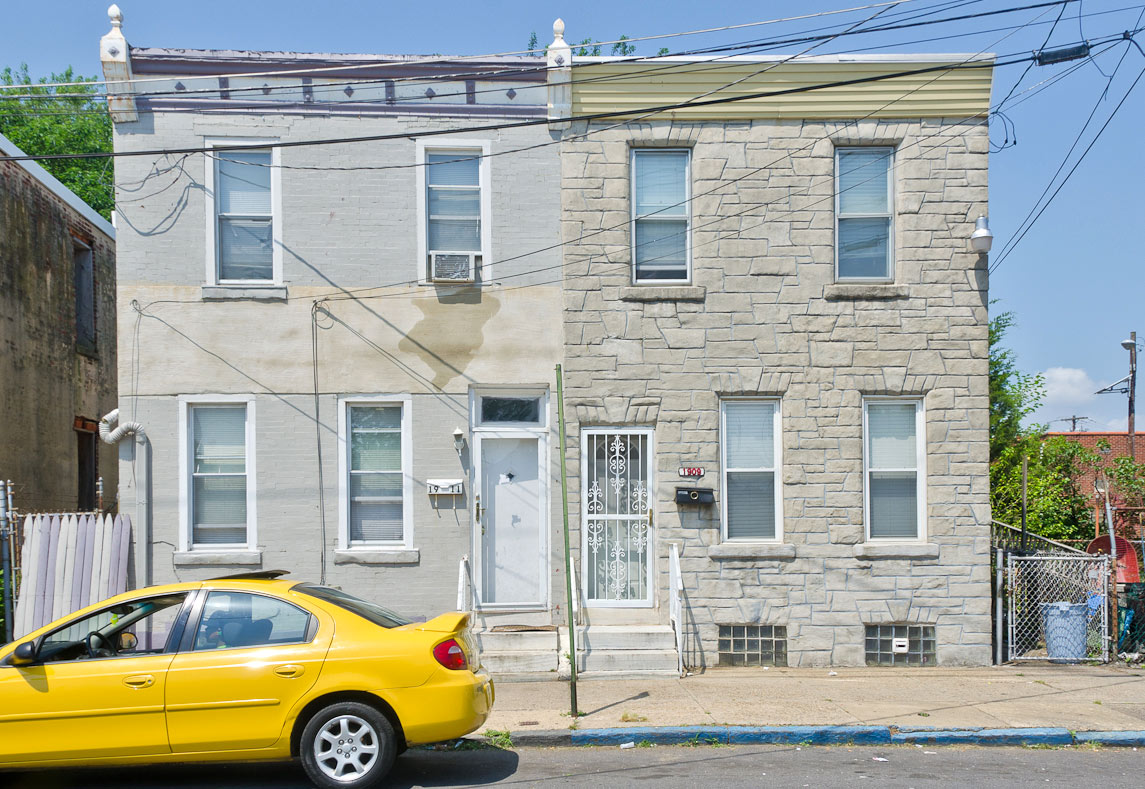
Kossuth Street ran south through South Camden from Van Hook Street to the railroad tracks; named for the Hungarian revolutionary Louis Kossuth, much of it was razed in the 1950s for the Franklin D. Roosevelt Manor and Chelton Terrace public housing projects.


Reprinted from the series of stories of Camden's earlier days, under the title Sixty Years in Camden County - Gosh! by Will Paul, appearing in The Community news, of Merchantville, NJ.
Main Street is a diagonal street in North Camden running southeast from State and Point Streets. The 1878 city directory listed it as starting at the Vine Street Ferry.

Haddon Avenue is one of Camden's oldest roads, dating to at least 1792 as a bridle path and incorporated as the Haddonfield & Camden Turnpike in 1839. It runs southeast from Federal Street to the city limits toward Collingswood, Haddon Township, and Haddonfield.

Sixth Street runs with few interruptions from the Delaware River to Morgan Street, virtually the length of the city, from North Camden south almost all the way to Gloucester City.
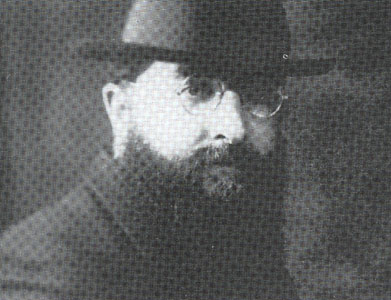
Rabbi Naftoly H.J. Riff (1893-1976) led Congregation Sons of Israel on South 8th Street in Camden, New Jersey for nearly 50 years from the early 1920s.

Baring Street runs for one block in South Camden, from Chestnut Street south to Kaighn Avenue, between Marion Street and South 6th Street. The homes were built in 1888 by Wilson Ernst, one of Camden's most active builders of the 1880s.

EUGENE F. ALSTON was born October 16, 1919 in Camden to Richard Alston and his wife, the former Dolly Robinson. His father had been born in 1891 in Henderson, North Carolina.
Berkley Street was originally spelled Berkeley Street, named for Lord Berkeley, who co-owned the colony of New Jersey from 1664 to 1674. East of Broadway it was known as Hamilton Street until 1882. This page covers occupants from the 200 block through the 3000 block.

Federal Street, originally called Joseph Cooper's Lane, is one of the primary east-west streets in Camden, running from the Delaware River waterfront through Stockton Township to Mount Holly. The intersection of Federal Street and Broadway is considered by most to be the center of center city Camden.

DAVID ALLABAND was born in New Jersey on September 2, 1912. His father, David S. Allaband, died three months before his birth, and his mother Suzanne passed when he was only four years old.
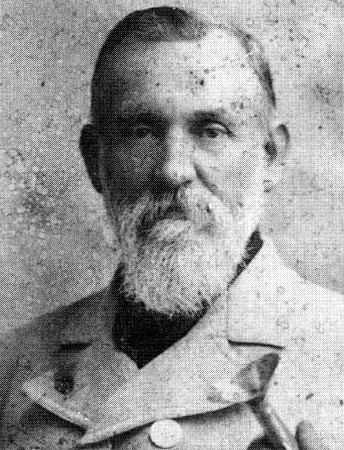
William Abels was born in Pennsylvania around 1839 to Andrew and Sarah Abels. His family was living in Wilmington in 1850.
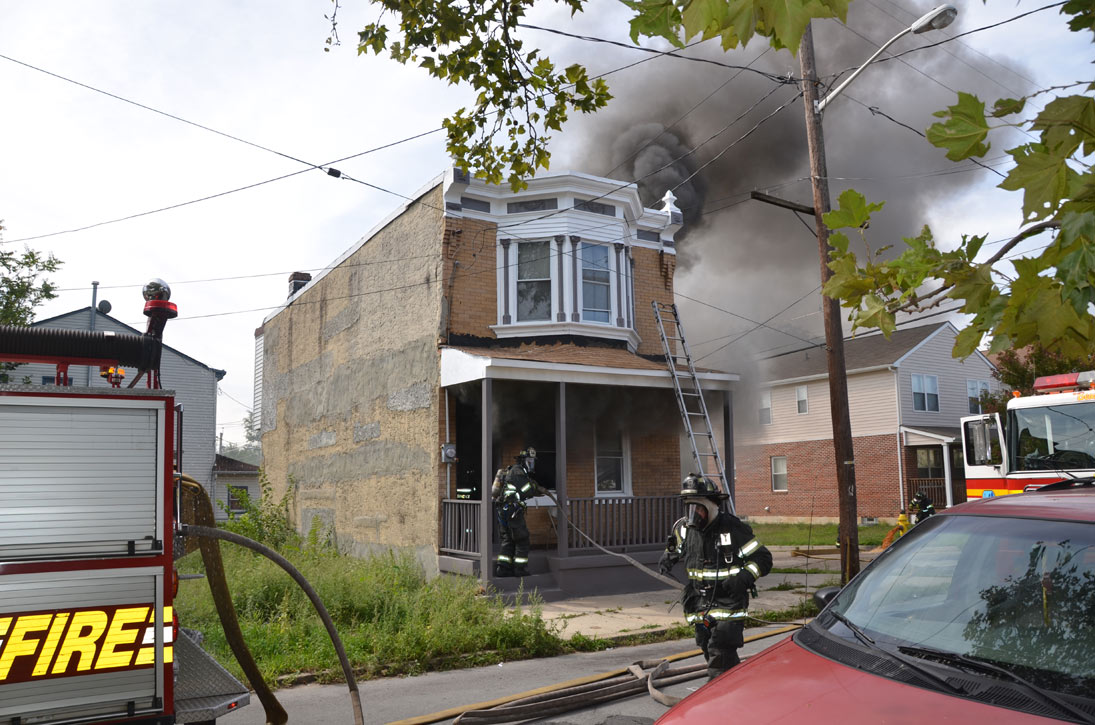
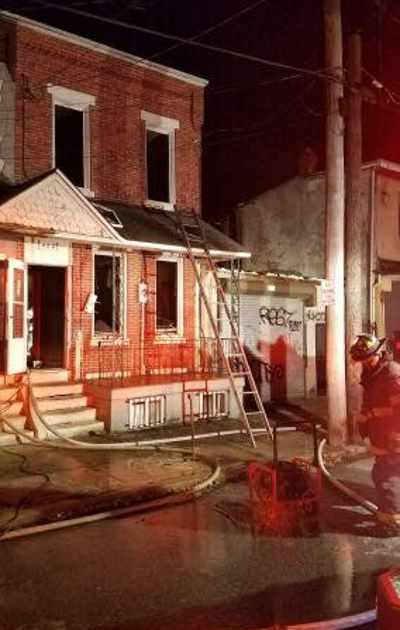
Camden Fire Department response to a fire at 1227 North 28th Street in Cramer Hill on September 19, 2011.
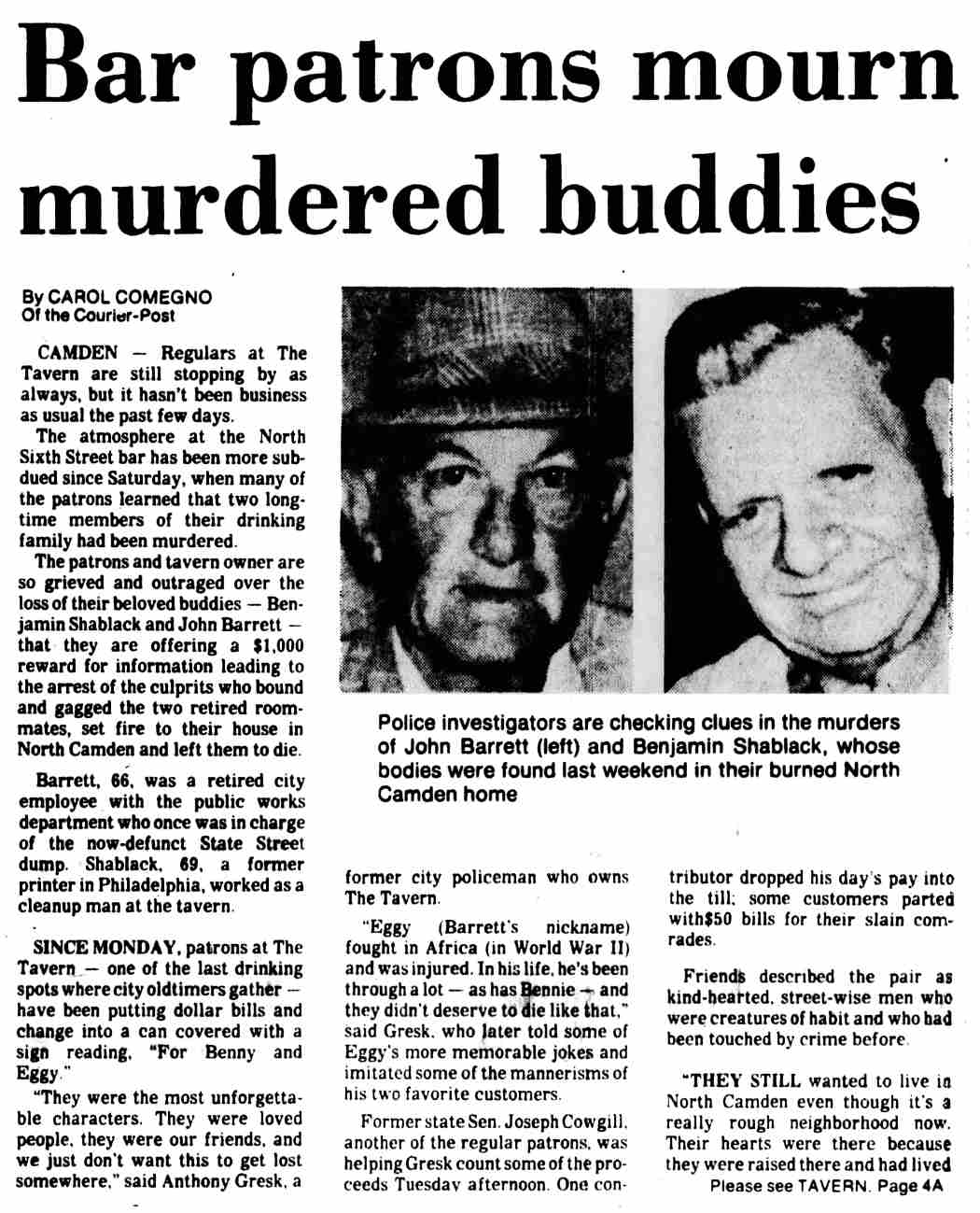
Regulars at The Tavern, a North Sixth Street bar, mourned Benjamin Shablack and John Barrett, two retired roommates bound, gagged, and left to die in a fire set in their North Camden rowhouse on Bailey Street. Fire Marshal Harold Pike found the fire was deliberately set in four locations.
Two elderly men, Benjamin Shablock and John Barrett, were found bound and gagged and died of smoke inhalation in a deliberately set fire at their Bailey Street home, prompting renewed calls for better police protection in North Camden.
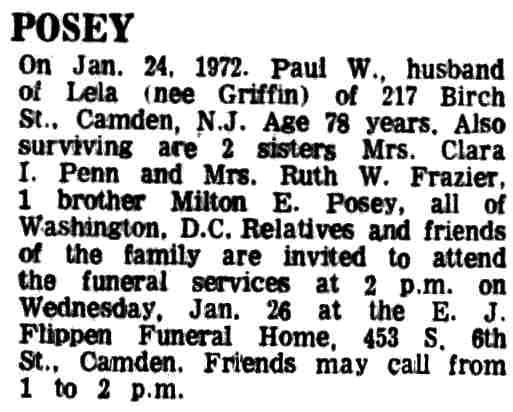
Paul W. Posey, 78, of 217 Birch Street, Camden, died January 24, 1972. He is survived by his wife, Lela, and siblings from Washington, D.C.

March 30, 1970 Captain Maycott as last member removed from collapse is carried to waiting ambulance. Units at scene breached walls and performed tunneling and shoring operations to reach trapped members.

A Camden fire pumper from Engine 1, answering a mattress fire, collided with an automobile and crashed through the front of an insurance office at Broadway and Pine Streets, injuring firemen, a passerby and the car's occupants and leaving the building condemned.
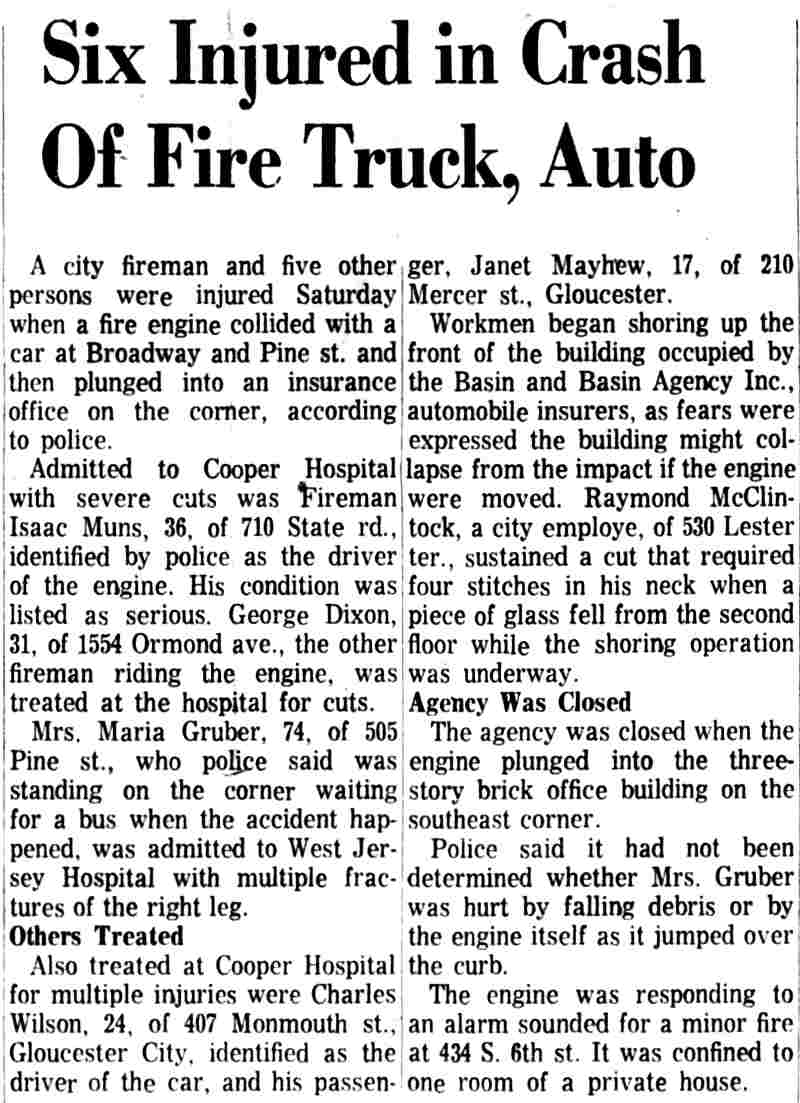
A Camden fire engine driven by Fireman Isaac Muns collided with a car at Broadway and Pine Street and plunged into an insurance office on the corner, injuring two firemen, a woman waiting for a bus, the car's two occupants and a city worker shoring up the building.
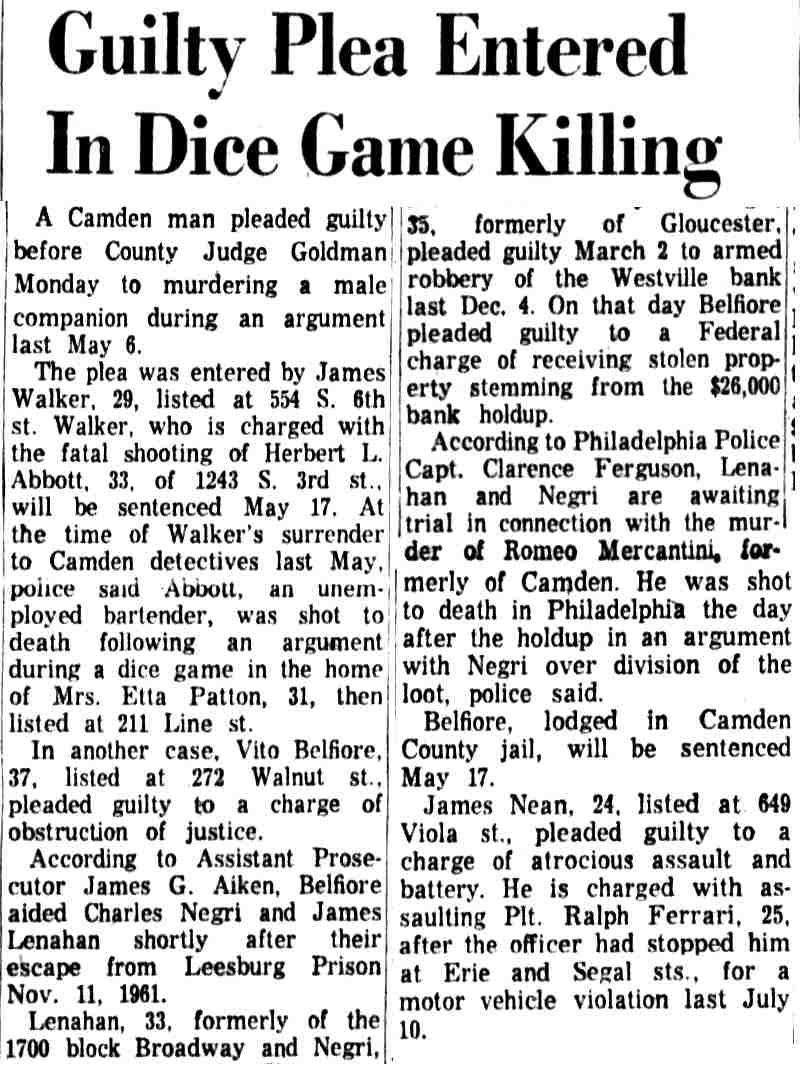
James Walker pleaded guilty to the fatal shooting of Herbert L. Abbott of 1243 South 3rd Street, killed during an argument over a dice game at 211 Line Street in May 1961.
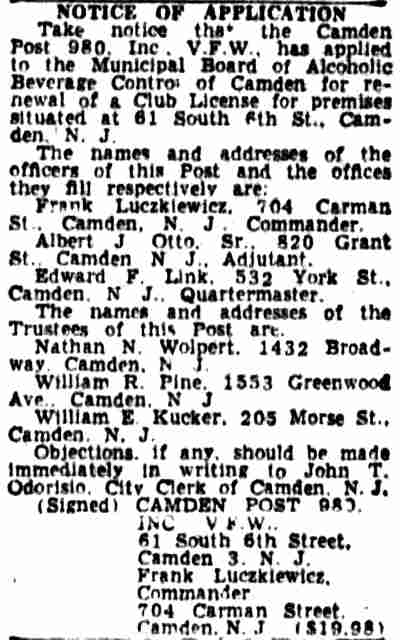
A June 1958 legal notice that Camden Post 980, Inc. V.F.W. applied to renew its club liquor license at 61 South 6th Street, listing Commander Frank Luczkiewicz of 704 Carman Street and the post's other officers and trustees.
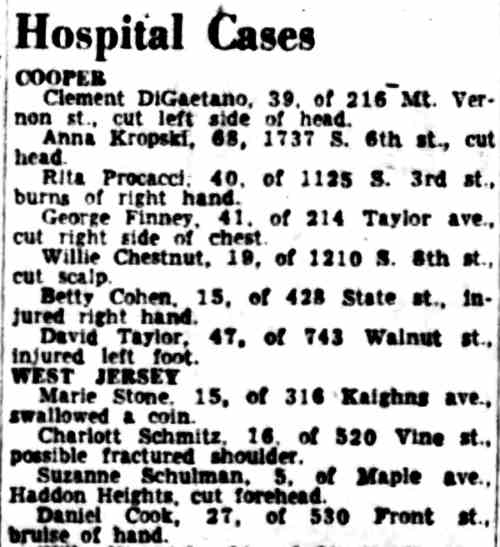
Cooper and West Jersey hospital cases reported in the Camden Courier-Post of February 3, 1956, including Rita Procacci of 1125 South 3rd Street, treated for burns of the right hand.
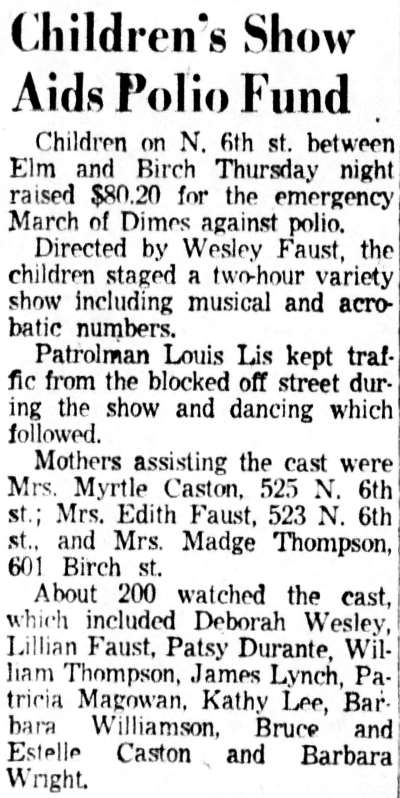
Children on North 6th Street between Elm and Birch raised $80.20 for the emergency March of Dimes with a two-hour variety show directed by fireman Wesley Faust.
Public Safety Commissioner E. George Aaron promoted three hosemen to fire captain and announced six new firemen — including Henry J. Keating of 3316 Lemuel Avenue, transferred from the Police Department — and two new policemen. Camden Courier-Post, November 30, 1953.

Kaighn School Razed; Blazes Set in Church, Unoccupied House Police today are investigating the possibility that three fires Wednesday within a quarter-mile area inside of three hours and 46 minutes were the work of a firebug.

Camden detectives returned about $4360 in stolen goods to burglary victims at City Hall in April 1952 and held parolee George Wilmer as the suspected daytime "phantom burglar."