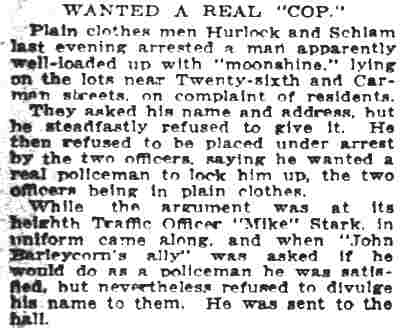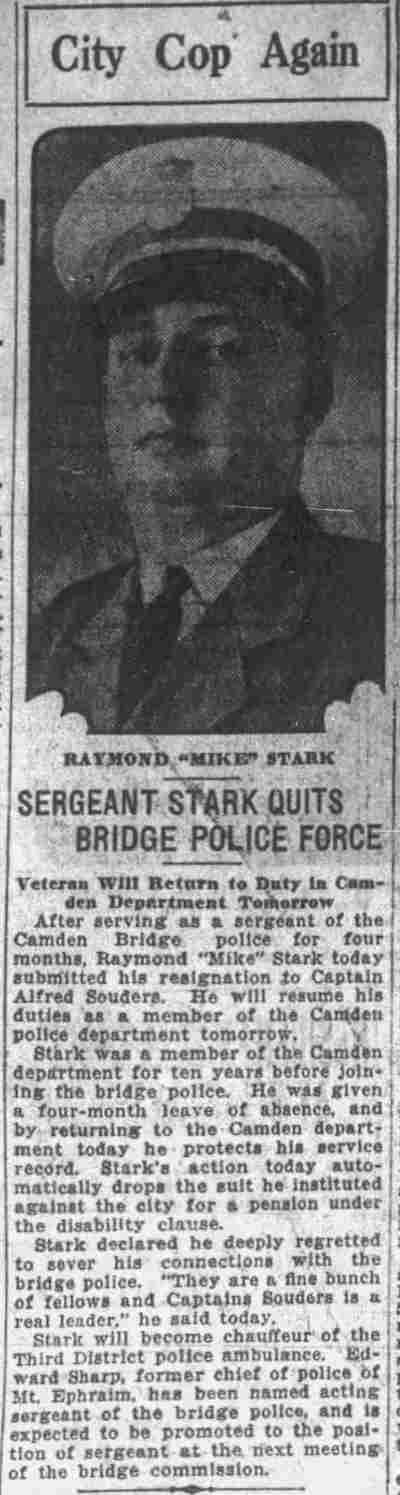
Wanted a Real "Cop"
A man arrested by plain clothes officers Hurlock and Schlam near Twenty-sixth and Carman streets refused to submit until a uniformed policeman appeared — Traffic Officer "Mike" Stark. He still would not give his name.
Tag

A man arrested by plain clothes officers Hurlock and Schlam near Twenty-sixth and Carman streets refused to submit until a uniformed policeman appeared — Traffic Officer "Mike" Stark. He still would not give his name.

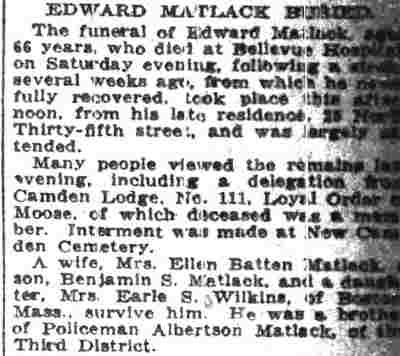
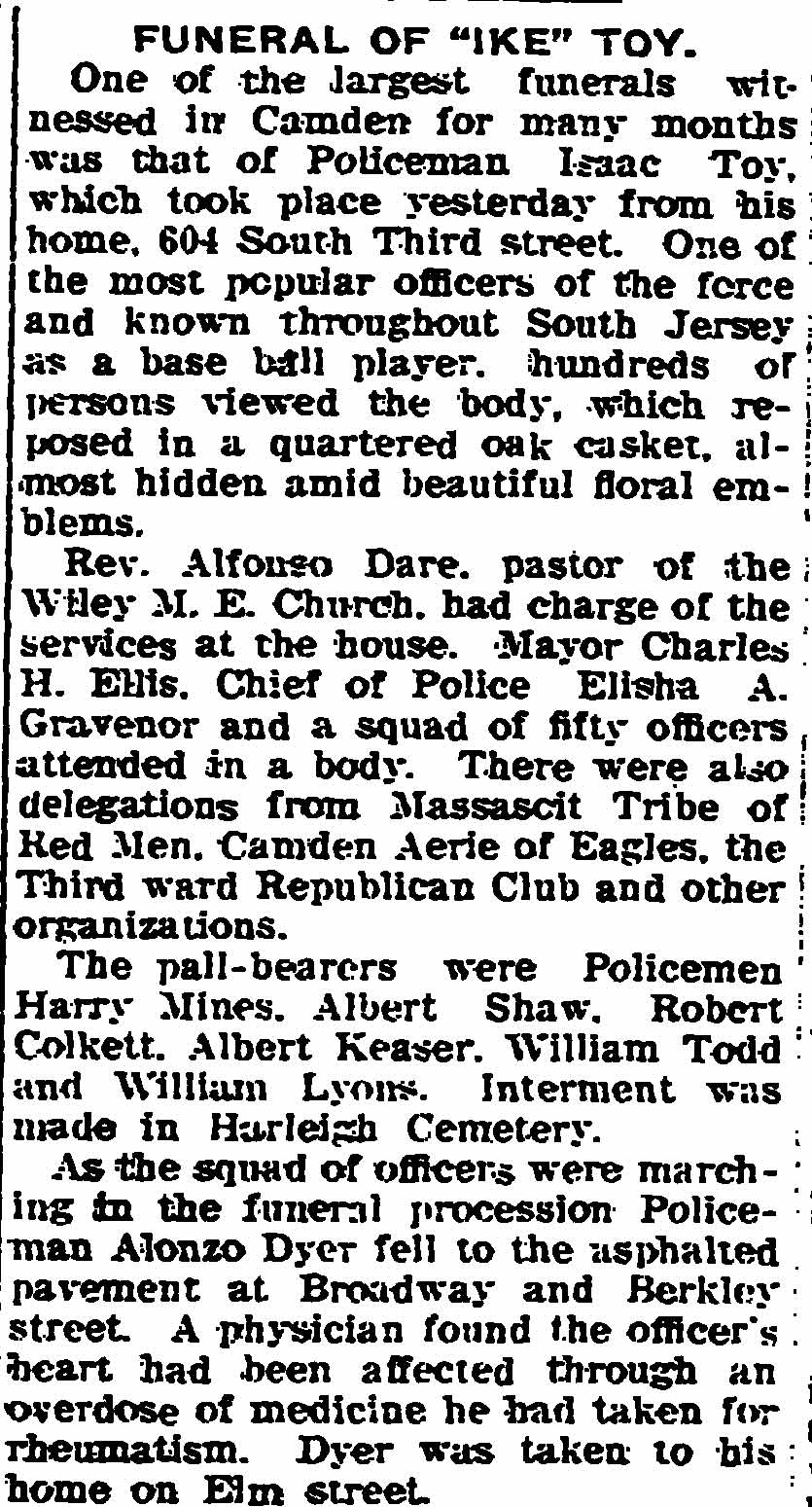
The funeral of Edward Matlack, 66, who died at Bellevue Hospital following a stroke, was held from his late residence at 25 North Thirty-fifth Street on May 1, 1923, with interment at New Camden Cemetery.

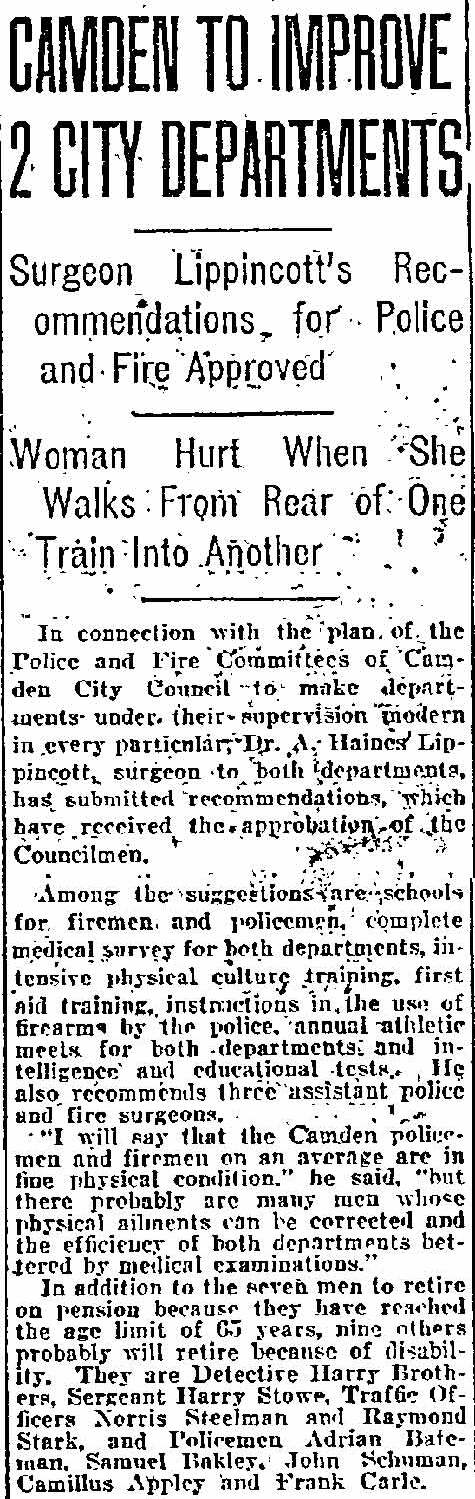
Dr. A. Haines Lippincott, surgeon to the Camden police and fire departments, submitted recommendations approved by City Council, including schools, medical surveys and firearms instruction. Nine men, among them Traffic Officer Raymond Stark, were expected to retire on disability.

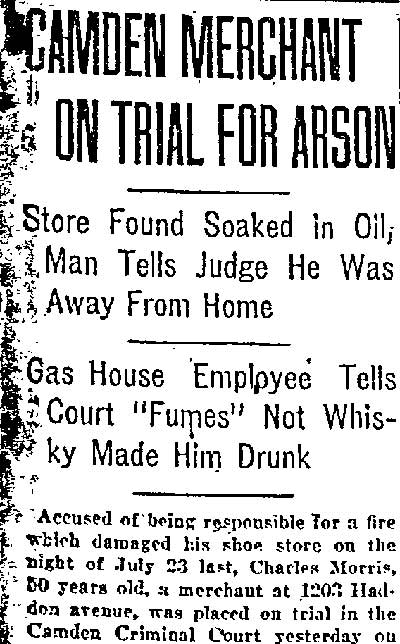
Charles Morris, a merchant at 1203 Haddon Avenue, went on trial in Camden Criminal Court on arson, conspiracy and aiding indictments over a July 23 fire at his shoe store; Fire Chief Carter and Police Chief Hyde testified to oil fumes in the store.

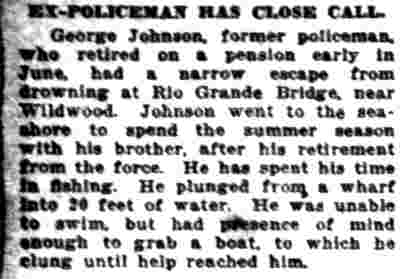
George Johnson, the retired Camden policeman, narrowly escaped drowning at Rio Grande Bridge near Wildwood after plunging from a wharf into 20 feet of water; unable to swim, he clung to a boat until help arrived.

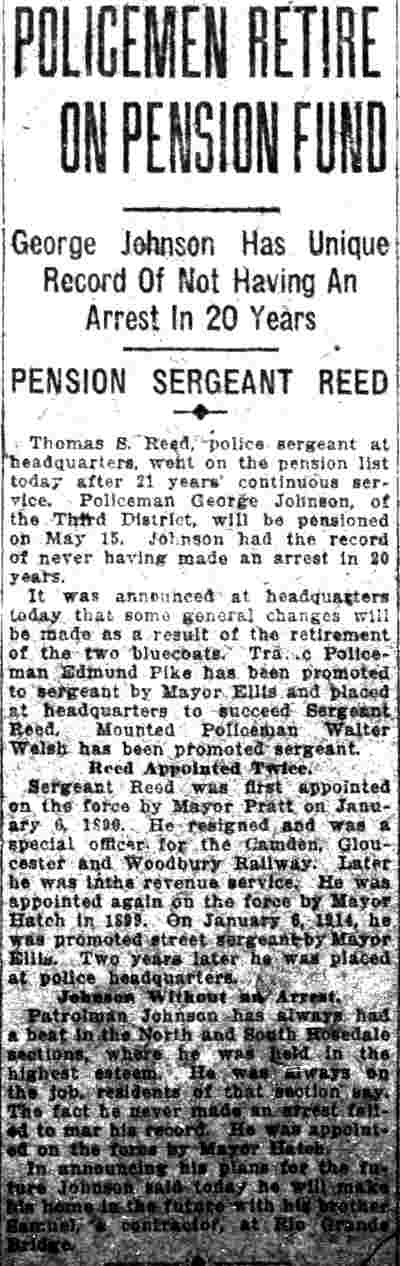
Sergeant Thomas S. Reed went on the Camden police pension list after 21 years' service, and Policeman George Johnson of the Third District was to be pensioned on May 15 — with the record of never having made an arrest in 20 years on his Rosedale beat.

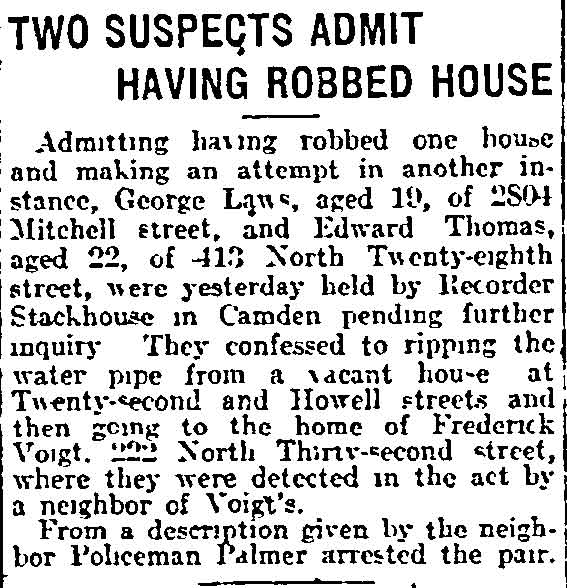
George Laws and Edward Thomas, 22, of 413 North 28th Street, admitted ripping a water pipe from a vacant house at 22nd and Howell Streets and attempting to rob the home of Frederick Voigt at 222 North 32nd Street, where they were caught by a neighbor.

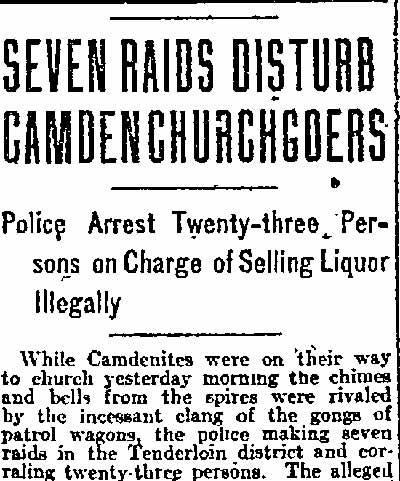
Camden police made seven simultaneous raids in the Tenderloin district on a Sunday morning, arresting twenty-three persons accused of selling liquor without a license. The raids were directed by Police Captain Arthur Stanley.

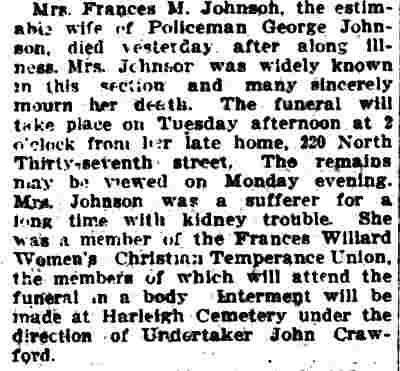
A death notice for Mrs. Frances M. Johnson, wife of Camden policeman George Johnson of 220 North Thirty-seventh Street, who died after a long illness. She was a member of the Frances Willard Women's Christian Temperance Union and was interred at Harleigh Cemetery.

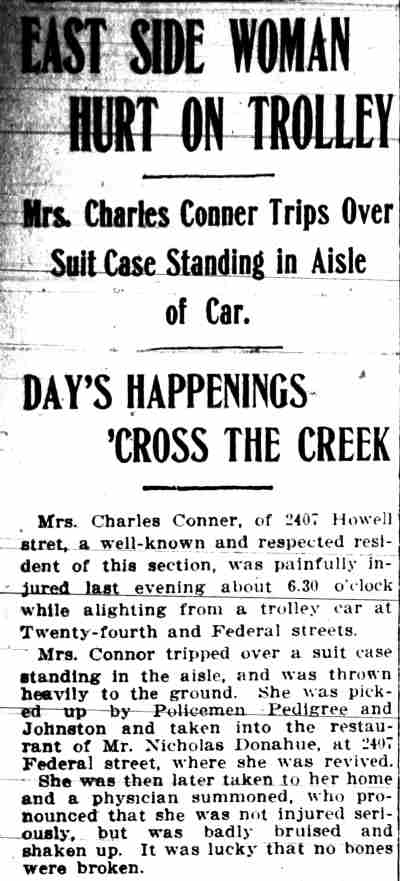
Mrs. Charles Conner of 2407 Howell Street was injured while alighting from a trolley car at Twenty-fourth and Federal Streets, tripping over a suit case left standing in the aisle. Policemen Pedigree and Johnston carried her into a nearby restaurant.

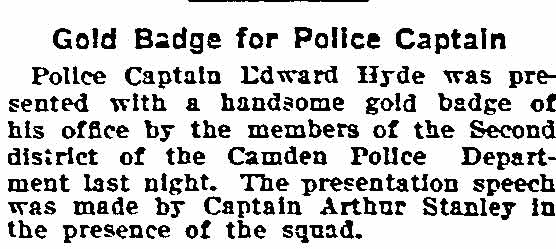
Police Captain Edward Hyde was presented with a gold badge of his office by the men of Camden's Second District; Captain Arthur Stanley made the presentation speech.

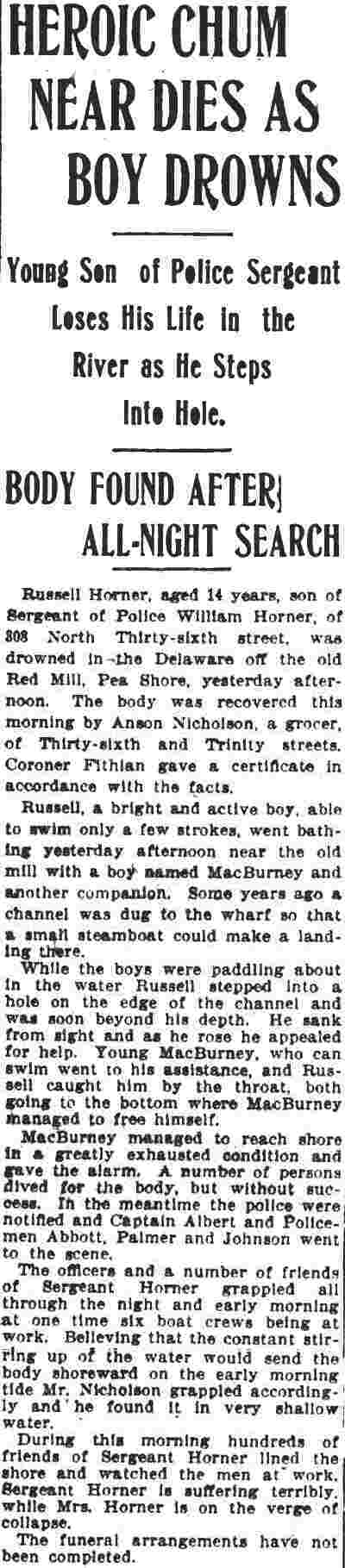
Russell Horner, 14, son of Camden police sergeant William Horner, drowned in the Delaware off the old Red Mill at Pea Shore. His body was recovered the following morning after an all-night search by police and friends of the family.

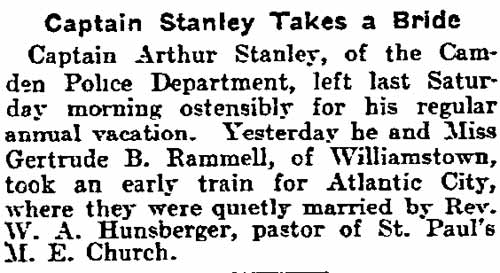
Captain Arthur Stanley left Camden ostensibly for his annual vacation, then took an early train to Atlantic City with Miss Gertrude B. Rammell of Williamstown, where they were quietly married.

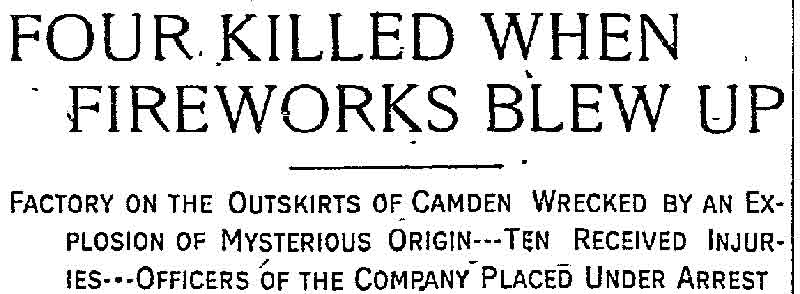
An explosion of mysterious origin wrecked the Independent Fireworks Company plant at Ferry and Cooper avenues in Camden, killing four workmen and injuring others; officers of the company were arrested on manslaughter charges.

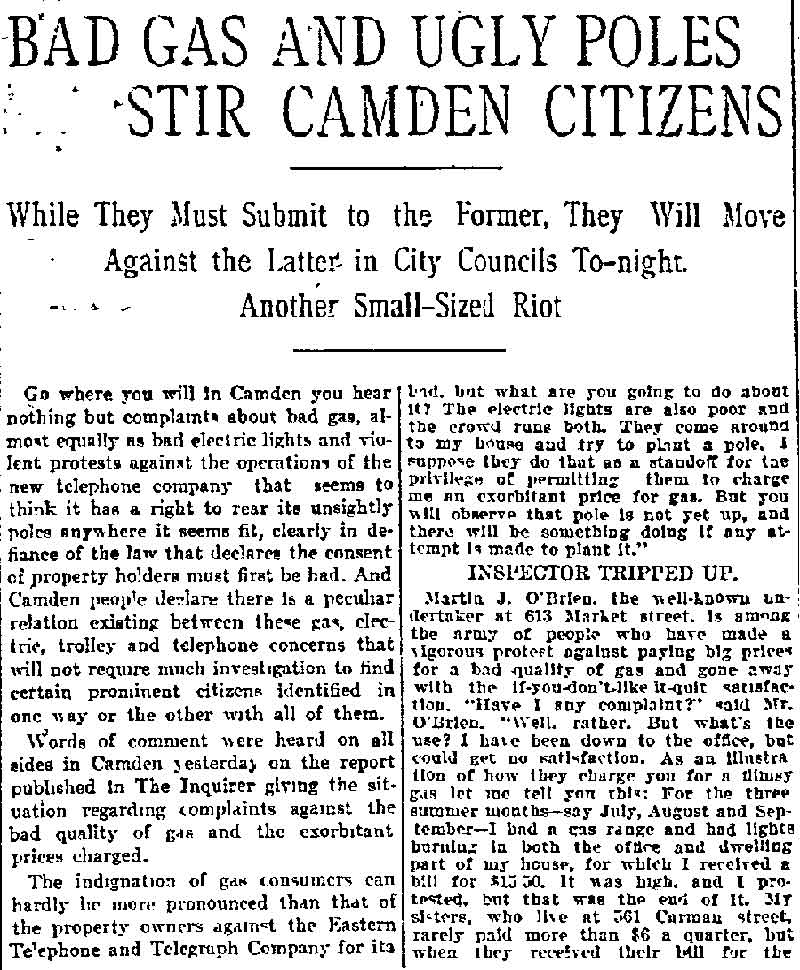
Camden householders and businessmen complained of poor gas and electric service at high prices, and of the Eastern Telephone and Telegraph Company's pole-raising. Philip Burch drove off a pole gang with hot and cold water, and property owners prepared to demand revocation of the company's franchise before City Council.

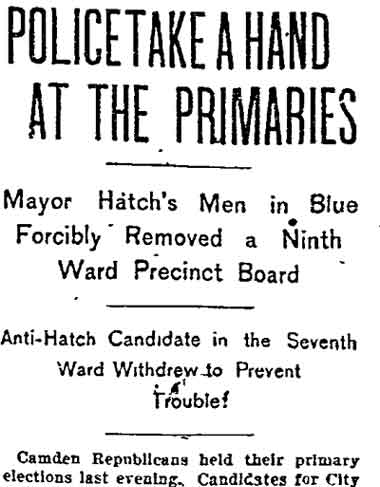
Camden Republicans held their ward primary elections, and in the Ninth Ward Mayor Hatch's policemen — Chief of Police Foster, Captain Stanley and a squad of officers — forcibly ejected the primary board seated by City Committeeman Edwin Hillman.

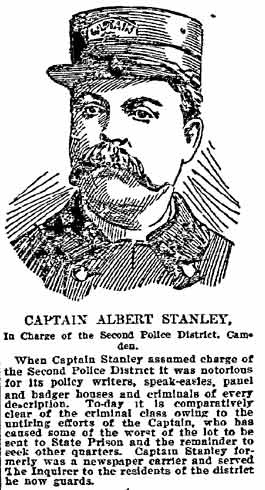
A portrait feature on the commander of Camden's Second Police District — Arthur Stanley, whose given name the Inquirer misprinted as "Albert." The item credits him with clearing the district of policy writers and speak-easies, and notes he had formerly carried the Inquirer to its residents.

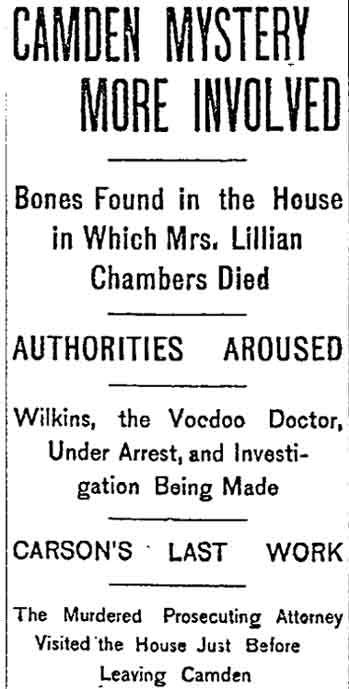
The investigation into the death of Mrs. Lillian Chambers at the Locust Street house of William H. Wilkins, a Camden fortune teller and "voodoo doctor," led police to a boiler of suspected human bones hidden behind a sealed fireplace.