People
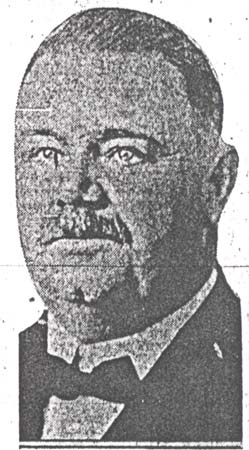
Edward S. Hyde
Edward S. Hyde rose through the Camden Police Department from patrolman to acting chief, served as a Camden County Freeholder, and died in 1930.
Tag
Edward S. Hyde rose through the Camden Police Department from patrolman to acting chief, served as a Camden County Freeholder, and died in 1930.

Baxter Street (formerly Newton Street and locally known as "Hog Alley") ran from South 7th Street to Mount Ephraim Avenue in South Camden, notorious for decades as a hub of illegal activity; largely demolished, the 700 block survives as an overgrown alley.

Sycamore Street is one of Camden's "tree" streets, originally running east from Front Street to Haddon Avenue; its intersections at 7th, 8th and Louis Streets were hubs for different ethnic and cultural communities.

Division Street runs across South Camden. In 1997, a portion of the street was renamed Ramona Gonzalez Street to honor a community leader; the remainder continues to be known as Division Street.

2nd Street extends north-south between Front Street and 3rd Street, running parallel to the Delaware River until Mechanic Street. In the early 1970s, several buildings were cleared on the east side of North 2nd Street below Mickle Street to make way for the Royal Court townhomes and Mickle Tower senior citizens apartment building.
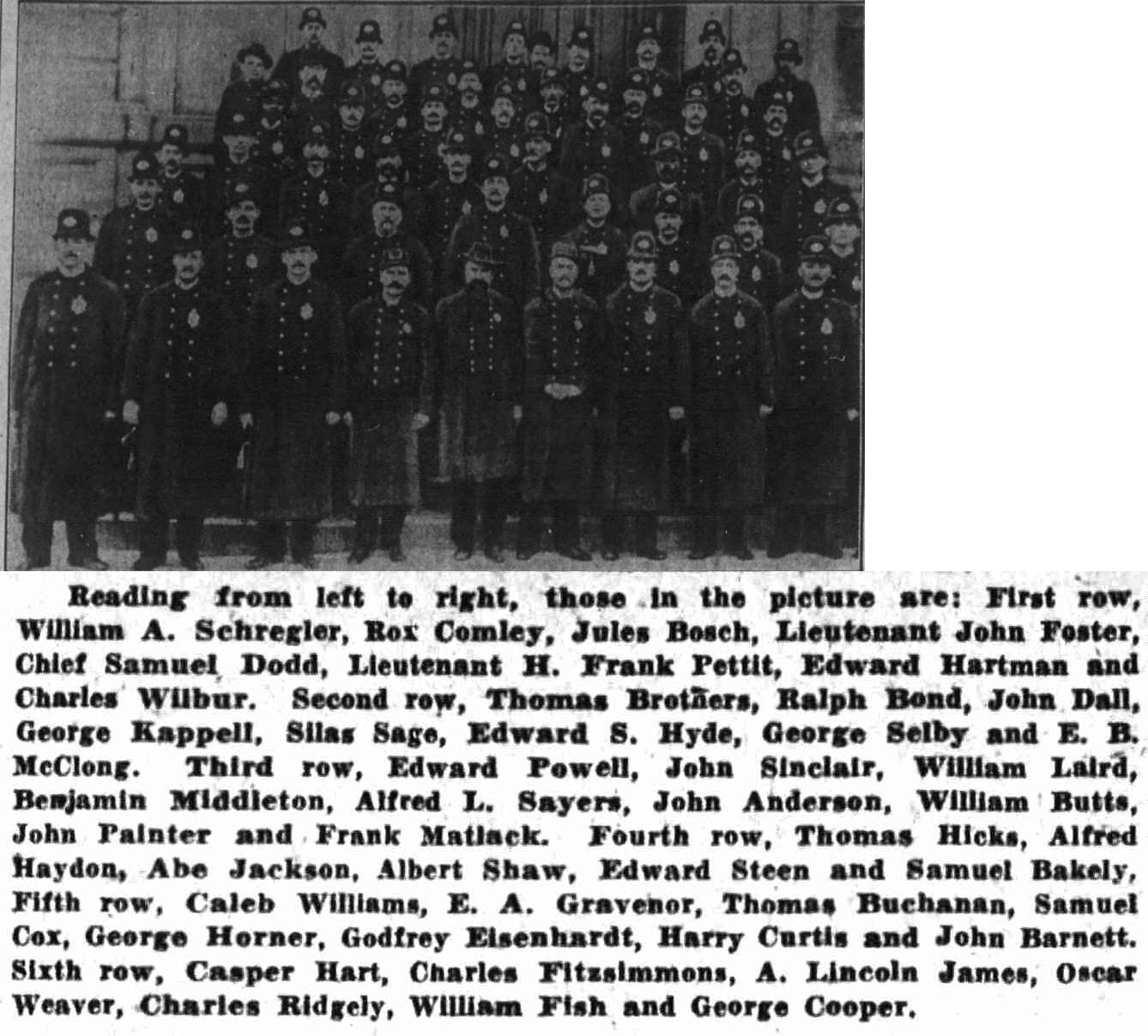
A 1930 Camden Courier-Post retrospective reprints a photograph of the Camden Police Department as it appeared in 1898, with every officer in the group identified — among them Edward S. Hyde.
A police motorcycle squad under Inspector Humes escorts the funeral of former police chief Edward S. Hyde, held at his Haddon Avenue home with burial in Harleigh Cemetery.
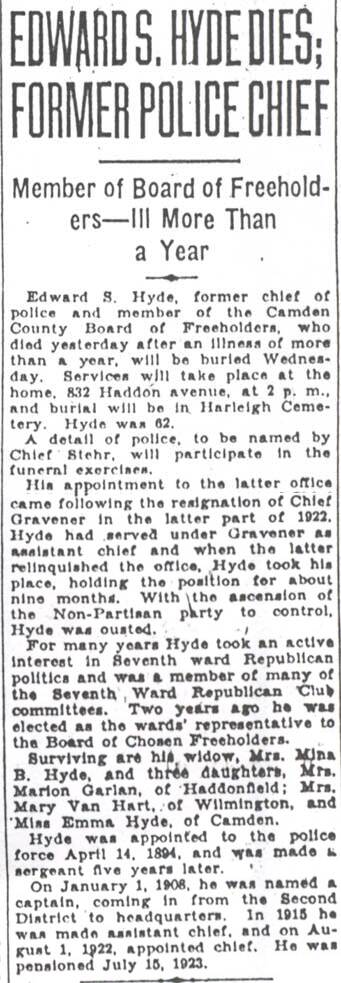
Edward S. Hyde, former Camden chief of police and member of the county Board of Freeholders, dies after an illness of more than a year; services will be held at his Haddon Avenue home with burial in Harleigh Cemetery.
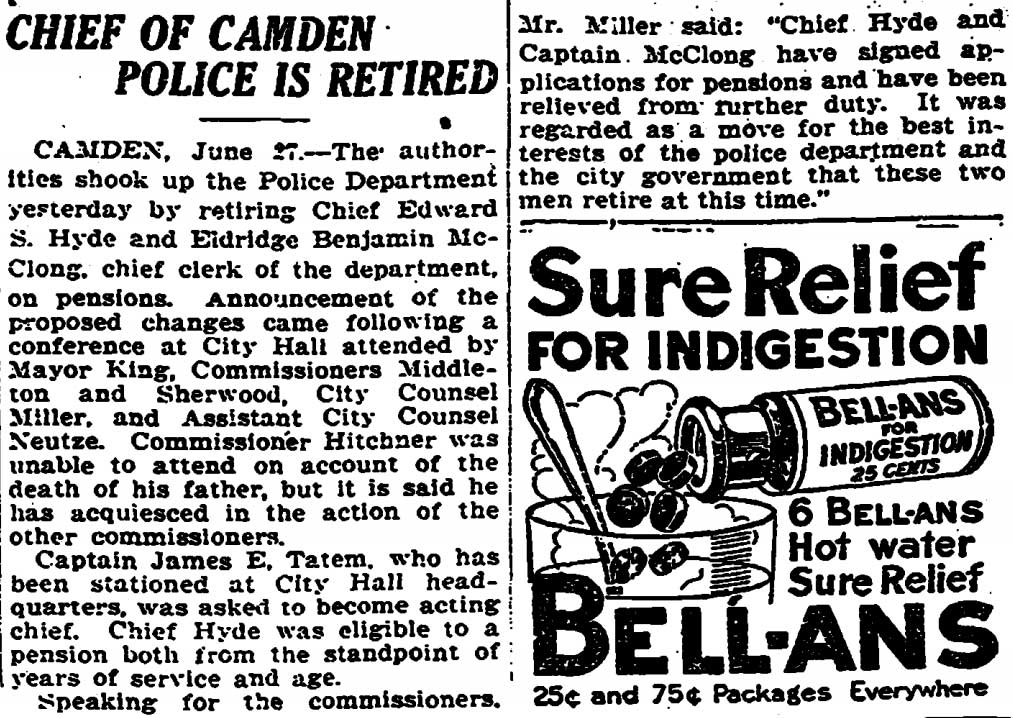
Camden authorities retire Police Chief Edward S. Hyde and chief clerk Eldridge Benjamin McClong on pensions; Captain James E. Tatem is asked to become acting chief.

The police committee of Camden City Council directed Solicitor Bleakly to draft an ordinance partially reorganizing the Police Department, reducing the number of captains to one and retiring seven veteran officers on pension.
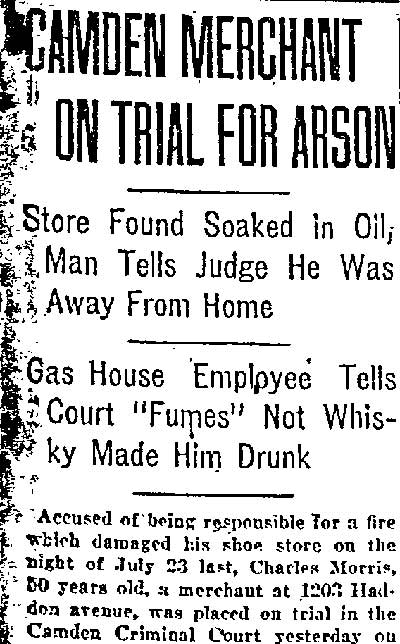
Charles Morris, a merchant at 1203 Haddon Avenue, went on trial in Camden Criminal Court on arson, conspiracy and aiding indictments over a July 23 fire at his shoe store; Fire Chief Carter and Police Chief Hyde testified to oil fumes in the store.
Assistant Chief Edward S. Hyde, temporarily heading the Camden police department, denies that patrolmen listing the names of saloon patrons — a Federal Prohibition enforcement measure — are acting under any police orders.

Mayor Charles H. Ellis ordered an investigation into the $200,000 fire that destroyed the Economy Store and adjoining buildings at 427-429 Kaighn Avenue, injuring five Camden firemen — one of them, Captain Martin B. Carrigan, critically.
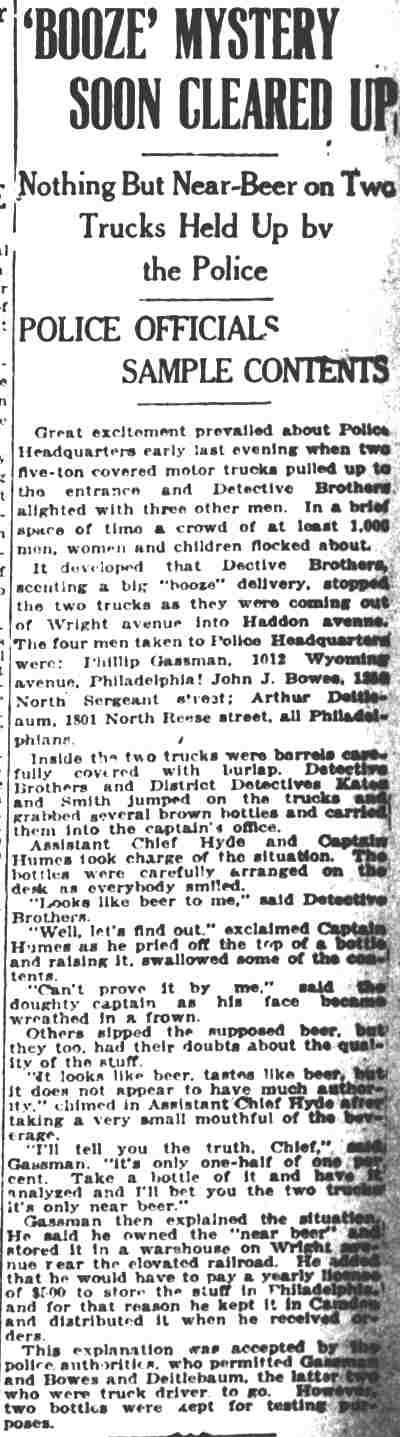
Detective Brothers stops two five-ton trucks suspected of a big Prohibition-era liquor delivery; Assistant Chief Hyde and Captain Humes take charge, only to find the bottles hold nothing but near-beer.

Camden held a Victory Jubilee parade and banquet on September 6, 1919, reviewed by Admiral Henry B. Wilson, honoring returning soldiers and sailors and the 135 Camden County men who died in the war.
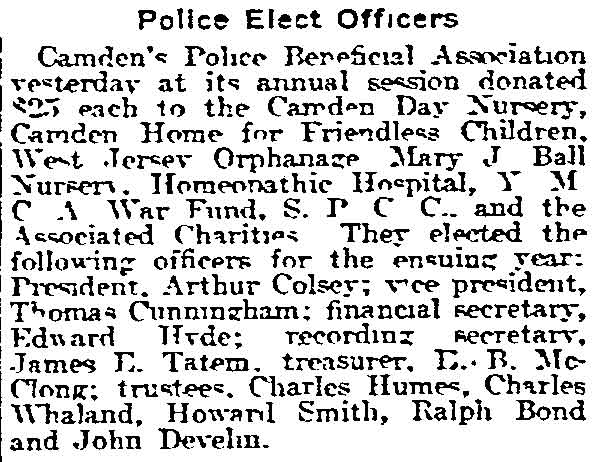
The Camden Police Beneficial Association makes charitable donations at its annual session and elects officers for the year, including Edward Hyde as financial secretary.
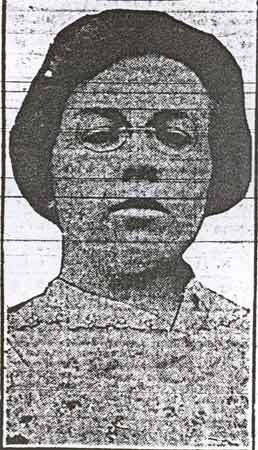
Mrs. Marian Ashbridge confesses to smuggling into the Camden County Jail — hidden in a basket of fruit — the revolver her husband used to kill jailor Isaac Hibbs and escape; she is held without bail on a charge of conspiracy.
Wilson Ashbridge, slayer of Mrs. Elizabeth Dunbar, and forger George E. Thompson shoot their way out of the Camden County Jail with a smuggled revolver, killing keeper Isaac Hibbs and wounding Joseph Ellis; a general jail delivery is averted by police summoned by the wounded men.
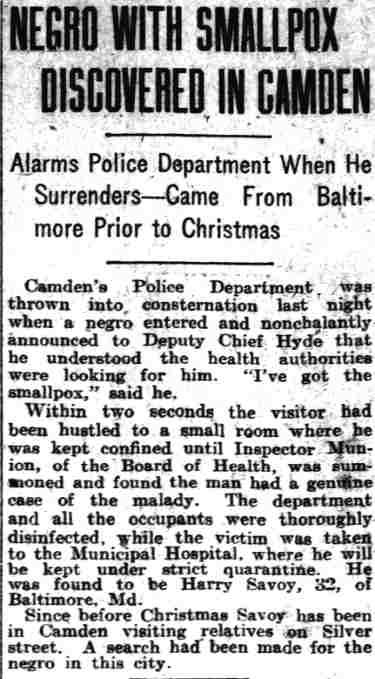
A man surrenders at Camden police headquarters announcing to Deputy Chief Hyde that he has smallpox; he is confined and removed to the Municipal Hospital under quarantine.
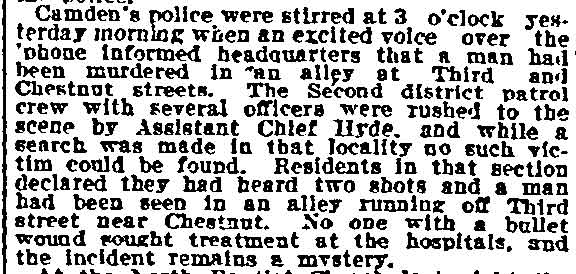
A 3 a.m. telephone report of a murder in an alley at Third and Chestnut streets sends the Second district patrol, under Assistant Chief Hyde, to the scene — but no victim is ever found.
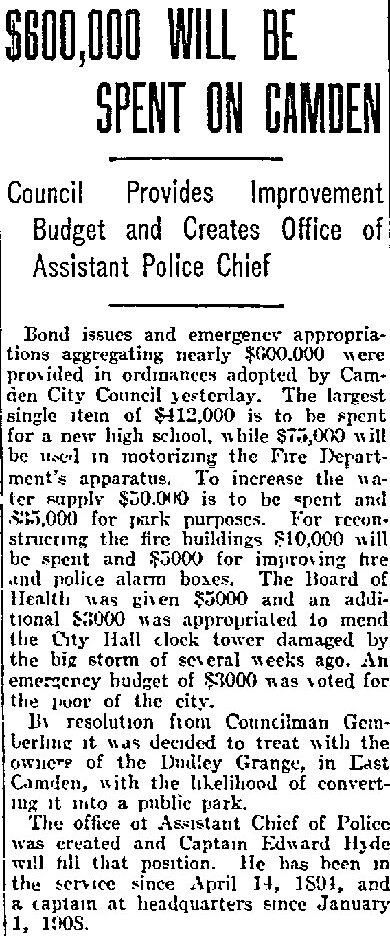
Camden City Council adopts bond issues and appropriations of nearly $600,000 — including a new high school and Fire Department motorization — and creates the office of Assistant Police Chief.
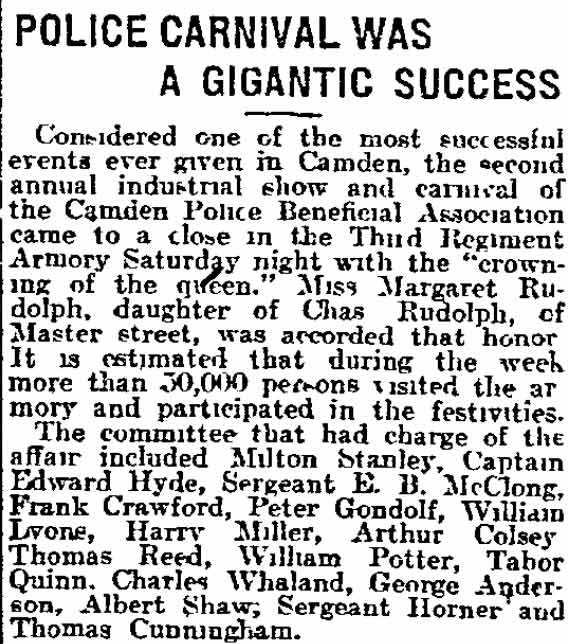
The second annual industrial show and carnival of the Camden Police Beneficial Association draws more than 50,000 to the Third Regiment Armory; Captain Edward Hyde served on the organizing committee.
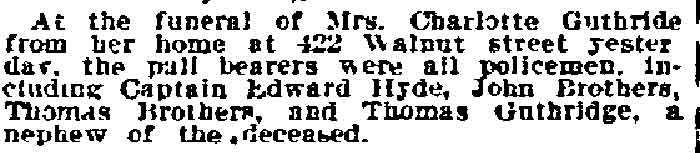
At the funeral of Mrs. Charlotte Guthridge on Walnut Street, the pallbearers were all policemen, including Captain Edward Hyde and detective John Brothers.
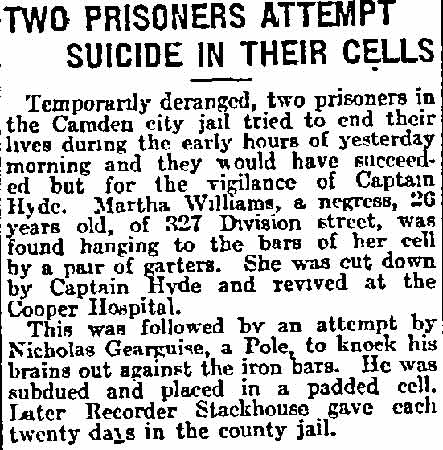
Two prisoners in the Camden city jail attempt to take their own lives; the vigilance of Captain Hyde saves them, and both are given twenty days by Recorder Stackhouse.
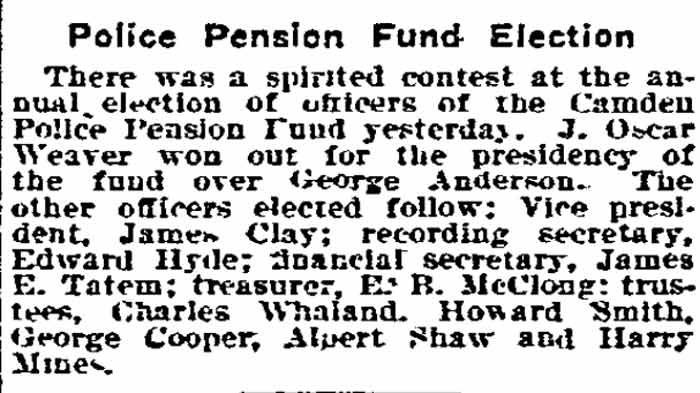
J. Oscar Weaver wins the presidency of the Camden Police Pension Fund over George Anderson in a spirited annual election; Edward Hyde is elected recording secretary.
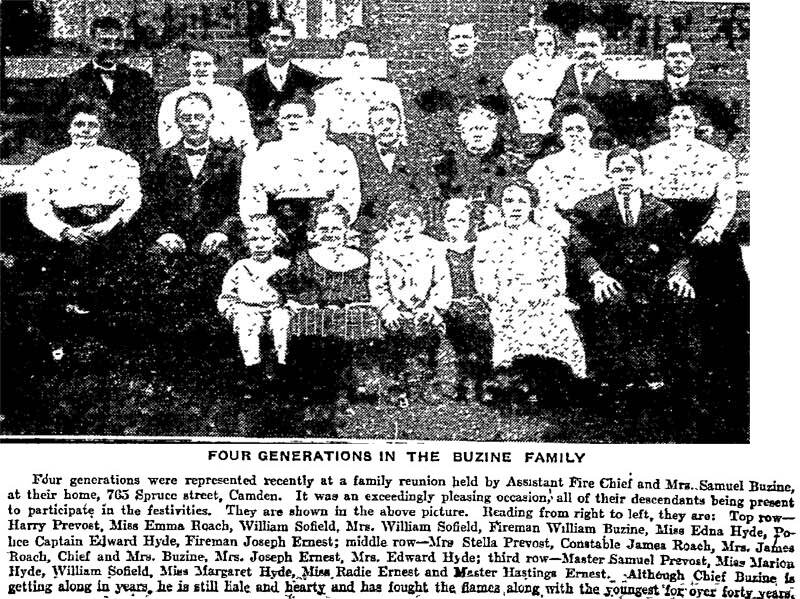
Four generations gather at a family reunion held by Assistant Fire Chief Samuel Buzine and his wife; the group includes Police Captain Edward Hyde, who married into the Buzine family.
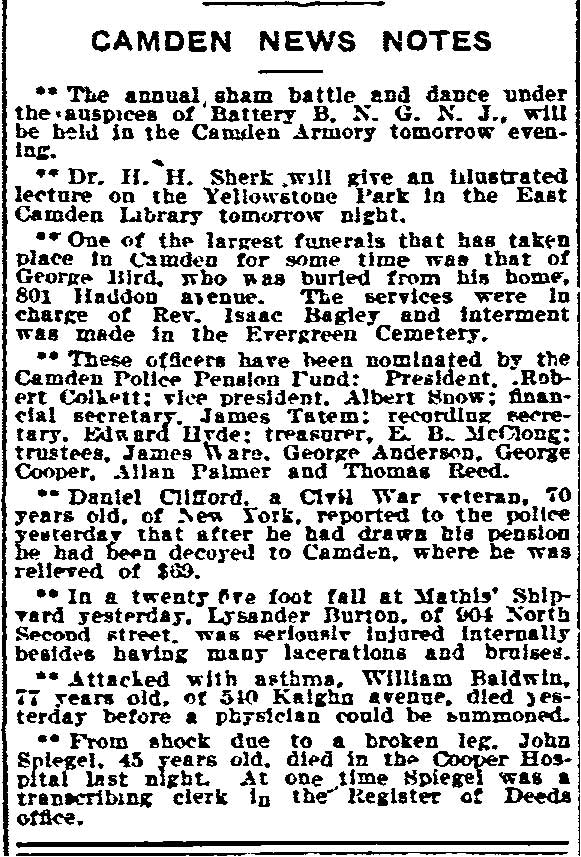
A column of Camden news items, including the nomination of officers for the Camden Police Pension Fund — with Edward Hyde nominated recording secretary — the funeral of George Bird, and the death of William Baldwin of 510 Kaighn Avenue.
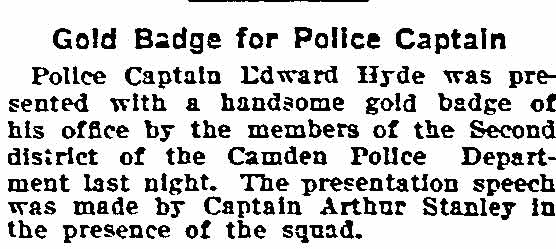
Police Captain Edward Hyde was presented with a gold badge of his office by the men of Camden's Second District; Captain Arthur Stanley made the presentation speech.
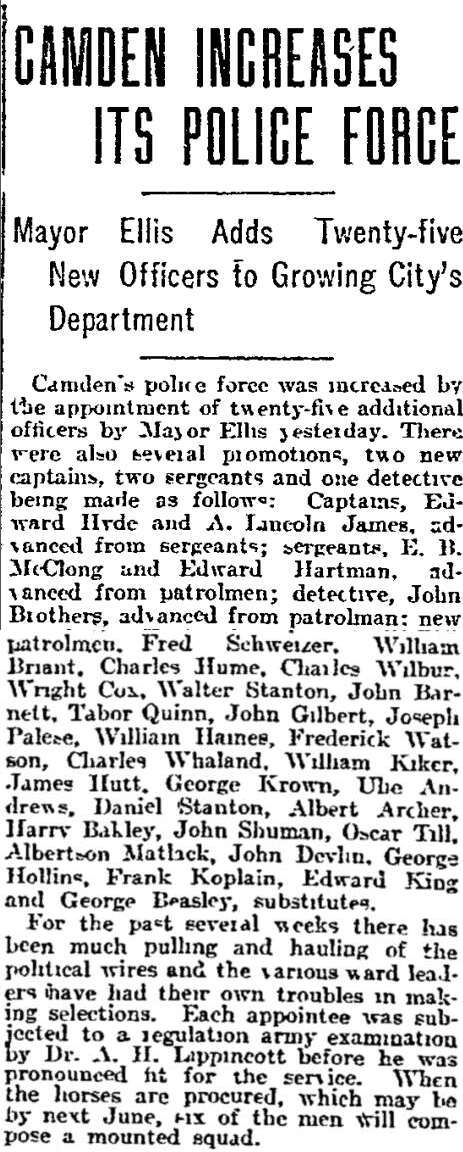
Mayor Ellis adds twenty-five officers to the Camden police force and orders several promotions, elevating Edward Hyde and A. Lincoln James from sergeants to captains.
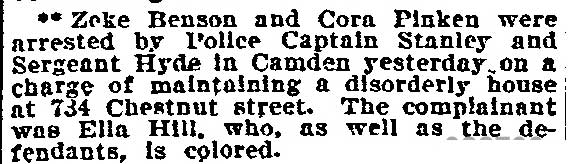
Zeke Benson and Cora Pinken are arrested by Captain Stanley and Sergeant Hyde on a charge of maintaining a disorderly house at 734 Chestnut Street.
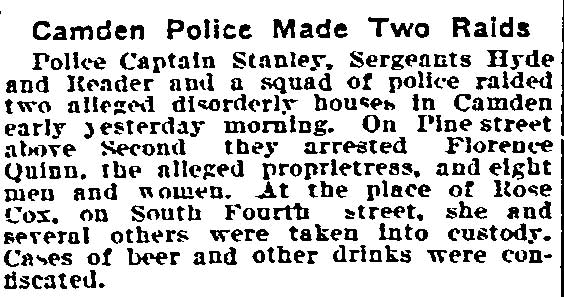
Captain Stanley, Sergeants Hyde and Reader, and a police squad raid two alleged disorderly houses in Camden, arresting the proprietors and confiscating cases of beer.
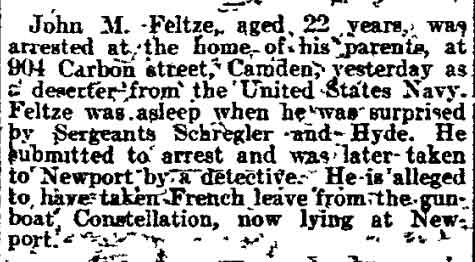
John M. Feltze, 22, of 904 Carbon Street was arrested at his parents' home as a deserter from the United States Navy.
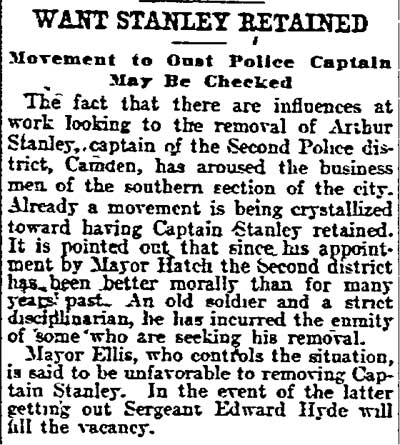
Business men of southern Camden move to block the removal of Police Captain Arthur Stanley; were he ousted, Sergeant Edward Hyde would fill the vacancy.
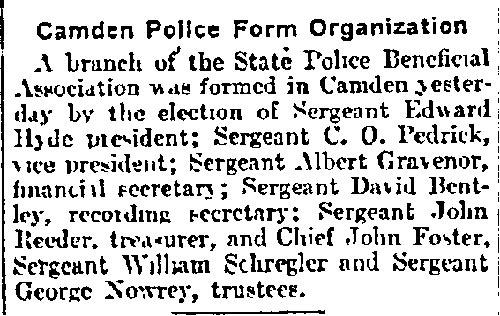
Camden police form a branch of the State Police Beneficial Association, electing Sergeant Edward Hyde president and Chief John Foster among the trustees.
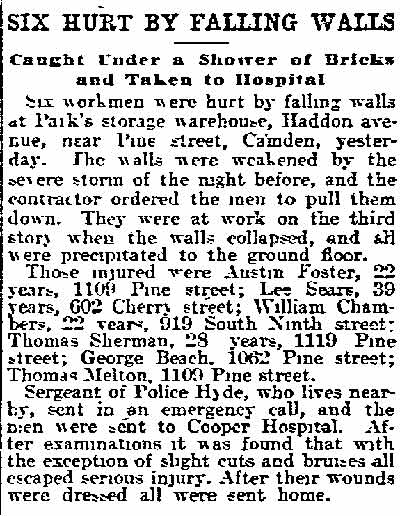
Six workmen are hurt when storm-weakened walls collapse at Park's storage warehouse on Haddon Avenue; Sergeant of Police Hyde, who lived nearby, sends in the emergency call and the men are taken to Cooper Hospital.
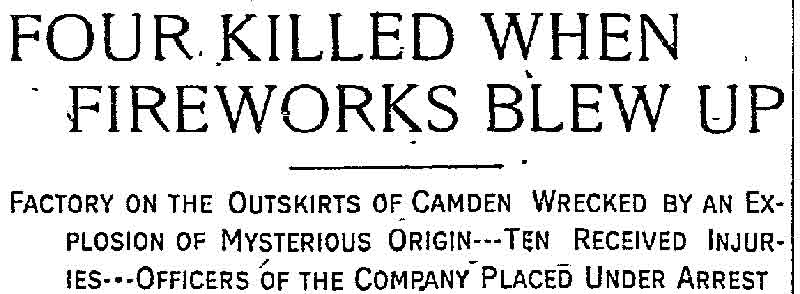
An explosion of mysterious origin wrecked the Independent Fireworks Company plant at Ferry and Cooper avenues in Camden, killing four workmen and injuring others; officers of the company were arrested on manslaughter charges.

Camden police were left without a clue after five armed men held up the State Street bridge tender, blew up a safe, and terrorized the outskirts of East Camden. Chief John Foster and his detectives chased leads as far as Elizabeth, New Jersey, without result.
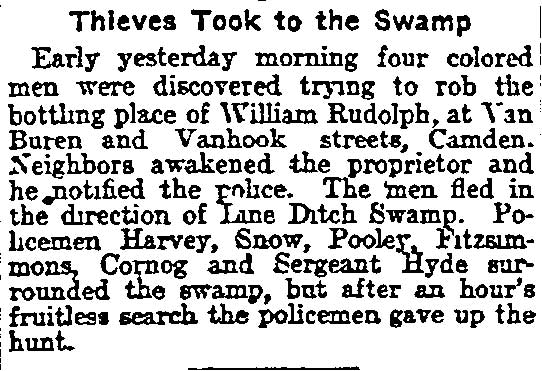
Four men attempting to rob William Rudolph's bottling works at Van Buren and Vanhook streets flee into Lane Ditch Swamp; police, including Sergeant Hyde, surround it but abandon the search after an hour.
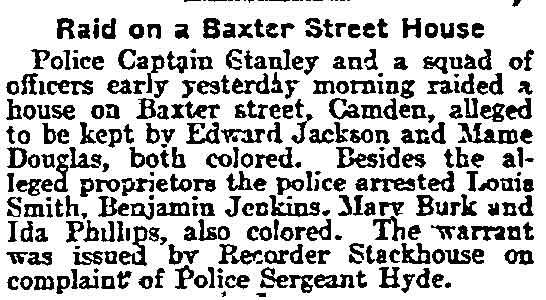
Captain Stanley and officers raid a Baxter Street house alleged to be kept by Edward Jackson and Mame Douglas; six arrested.
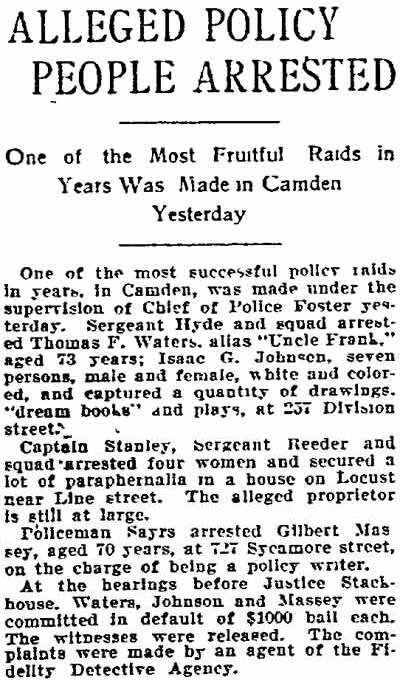
A major policy (numbers) raid in Camden, supervised by Chief of Police Foster with Sergeant Hyde's squad, nets nine arrests and a quantity of drawings and "dream books" at 257 Division Street.
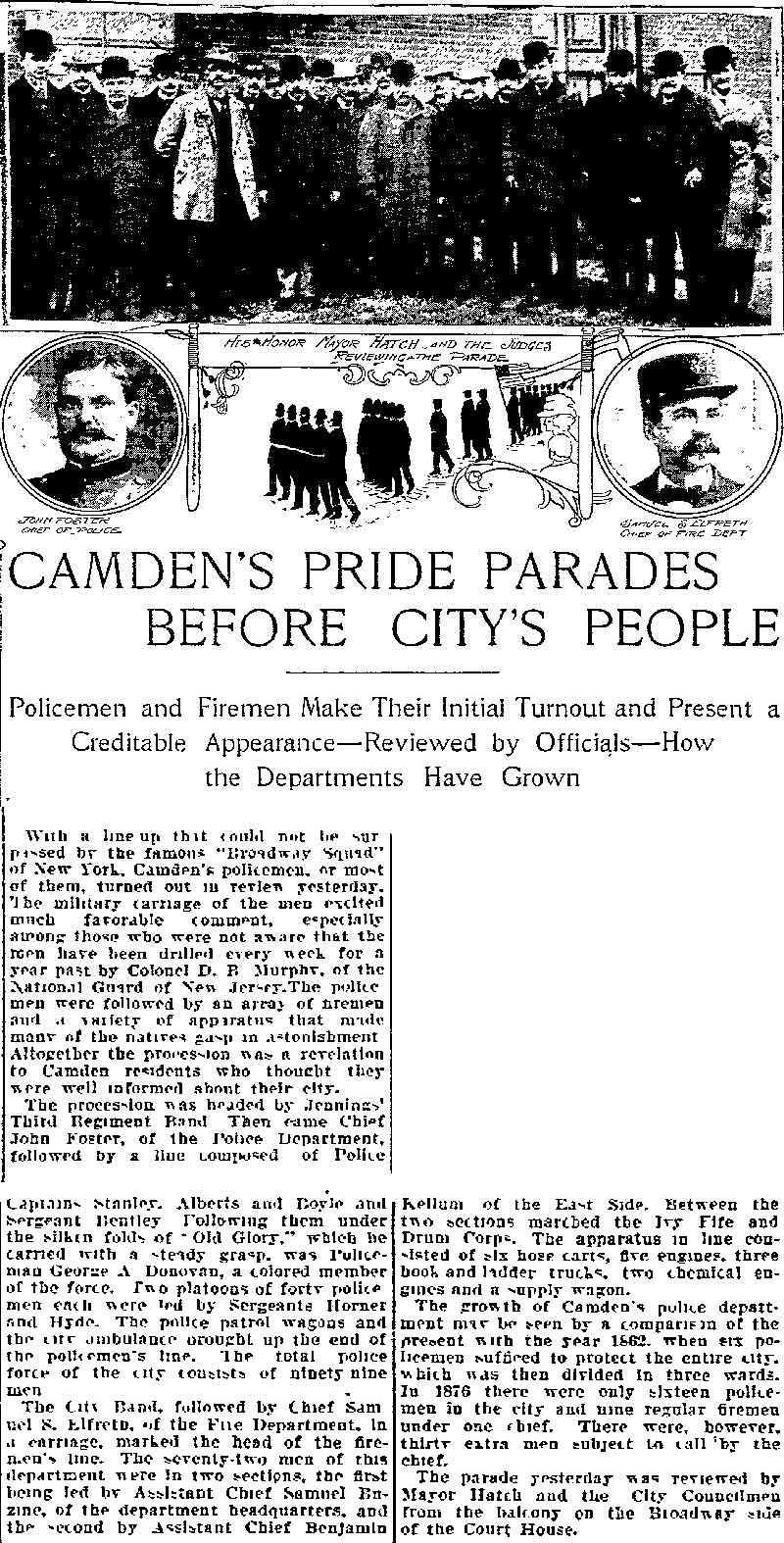
Camden's policemen and firemen make their first formal turnout in review, drilled to a military carriage; the Philadelphia Inquirer describes the procession, its officers, and the growth of the departments since 1862.
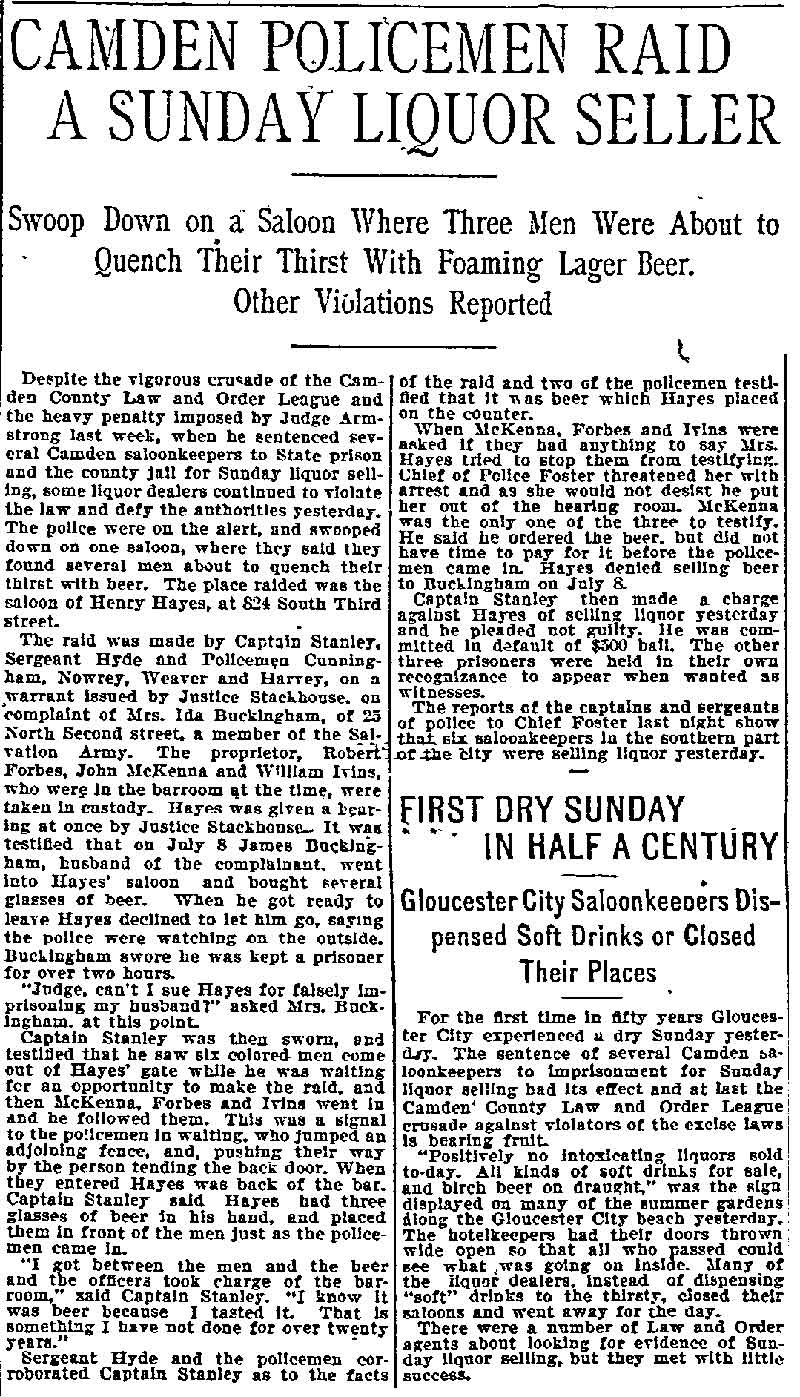
Acting on a complaint, Captain Stanley and Sergeant Hyde raid Henry Hayes' saloon on South Third Street for Sunday liquor selling; Hayes is committed in default of bail.
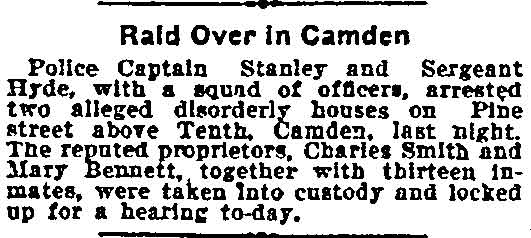
Police Captain Stanley and Sergeant Hyde raid two alleged disorderly houses on Pine Street above Tenth, arresting the reputed proprietors and thirteen inmates.
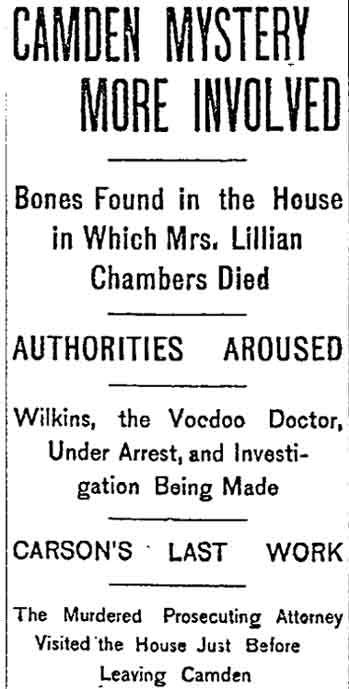
The investigation into the death of Mrs. Lillian Chambers at the Locust Street house of William H. Wilkins, a Camden fortune teller and "voodoo doctor," led police to a boiler of suspected human bones hidden behind a sealed fireplace.

Mayor Cooper B. Hatch launches a campaign against Camden's speak-easies; the first raid, led by Captain Stanley and Sergeant Hyde, seizes a house full of liquor, while saloonkeepers are fined for operating gambling machines.
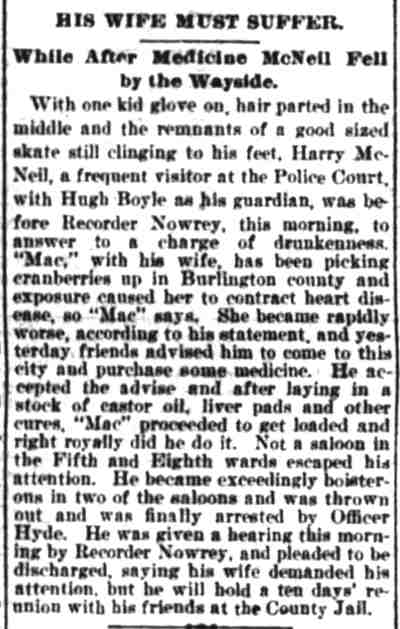
Harry McNeil, a frequent visitor to the Camden Police Court, is arrested by Officer Hyde for drunkenness after a spree through the saloons of the Fifth and Eighth wards.
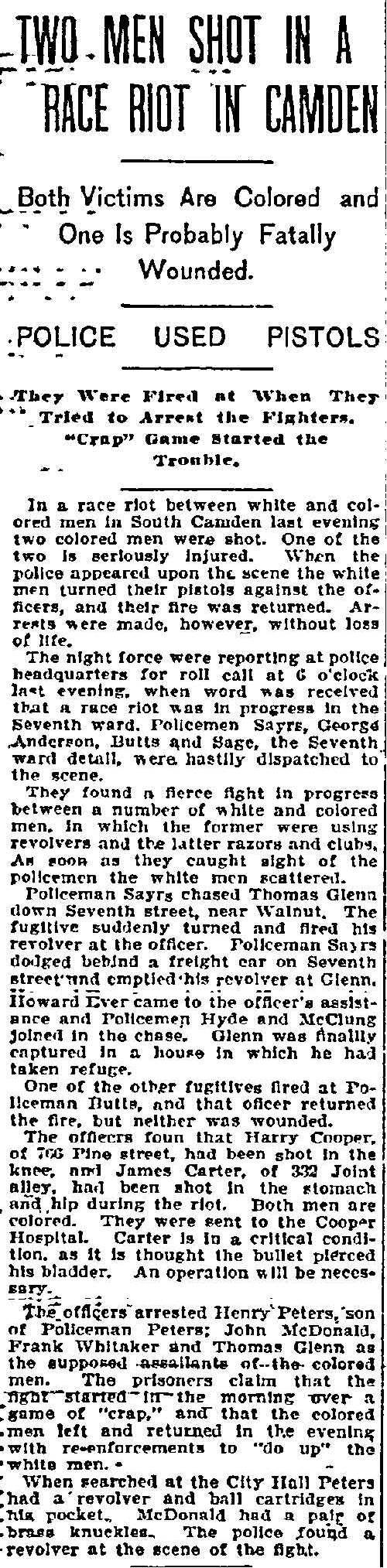
A race riot in South Camden's Seventh Ward leaves two men wounded; police, including Policemen Hyde and McClung, exchange pistol fire with the combatants and make several arrests.
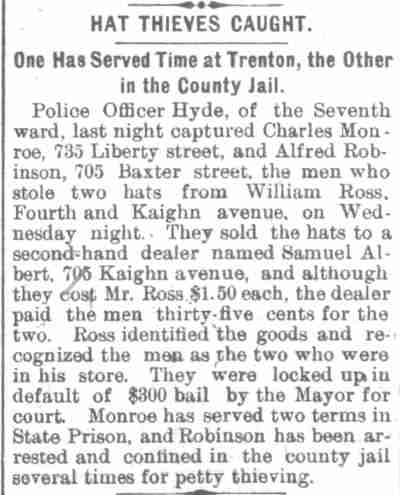
Police Officer Hyde captures Charles Monroe and Alfred Robinson of 705 Baxter Street for stealing two hats from William Ross at Fourth and Kaighn Avenue.
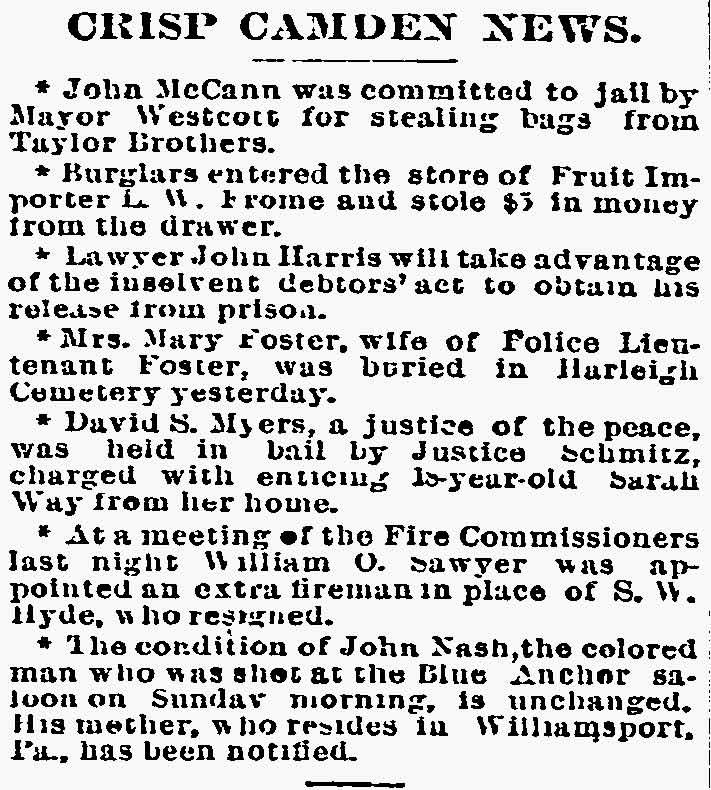
A roundup of short Camden news items from the Philadelphia Inquirer, including the appointment of William O. Sawyer as an extra fireman in place of S. N. Hyde, who resigned.
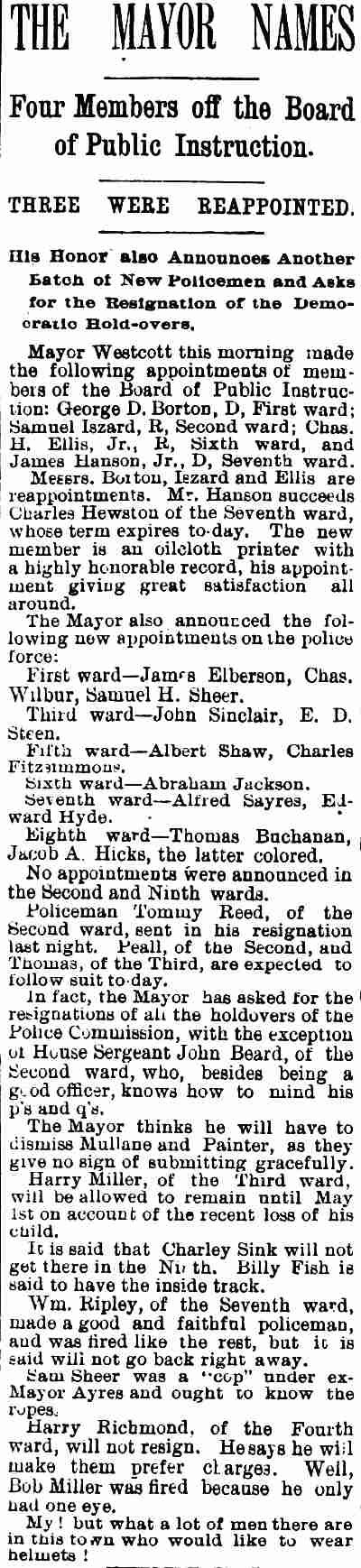
Mayor Westcott announces four members of the Board of Public Instruction and a fresh batch of new policemen, including Edward Hyde of the Seventh Ward, while asking Democratic holdovers to resign.