Streets
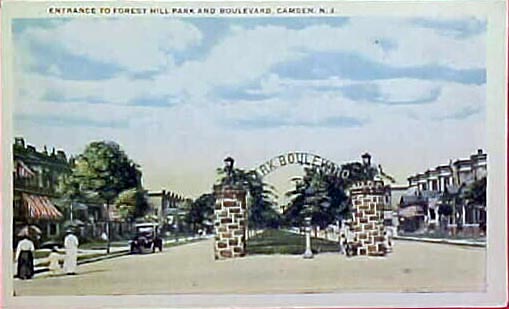
Park Boulevard
Park Boulevard is one of the three main thoroughfares of Camden's Parkside neighborhood, running from Haddon Avenue north and curving east to Vesper Boulevard at the border of Harleigh Cemetery.
Tag
Park Boulevard is one of the three main thoroughfares of Camden's Parkside neighborhood, running from Haddon Avenue north and curving east to Vesper Boulevard at the border of Harleigh Cemetery.
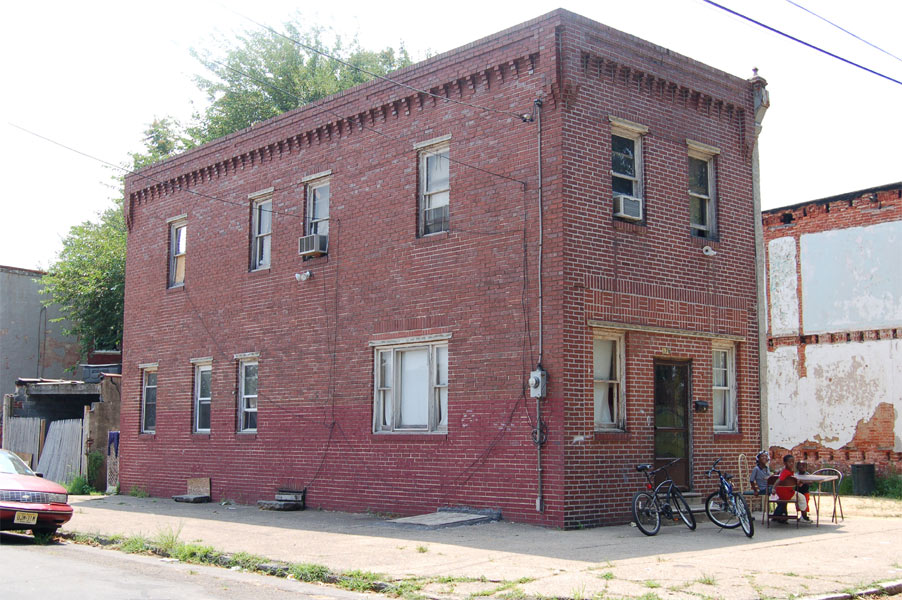
Louis Street runs between Haddon Avenue and Mount Ephraim Avenue, from Mount Vernon Street south to Sheridan Street. Primarily residential with many corner businesses, it passes Whitman Park and was devastated by the crack epidemic of the 1980s.
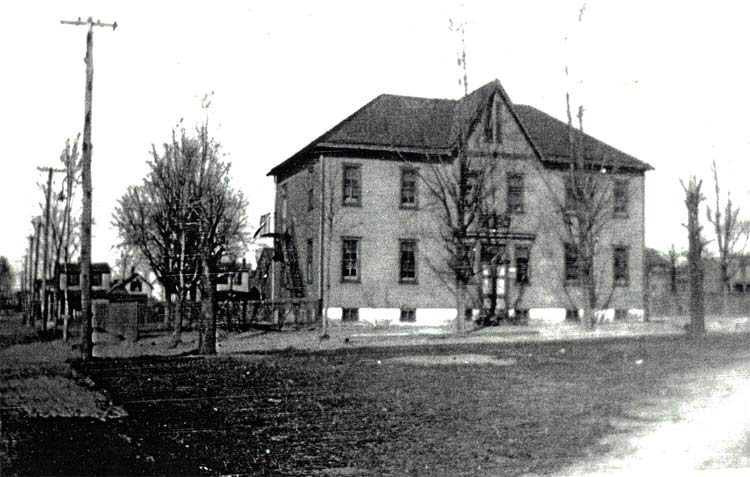
The James G. Blaine School was located at the south-east corner of North 23rd Street at Wayne Avenue in the Pavonia-Cramer Hill section of Camden. Built by Stockton Township, it joined Camden public schools in 1899 and was closed in 1932.
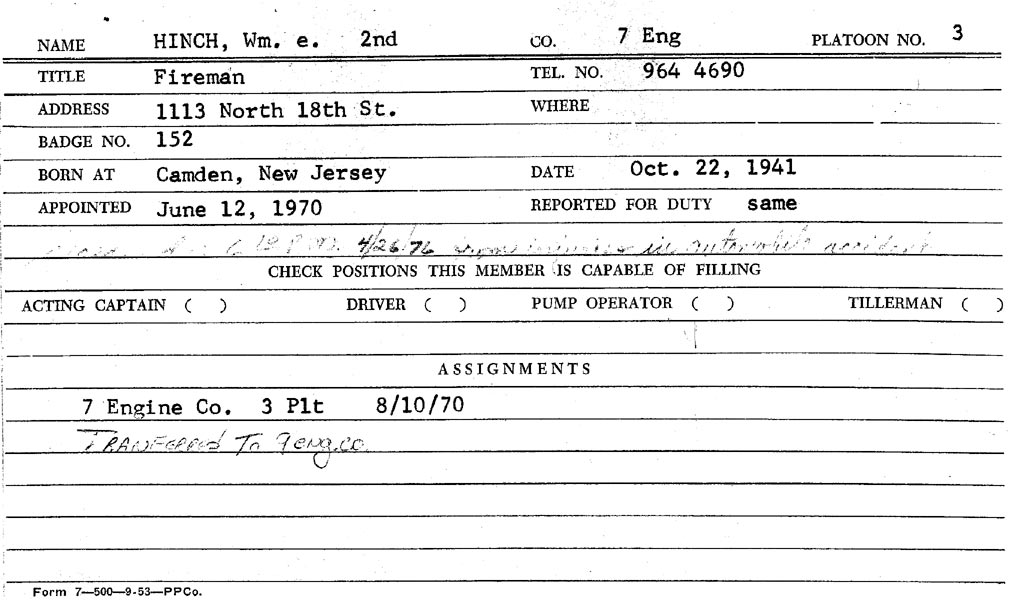
William E. Hinch II (1941–1976) was a Camden firefighter. Born in Camden and living at 1113 North 18th Street in Cramer Hill, he was appointed to the Camden Fire Department in 1969 and served with Engine Company 7 on Kaighn Avenue and later Engine Company 9 in East Camden. He died on April 26, 1976 of injuries sustained in an automobile accident.
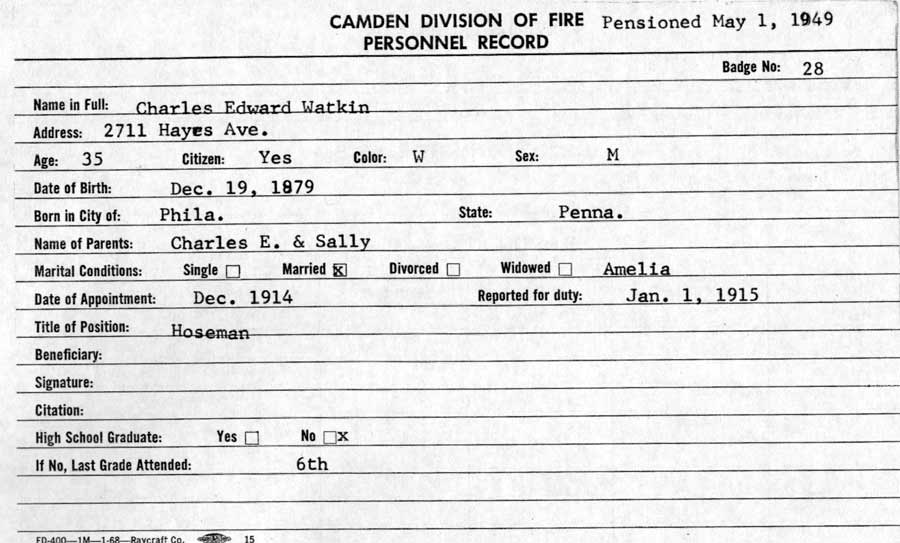
Charles E. Watkin Jr. (1879-1954) was a Camden Fire Department captain who served over 34 years, from his appointment on January 1, 1915 until his retirement on May 1, 1949.
Camden firefighter who served 32 years from 1941 to 1971, rising to Acting Battalion Chief. Son of Camden firefighter Samuel Oshushek.
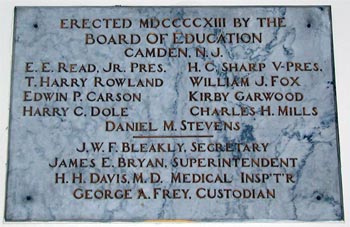
Physician, pharmacist, and Camden's first Medical Inspector; later Health Director and chief school physician who shaped public-school health care in Camden for a generation.
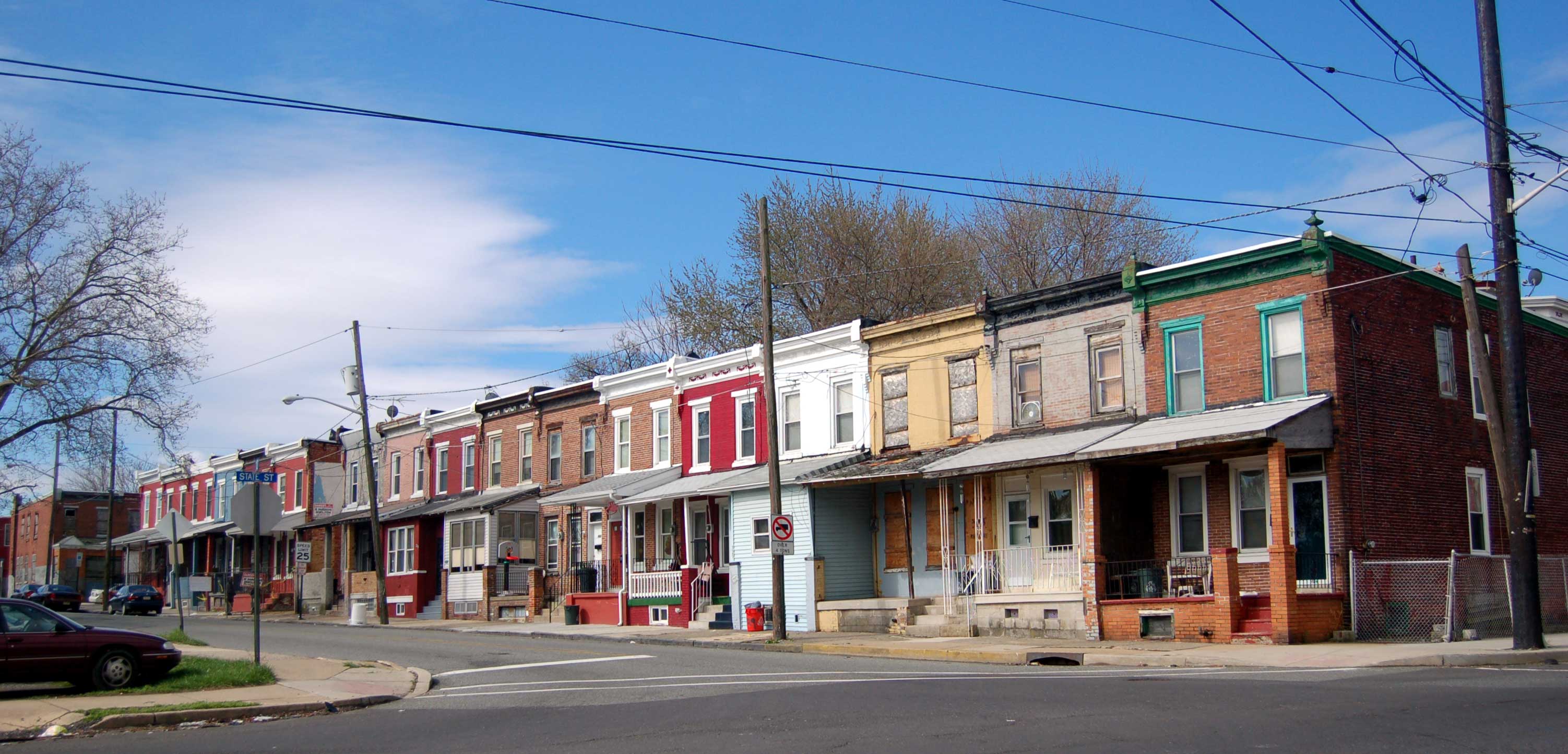
City directory records and newspaper accounts for 10th Street, one of Camden’s longest thoroughfares, running from State Street in North Camden through Cramer Hill and Whitman Park to Morgan Village, 1870s–1970s.
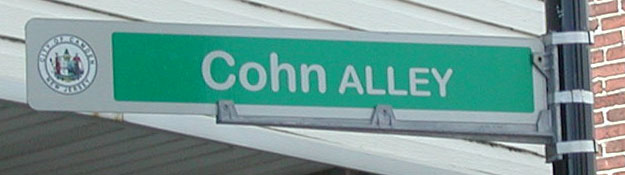
Cohn Alley is named after Edward N. Cohn, a prominent figure in Camden's real estate and construction circles during the 1880s and 1890s. The alley runs east from Haddon Avenue, between Kaighn and Liberty Streets, and never had any formal addresses.
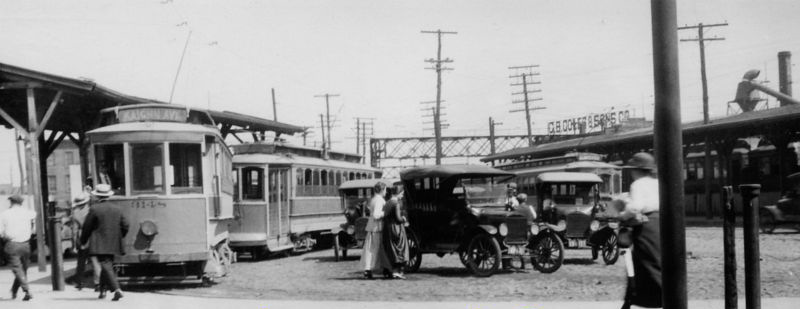
One of Camden's major east-west streets, running from Kaighn's Point at the Delaware River east to Admiral Wilson Boulevard and the Airport Circle in Pennsauken, with block-by-block address histories from the 1860s through the early 2000s.

Sitley & Son was established by Arthur M. Sitley and his son, Frank Budd Sitley. Originally farmers, the Sitleys recognized a business opportunity in Camden and began selling grain, feed, and farm equipment.
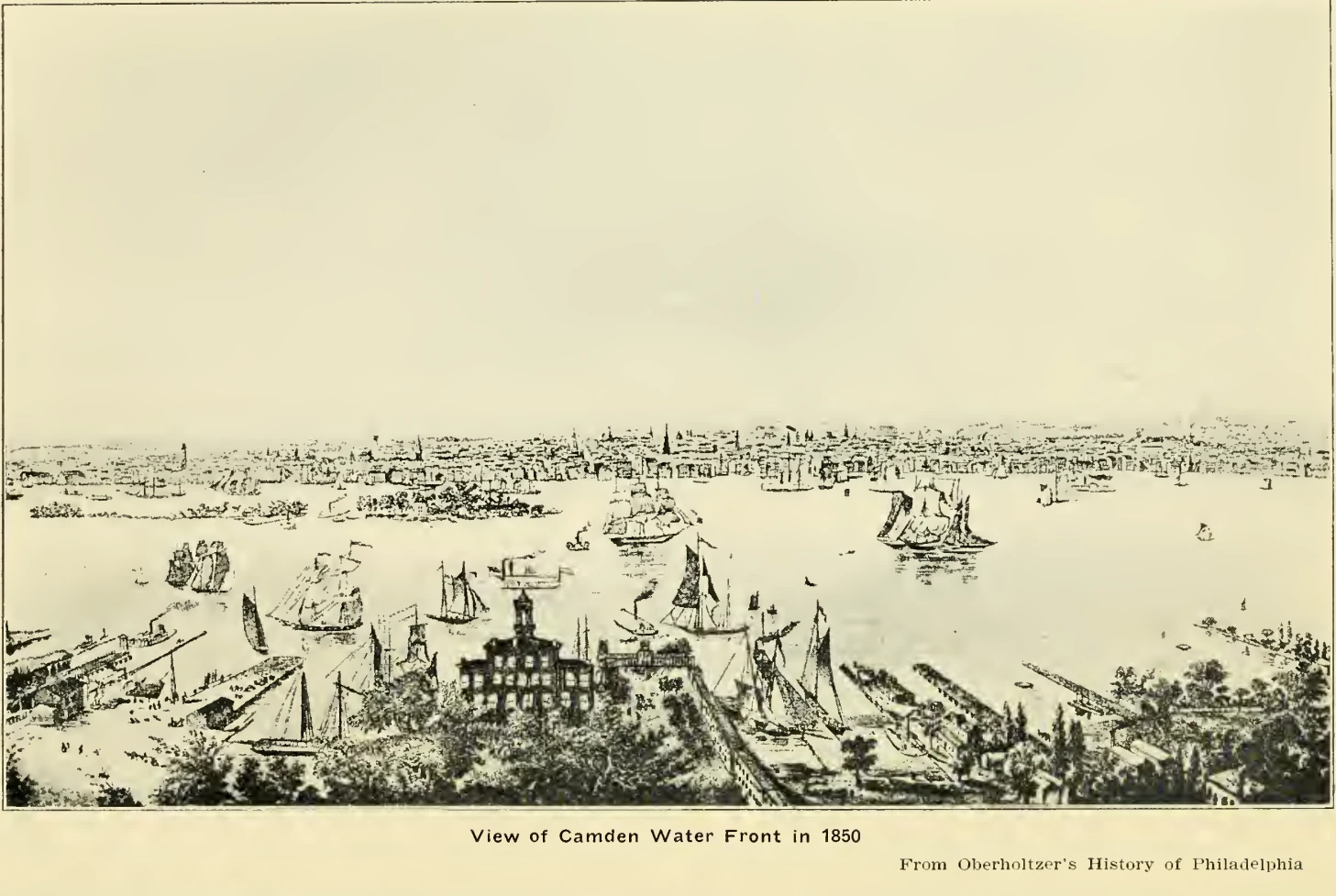
Annals of Camden No 3 - Old Ferries - Camden NJ Download In this age of inventions, improvements and ever-changing modes of transportation, the ferry boat is still an important factor in carrying the traveller across that "goodly and noble" river which forms the boundary between the two Quaker Colonies of New Jersey and Pennsylvania.
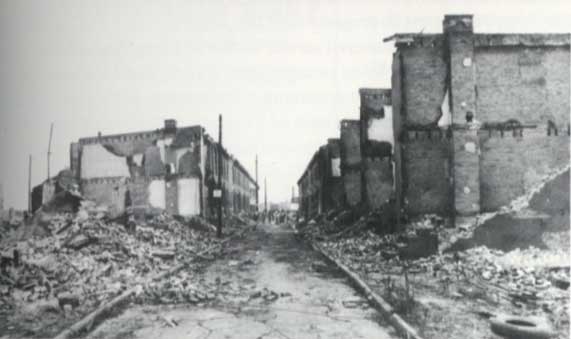
Burns Street was in Camden's Poet's Row neighborhood, named for Robert Burns. Three blocks of row homes built in the 1890s, all destroyed in the catastrophic Poet's Row fire of August 1972.

Henry Evans Zook was born on March 29, 1888, in Evesham Township, New Jersey, to John Trimble Zook Sr. and Mary B. Evans.
Linden Street runs east from the Delaware River to North 12th Street in Camden; large portions were demolished for the Benjamin Franklin Bridge, Rutgers University and the toll plaza.
Camac Street, often confused with Gant Street, was a short Camden, New Jersey street running between the Delaware River and South 2nd Street below Kaighn Avenue.

Charles Miller Gladney was born in New Jersey on September 2, 1877, to George and Mary Gladney. In 1878, the family lived at 728 Mount Vernon Street , but by 1880, George, Mary, and their older son David had moved to 432 Liberty Street in Camden.

John Atwood Ewing was born on July 7, 1845, in Delaware to parents John and May Ewing. In his early years, he lived in Penns Grove, Salem County, New Jersey.
Isaac J. Hibbs was born on March 25, 1848, in Pennsylvania. He was the son of Isaac G. Hibbs, a carpenter, and his wife Mary. At the time of the 1850 Census, he was the youngest of the seven living Hibbs children.

aka Claudius W. Bradshaw School; aka Challenge Square Academy; aka Met East High School 1151 Kaighn Avenue Camden had become an industrial city by the 1880s, and although the country went into an economic slump in the early 1890s, generally referred to as "the panic of 1893," the city continued to grow and with it the need for new schools.
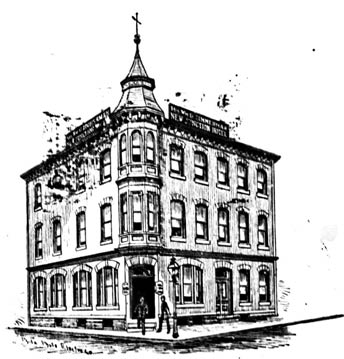
Bridge Avenue was one of Camden's most notable thoroughfares, lying between Federal and Mickle Streets. By 1947 only the block east of South 8th Street remained, and that too has long since vanished.
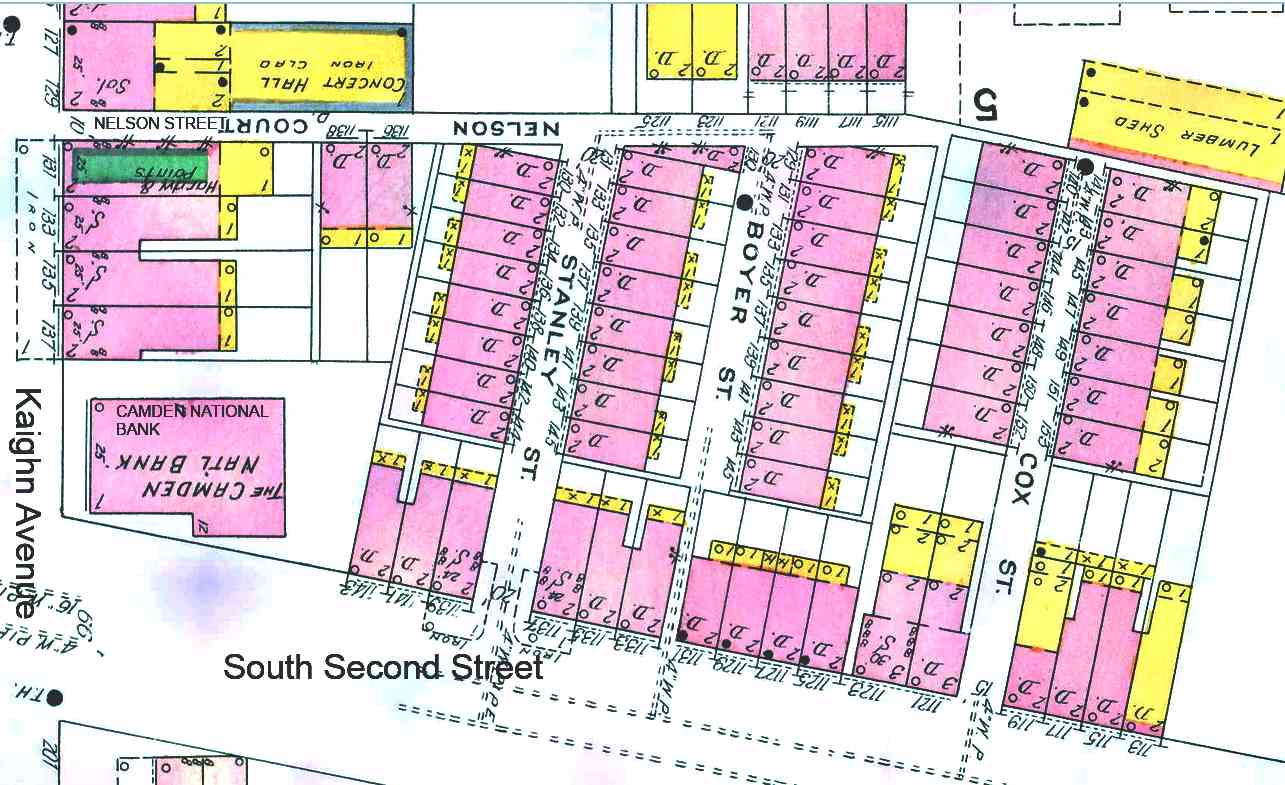
Boyer Street, also known as Boyer Court, was a half-block dead-end street running east from Nelson Street in South Camden. Eight brick homes on the north side were built in the early 1890s and demolished after World War II for industrial development.
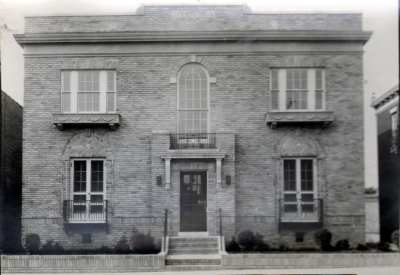
Belleview Avenue runs east from Baird Boulevard to Park Boulevard in Camden's Parkside neighborhood.

Baxter Street (formerly Newton Street and locally known as "Hog Alley") ran from South 7th Street to Mount Ephraim Avenue in South Camden, notorious for decades as a hub of illegal activity; largely demolished, the 700 block survives as an overgrown alley.

Bannard Alley (also known as Bannard Avenue) runs southeast from Kaighn Avenue toward Mechanic Street along the elevated railroad tracks. It likely originated as a service road for the rail line and has no residential or commercial addresses, serving primarily as a pedestrian and bicycle shortcut.
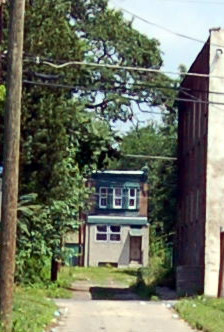
Maurice Street, also known as Ann Street, runs south from Mount Vernon Street to Kaighn Avenue in Camden, site of the Wesley A.M.E. Church at Sycamore Street.

Sycamore Street is one of Camden's "tree" streets, originally running east from Front Street to Haddon Avenue; its intersections at 7th, 8th and Louis Streets were hubs for different ethnic and cultural communities.
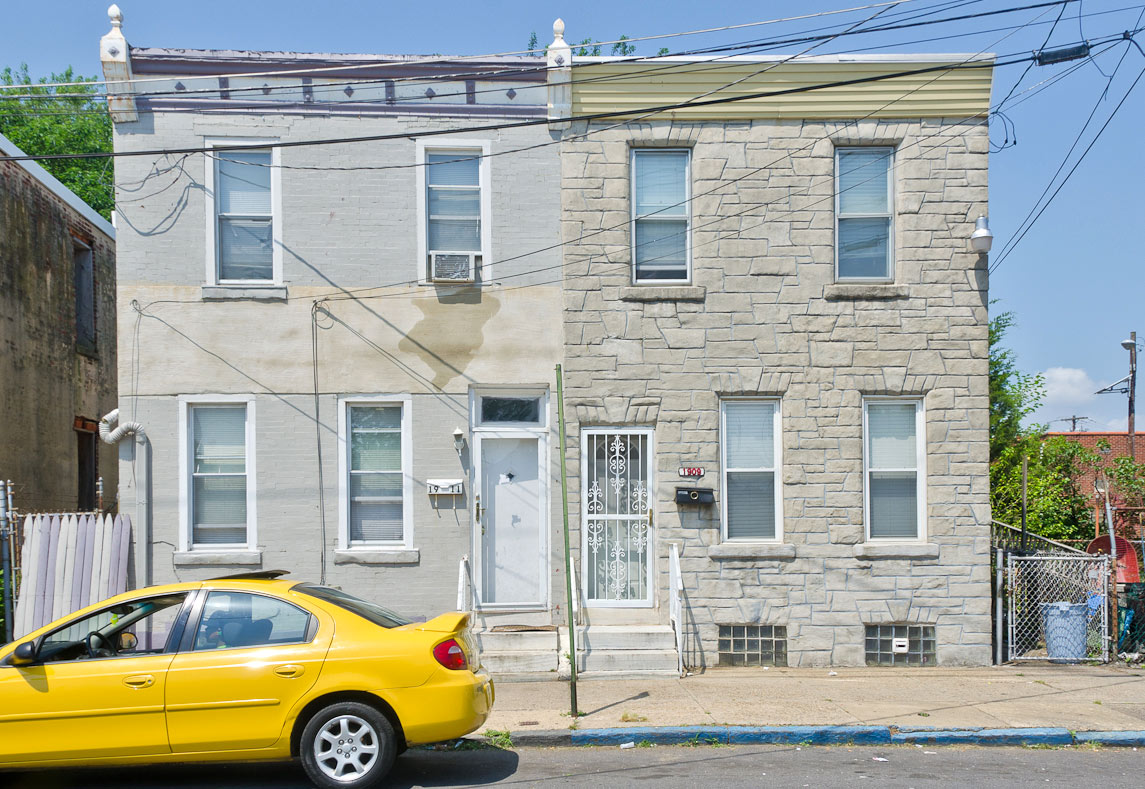
Kossuth Street ran south through South Camden from Van Hook Street to the railroad tracks; named for the Hungarian revolutionary Louis Kossuth, much of it was razed in the 1950s for the Franklin D. Roosevelt Manor and Chelton Terrace public housing projects.

Locust Street ran south from Beckett Street to Mechanic Street between South 2nd and South 3rd Streets in Camden; its 700 block was known as Oak Street until about 1883 and its 600 block as John Street in the 1870s. Homes and businesses disappeared block by block after World War II, and the last structure, at 1128 Locust, was razed after a fire in 2010.
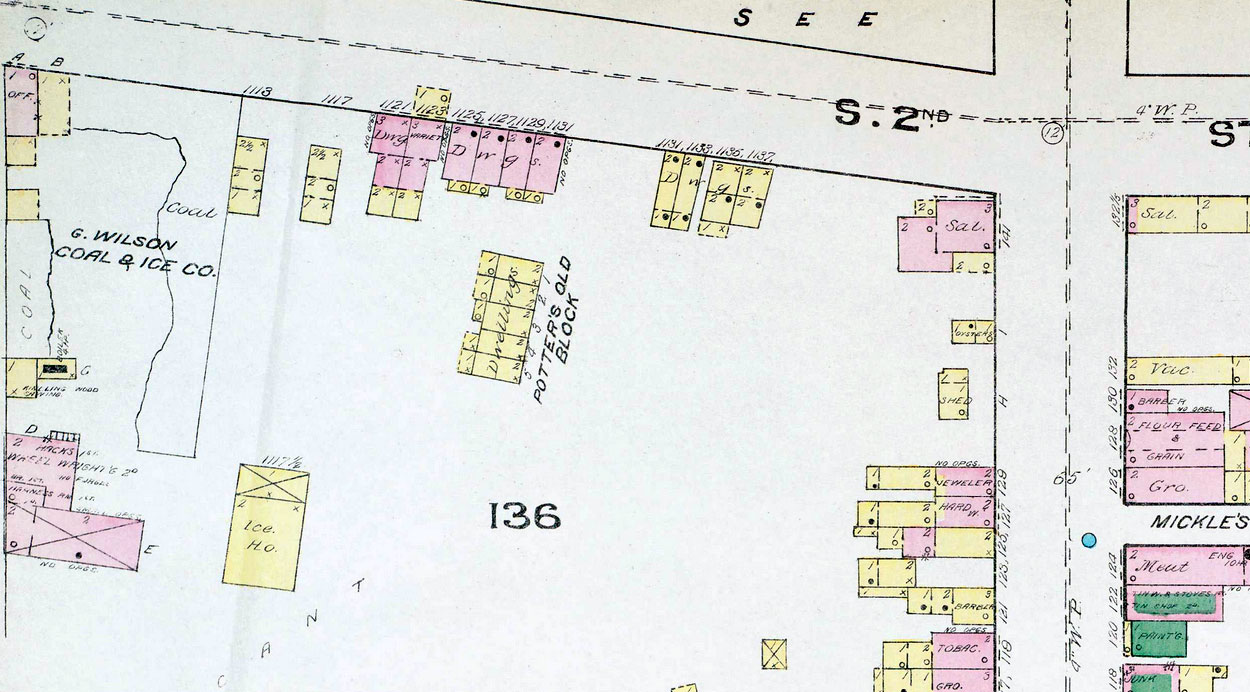
Cox Street ran west from 1119 South 2nd Street for about half a block to a dead end, roughly opposite Sycamore Street; it first appeared in City Directories in 1890 and was renamed Sycamore Street around 1922, then erased after World War II as part of a redevelopment plan.

Atlantic Avenue lies three blocks south of Kaighn Avenue and runs from Front Street east to Haddon Avenue. East of 7th Street it was and remains a mix of homes and commercial properties; between 7th and 9th Streets, I-676 and the elevated rail line cross the street, and east of 9th Street it is primarily residential.

Division Street runs across South Camden. In 1997, a portion of the street was renamed Ramona Gonzalez Street to honor a community leader; the remainder continues to be known as Division Street.

Reprinted from the series of stories of Camden's earlier days, under the title Sixty Years in Camden County - Gosh! by Will Paul, appearing in The Community news, of Merchantville, NJ.

Front Street runs north and south through Camden, west of Second Street and parallel to the Delaware River, from Erie Street in North Camden as far south as Atlantic Avenue. Known historically as North Front Street and South Front Street, it was home to saloons, livery stables, churches, and waterfront industry before early-1970s redevelopment broke its once-continuous run.

Baird Boulevard (originally Baird Avenue) runs diagonally through the Parkside and East Camden neighborhoods, named for Camden businessman and U.S. Senator David Baird Sr. It begins at Kaighn Avenue, crosses the Cooper River and Admiral Wilson Boulevard, and terminates at the intersection of Federal Street and 27th Street in East Camden.

Edward N. Cohn was born in 1832. On the 1870 U.S. Census, he reported his birthplace as Bohemia, while in the 1880 Census he listed it as Germany. It is likely he was born in a region that is now part of the Czech Republic.

The Parkade Building was built in the mid-1950s on the site of Roosevelt Plaza Park, opposite City Hall on Fifth Street in Camden. Mayor George E. Brunner's plan to ease parking downtown failed to revive Broadway businesses, and demolition was approved in October 2003.

Haddon Avenue is one of Camden's oldest roads, dating to at least 1792 as a bridle path and incorporated as the Haddonfield & Camden Turnpike in 1839. It runs southeast from Federal Street to the city limits toward Collingswood, Haddon Township, and Haddonfield.

Railroad Avenue ran from Kaighn Avenue to Jefferson Street in Camden. The page includes a 1906 Sanborn Map of its west side from Chelton Avenue to Bulson Street.

Mickle Street, also known as Martin Luther King Jr. Boulevard, is a major east-west road in Camden, named for John W. Mickle, a Federal Street Ferry organizer with a large stake in the Camden and Amboy Railroad.

Incorporated in 1828, the progress and possibilities of Camden have far exceeded the expectations of the Founders and Incorporators. The year 1928 witnessed the celebration of the one hundredth anniversary of the incorporation of Camden as a city.
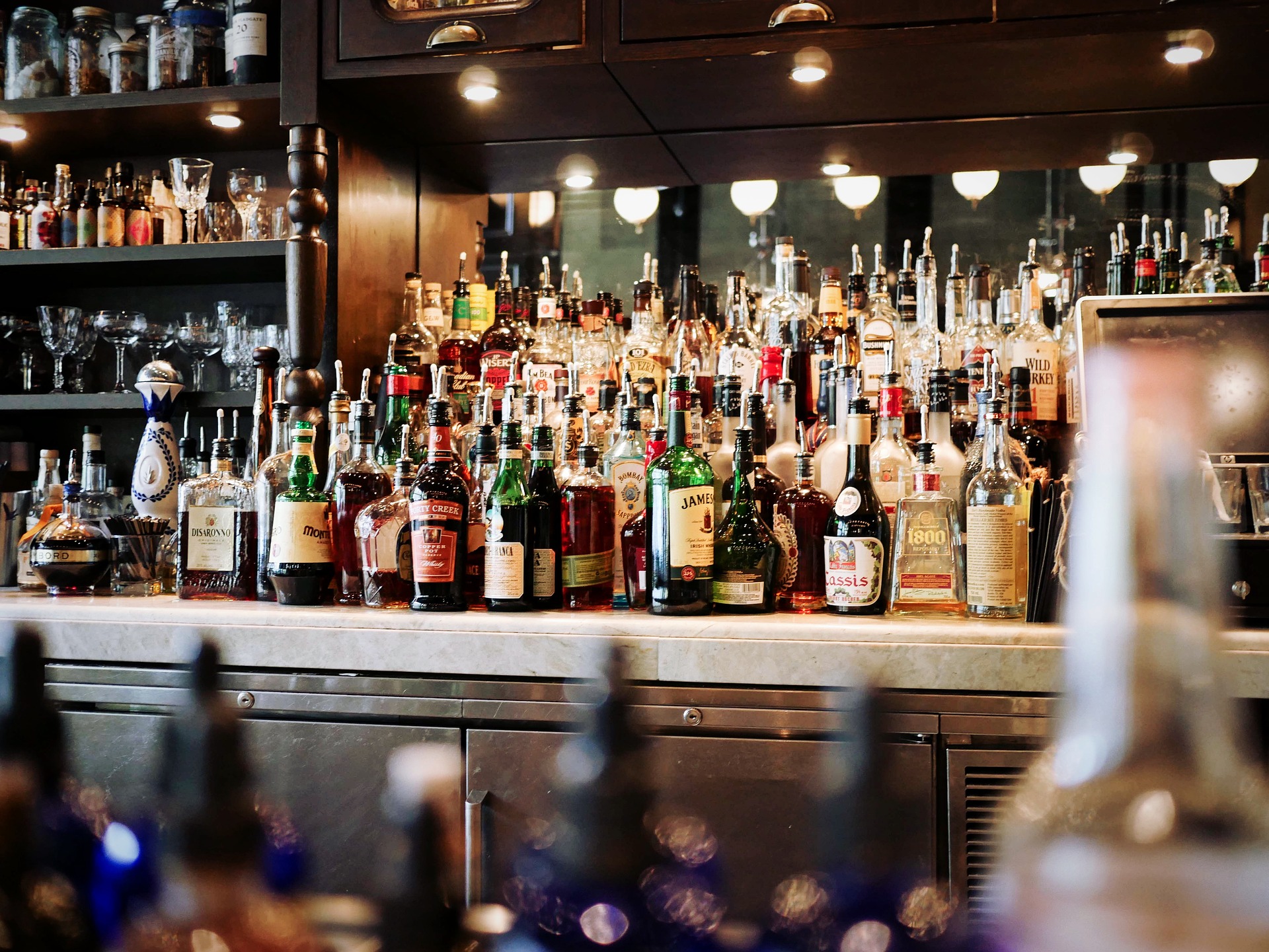
Three-O-Three Bar, a Camden tavern at 303 Kaighn Avenue operating from the 1930s through 1970, later the Togetherness Bar before the building was razed.

The Broadway Trust Company, a bank built before World War I at 938-944 Broadway in Camden, New Jersey, operated until shortly after the 1929 crash.

Excerpt from Historical and Industrial Review of Camden, N.J. 1890.
1123 Broadway (Broadway and Sycamore Street), Camden, NJ Established in 1885, the Camden National Bank opened at 259 Kaighn Avenue on August 13, 1885. Zophar C. Howell was the first President.
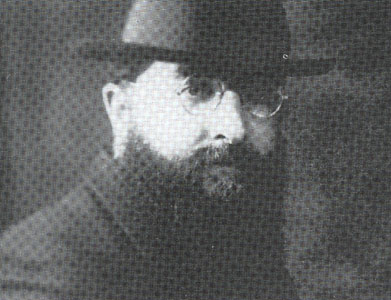
Rabbi Naftoly H.J. Riff (1893-1976) led Congregation Sons of Israel on South 8th Street in Camden, New Jersey for nearly 50 years from the early 1920s.
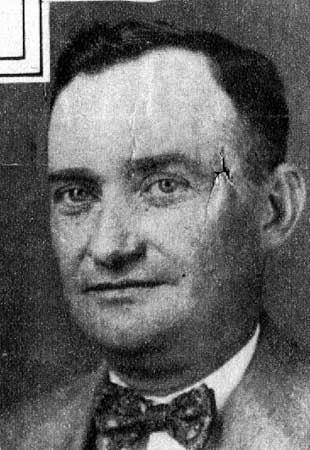
Thomas J. Daley (born 1889) was a civil engineer who joined Camden's engineering department in 1913 and was appointed City Engineer in 1925, serving during construction of the new City Hall and marine terminal.

2nd Street extends north-south between Front Street and 3rd Street, running parallel to the Delaware River until Mechanic Street. In the early 1970s, several buildings were cleared on the east side of North 2nd Street below Mickle Street to make way for the Royal Court townhomes and Mickle Tower senior citizens apartment building.
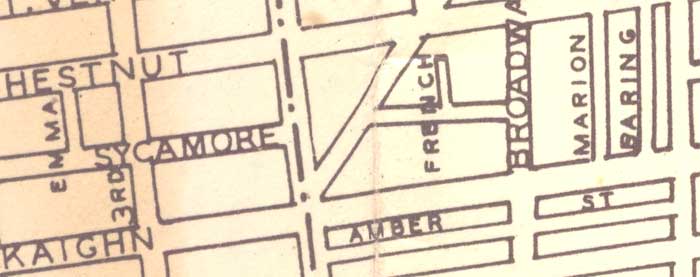
Amber Street is a small street that runs parallel to Kaighn Avenue from South 4th Street to South 6th Street. Best known as the alley beside Triangle Liquor east of Broadway.